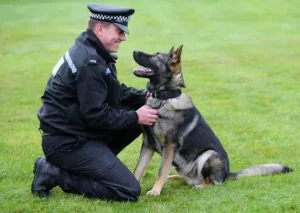
K9 teams help protect all types of places, but the way they work can change a lot. When you look at internal vs external K9 patrol, the shift in space and risk becomes clear fast.
Indoors, a dog moves through tight halls and busy rooms. Outside, the open ground brings different clues, sounds, and problems. Each style catches trouble in its own way.
This blog explores the differences between internal and external K9 patrol strategies so you can see how each approach fits a site that needs steady, sharp security.
Table of Contents
Internal vs External K9 Patrol: Tactical and Environmental Differences
When looking at internal vs external K9 security deployment, the biggest changes appear in how teams move, what they listen for, and what they expect to find.
Each setting shapes the dog’s instincts in a different way. The handler must adjust to the space, pace, and risk associated with either an indoor or outdoor patrol.
These two worlds may look similar at first glance, but the tactics behind them couldn’t be more different.
Here is a detailed breakdown of both techniques:
Internal K9 Security Patrol Techniques
Environment Focus (Confinement & Complexity)
Indoor patrols take place inside tight structures such as offices, data centres, storage areas, or large warehouse floors. These spots bring their own set of challenges.
A team might deal with narrow halls, low light, busy corners, or sharp turns that block views. Floors may shine and cause slipping. Echoes bounce off walls and create sound confusion. Even the smell inside a closed building can trap or swirl around, making detection harder.
Core Objective
The main goal of indoor K9 patrols is simple: find anyone who should not be there. Most of these patrols take place after hours, when the building is locked and quiet.
Intrusion detection becomes the top priority. Many facilities depend on the dog to guard assets that sit behind closed doors, equipment, documents, or sensitive items that must stay protected.
Methodology & Training
Indoor movement is slow by design. Teams clear one room at a time, with steady focus and minimal noise. Handlers use small gestures or soft commands so the dog stays alert without breaking the silence.
Training is built around calm control rather than speed. Dogs learn to deal with the odd shapes, tight corners, and clutter found inside a building. They must separate real threats from harmless noise, such as machinery hums or shifting air.
These K9 security patrol techniques focus on judgment and precision rather than distance or speed.
Equipment
Gear stays compact and quiet. Dogs may wear soft boots for slick floors and lightweight harnesses that don’t clatter. The goal is to remove anything that might echo through a hallway or alert a hidden intruder.
Threat Profile
Indoor threats often involve someone hiding in a storage area, behind crates, or inside a small room. Theft from within the building is another concern. Even a concealed item can become a target, so the dog must stay alert for small clues.
External K9 Security Patrol Techniques
Environment Focus (Scale & Variability)
Outdoor K9 patrols involve a wide range of spaces. The team may cover construction sites, storage yards, open fields around a plant, or long fence lines.
This environment changes fast, like wind shifts scent. Bright lights fade to darkness. Mud, uneven ground, or debris can appear without warning. The dog must navigate all of it while keeping a steady pace.
Core Objective
The goal outside is to stop trouble before it breaks in. Deterrence is a major part of external work. A visible K9 team can discourage attempts at climbing fences, cutting locks, or slipping through outer gates. Area denial becomes a key tactic, pushing potential threats away from the perimeter.
Methodology & Training
Outdoor movement usually runs faster. The dog covers ground quickly and follows search patterns meant for long distances. Tracking training becomes essential.
Dogs learn to pick up scent trails carried across grass, gravel, or open soil. They also practice sending alerts from far away. This speed and reach allow teams to respond well before someone reaches the building.
Equipment
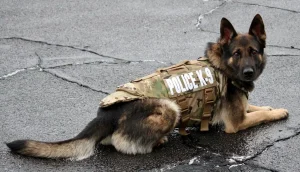
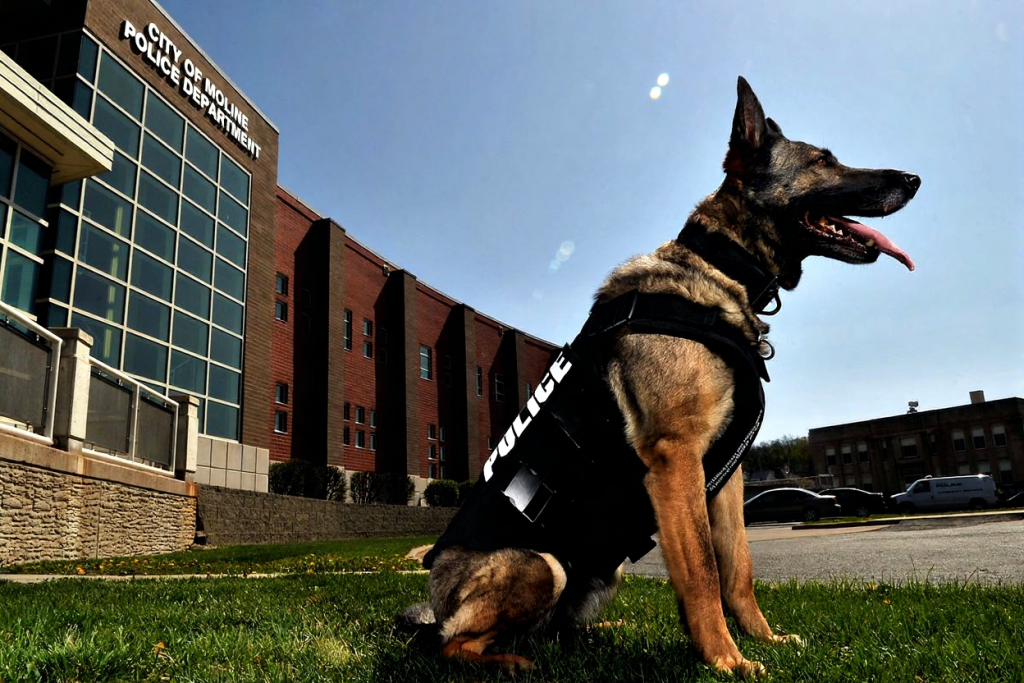
Outdoor gear leans toward durability. Dogs may wear reflective vests for visibility at night. Long tracking lines give them room to move. Vehicles are often part of the setup, helping handlers reach far edges of the property.
Threat Profile
Most outdoor threats involve attempts to breach a fence, slip through blind spots, or access equipment stored outside. Some sites also face planned theft or organised groups targeting entry points.
Operational and Logistical Differences of Internal and External K9 Patrol Strategies
Training and Canine Patrol Operations
Specialisation
Internal dogs need training to work in tight, closed spaces where scents cling to walls and mix together. They learn to separate tiny odour clues and locate hidden people or objects in dense indoor air.
External dogs build different strengths. They train for long-distance tracking, shifting weather, and the endurance needed to work in wide, open areas.
Deployment Cycles
Indoor patrols usually run shorter and more intensely. Teams move through a building in steady sweeps, checking rooms with focus and precision.
External patrols, on the other hand, follow longer routes. These shifts often cover large outdoor zones without many breaks.
Handler Interaction
Inside a building, the handler watches the dog closely, reading quiet signals and subtle changes in behaviour.
Every small reaction matters. Outdoors, teams rely more on voice cues, distance commands, and strong stamina. The terrain may spread the pair out, so communication must stay clear even when the dog is far ahead.
All of these factors discuss how the environment dictates the nature of canine patrol operations, shaping how each team trains, moves, and responds. In practice, these differences are managed through structured planning and specialist deployment, which is why many sites rely on K9 dog security services that can tailor patrol methods to both internal and external environments.
Visibility, Deterrence, and Risk Profiles
Deterrence Effect
External K9 patrols act as a clear warning. Seeing professional security dog patrols along a perimeter can stop theft, vandalism, or trespassing before it starts. UK health and safety guidance highlights the need to assess terrain, weather conditions, and nearby vehicle movement when planning outdoor patrol activity.
Indoor K9 teams serve as a hidden layer of protection. Their presence is not obvious to the public, but they offer strong peace of mind to clients and create a sharp surprise for anyone who enters without permission.
Risk to the Public
Internal patrols take place when a building is empty, so public contact stays low.
External patrols near walkways, parking lots, or open corporate grounds must follow tighter safety rules because people may pass nearby.
Operational Risk
Indoor teams face hazards like slippery floors, tight corners, and sudden close contact. Outdoor teams deal with weather changes, wildlife, uneven ground, and long travel distances.
Conclusion
The main difference in internal vs external K9 patrol comes from how each space taps the dog’s instincts. Indoors call for tight, careful scent work, while outdoor areas rely on reach, tracking, and strong deterrence.
The best fit depends on the risks of the site. Both styles need skilled handlers and solid training to work at full strength.
FAQs
1. Which strategy is better for general warehouse security?
Most warehouses benefit from internal patrols because the dog can move through aisles, storage rooms, and tight spaces where intruders hide.
2. Are the breeds used for internal and external K9 patrols different?
The same breeds often work both roles. What changes is the training, not the dog itself.
3. How does lighting affect external K9 security operations?
Low light slows the handler more than the dog. The dog relies on scent and sound, while the handler uses extra care to guide movement in dark areas.
4. Does an external K9 unit cost more to run than an internal one?
Usually yes. Outdoor teams need weather gear, longer routes, and vehicle support, which raises overall costs.
5. What is the most critical factor in successful professional security dog patrols?
Trust between the dog and handler. When both understand each other well, the patrol stays sharp and effective in any setting.