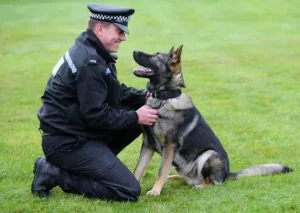
Dogs have a strange talent that still surprises seasoned K9 handlers. In the middle of chaos, fuel fumes, human sweat, stale air, damp concrete, rubber, dust, they can follow one tiny thread of scent as if the world has gone quiet. This ability sits at the heart of dog scent processing security, and it explains why trained detection dogs outperform most machines when the stakes involve explosives, narcotics, weapons, or hidden contraband.
Understanding how they do this isn’t just interesting science. It reveals why K9 teams continue to anchor modern security operations around the world, airports, warehouses, logistics hubs, border points, and even large public events where thousands of odours collide at once.
Table of Contents
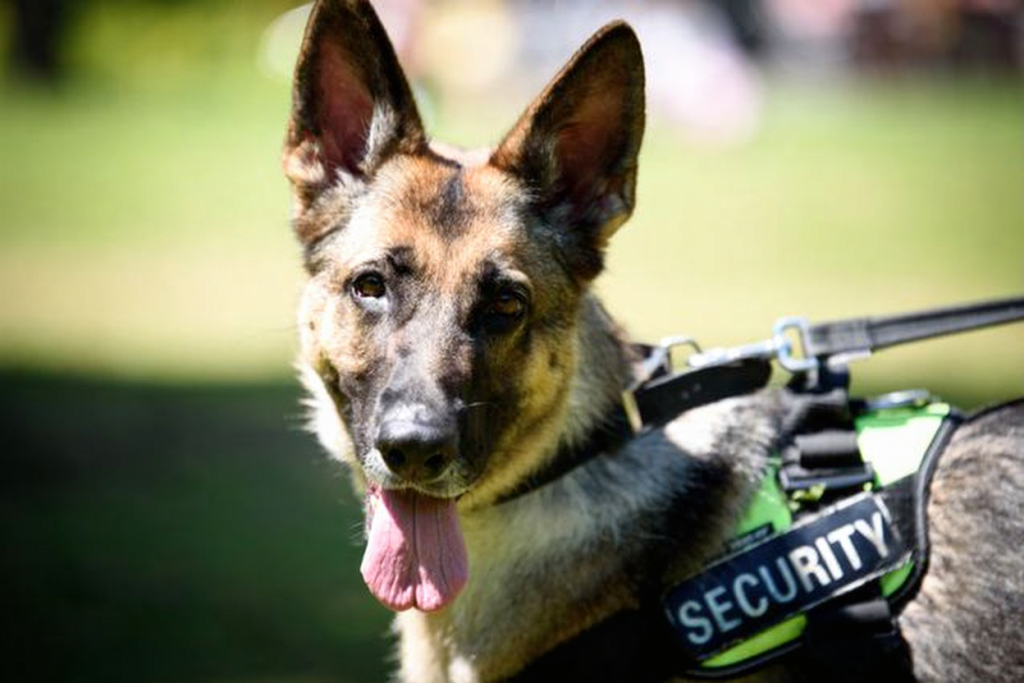
Dog Scent Processing Security: How K9 Teams Identify Threats With Precision
Dogs were born to interpret the world through scent. Long before we shaped them into working partners, their ancestors relied on scent to hunt, track, and survive. Vision told them what was close. Smell told them everything else. That instinct still drives the core of dog scent processing security today.
In security work, this makes dogs priceless. Vision can be blocked. Cameras can be angled the wrong way. People hide things with intention. But scent? Scent leaks, drifts, and clings to fibres and settles into tiny spaces. Dogs read this invisible trail like handwriting.
More importantly, their noses “map” smells. Not one at a time, but as layered scent pictures. This olfactory “pattern recognition” allows a dog to flag a target odour even when it hides beneath hundreds of stronger smells.
The Biological System Behind a Dog’s Multi-Scent Capabilities
300 Million Receptors and a Dedicated Olfactory Brain
Humans have roughly 5–6 million scent receptors. Dogs can have up to 300 million. But the number alone isn’t the remarkable part. It’s how dogs use them.
A dog’s nose splits airflow into two streams, one for breathing, one purely for smelling. This allows scent molecules to linger in the nasal cavity long enough for analysis. It also stops the system from “overloading,” which is something humans experience quickly.
Meanwhile, the part of the canine brain dedicated to scent is 40 times larger than ours relative to body size. They have real neurological space to process details.
The Jacobson’s Organ and Chemical Data Interpretation
Hidden deep in a dog’s nasal structure sits the vomeronasal organ, also called Jacobson’s organ. It picks up chemical signals that regular olfaction misses when dogs detect faint traces of explosives, concealed narcotics, accelerants, or electronics.
Because this organ processes chemical data in a separate channel, dogs can run long searches without losing accuracy. They are not overwhelmed by mixing smells; they sort them like threads. This ability anchors high-performance dog scent processing security during long deployments.
Odour Layering: How Dogs Separate Mixed, Masked, or Contaminated Smells
In real operations, smells never arrive neatly. Think of a warehouse search. A single parcel might carry:
- Diesel residue
- Plastic packaging smell
- Ink from labels
- Human handling of odour
- The target scent is hidden inside
To us, that’s a mess. To a trained detection dog, those smells are layers, not noise. The dog moves through them the way someone flips through pages in a book. One layer, then the next, until it hits the one that matters.
How Detection Dogs Avoid Odour Fatigue
Pattern Recall Instead of Memory Overload
People mistakenly imagine a detection dog memorising hundreds of smells. That’s not how it works. Dogs build mental scent shapes. Once the shape is stored, they aren’t scanning a thousand smells; they’re watching for one pattern that doesn’t belong.
This reduces mental load and keeps them sharp during long tasks.
Task-Driven Filtering: How K9s Ignore Non-Relevant Smells
Dogs don’t hunt for “interesting” smells. They hunt for assigned categories. A dog trained for explosives ignores food smells, perfume, coffee, human scent, vehicle odours, and the thousand distractions swirling around busy sites. Handler cues provide context, and the dog filters everything else out.
This filtering is why well-trained K9s rarely issue false alerts.
Micro-Breaks, Reset Sniffs, and Self-Regulation
Handlers notice something outsiders miss. Dogs sometimes pause, shake their head, or take two sharp reset sniffs. These tiny behaviours help them recalibrate airflow, reset their brain, and continue with high accuracy.
From Training to Field Work: Building Reliability Across Thousands of Odours
Imprinting: The First Scent Library
Puppies start early. They aren’t overwhelmed with dozens of odours at once. Trainers introduce one scent at a time slowly, carefully, until each target odour forms a strong imprint in the dog’s scent library. Strong foundations equal long-term reliability.
Proofing: Teaching Dogs to Ignore Decoys and Temptations
Next comes environmental proofing. Dogs learn to ignore:
- Food
- Perfume
- Human scent
- Environmental chemicals
- Natural smells
They practise in warehouses, airports, vehicles, cargo bays, offices, outdoor spaces, anywhere real searches might happen.
Real-World Application in High-Pressure Security Environments
During operations, dogs use a predictable cycle:
- Air scenting (catching the general direction)
- Source scenting (narrowing down the flow)
- Pinpointing (identifying the exact object)
High-drive working dogs thrive under pressure because this routine becomes second nature.
Scent Processing in Motion: How Dogs Build a Scent Map of Any Environment
Reading Airflow, Micro-Currents, and Odour Drift
Air moves. It curls around obstacles, drifts across open bays, slides under doors, and rises with heat. Dogs track those shifts. They read the movement of scent particles in a way humans can’t visually track.
Tracing Odour Cones and Identifying the Source Point
Every scent creates a cone wide where the odour spreads, narrow where the source sits. Dogs follow that cone the way someone follows a funnel. Begin broad, tighten your direction, and lock things down.
Adaptation to Challenging Terrains
A dog adjusts its sniff rhythm depending on the environment:
- Long sniffs for large open spaces
- Rapid sniffs in cluttered areas
- Paused sniffs in vehicles
- Sweeping patterns on concrete
- Slow, deep sampling in cold areas where scent sinks
This flexibility is what keeps them accurate during long multisite operations.
Why Detection Dogs Rarely Lose Accuracy: Even When Facing Thousands of Competing Odours
Neuro-Olfactory Efficiency
Dogs take “olfactory snapshots.” A single breath gives them enough detail to know whether a target is present. This saves mental energy, preventing overload.
Behaviour-Based Error Control
Handlers often see small corrections: a dog tilts its head, circles back, or dips down to double-check. These checks stop mistakes before they happen.
Handler Influence and Communication Loops
The dog and handler communicate constantly through tiny cues, subtle movements, and a shift in pace. This relationship keeps the search controlled, efficient, and safer for both.
Conclusion
Detection dogs don’t just smell, they interpret, filter, and process odour information with a level of precision that still outperforms most modern technology. Their ability to track a single chemical thread through a storm of competing scents makes dog scent processing security a cornerstone of high-risk operations worldwide. And as long as threats evolve, trained K9 units will continue to remain one step ahead, nose to the wind, reading the world through layers we can’t see.
Frequently Asked Questions
1. How do detection dogs avoid getting overwhelmed by so many smells?
They sort scents into layers, filter out irrelevant categories, and use airflow techniques that stop overload.
2. Can a dog recognise a smell it has only encountered once?
Yes. One strong imprint can anchor a long-term scent memory.
3. How do security dogs stay accurate in noisy or busy environments?
They rely on airflow, scent cones, and pre-trained mental filtering, not noise or visuals.
4. Do detection dogs get tired of smelling?
They can, but dogs self-regulate. Handlers also manage work cycles to protect accuracy.
5. Can scent-detection dogs work in extreme weather or large warehouses?
Yes. They adapt sniff frequency and airflow intake to heat, cold, or wide spaces.