Anti-social behaviour has become a major pressure point for retail parks. A single incident can trigger financial loss and damage the reputation of the site. Crowded areas and open car parks give troublemakers room to cause disruption. When left unchecked, small acts become costly for managers and tenants.
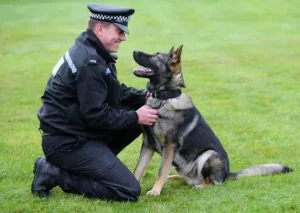
Security dogs offer more than a uniformed presence. They act as a strategic, high-value asset for risk leaders. Their role reaches far beyond patrolling. They deter. They reassure. They shift behaviour before problems grow. For property professionals, they offer a measurable advantage that standard guarding cannot achieve. This blog explains the use of security dogs for anti-social behaviour in retail parks.
Table of Contents
Beyond Patrol: The Measurable Deterrent Effect
A retail park is a complex environment. People arrive in waves. Cars fill the edges of the site. Groups gather in open spaces. With so many moving parts, anti-social behaviour can appear in minutes. The challenge is stopping these problems early, before they develop into something worse.
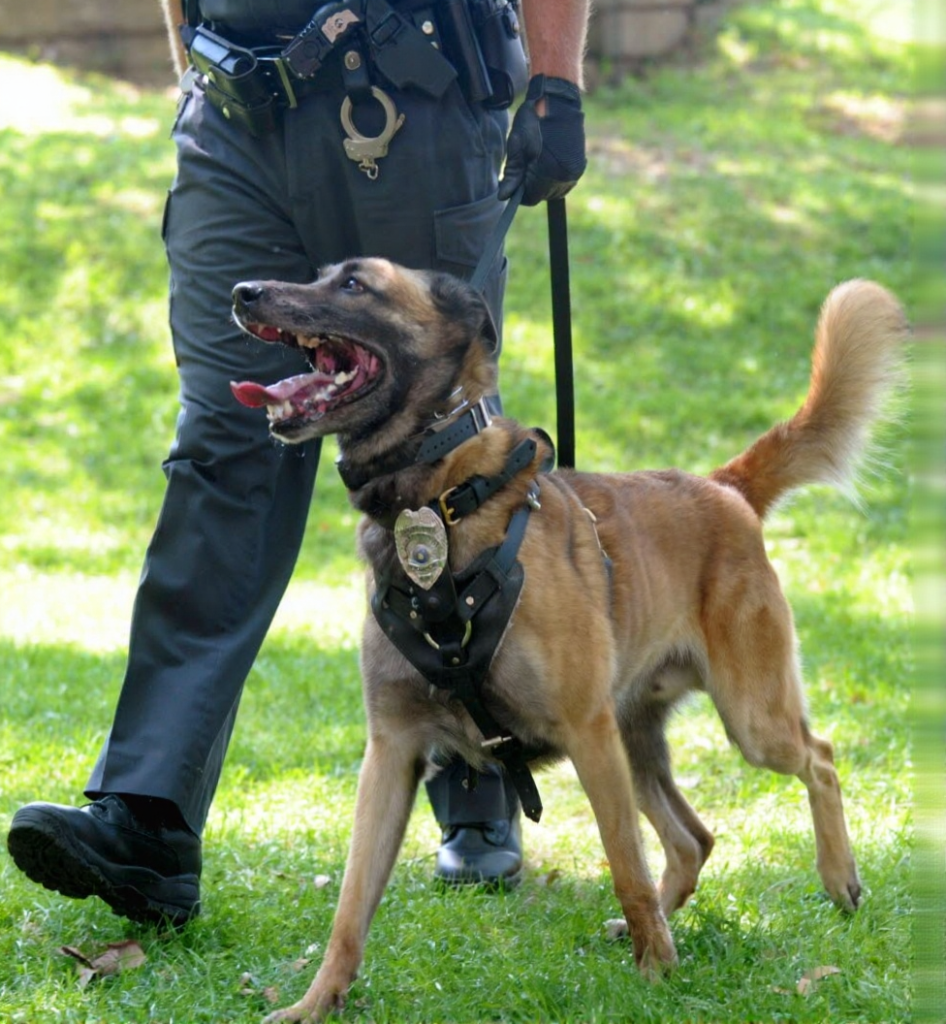
Security dogs create a natural barrier. Their presence alters behaviour without confrontation. Someone who might attempt vandalism often drops down the moment they see a trained dog. It is a psychological shift. Even individuals who usually ignore security guards tend to prioritise the K9 unit.
This deterrent effect matters most during peak hours. Loitering, aggressive behaviour, and vandalism become harder when a K9 patrol is near. A dog’s alert posture signals that the area is under careful watch. The message is not loud, but it is firm: trouble will not go unnoticed.
Organised retail crime groups respond even faster to this presence. Flash-mob theft attempts rely on speed and confidence. When these groups see a dog, they lose both. The plan becomes risky. The escape route looks uncertain. The spectacle they rely on cannot take shape. As a result, the site becomes a far less appealing target.
A K9 team can secure scenes faster than a guard working alone. Dogs detect movement and stress cues. They guide handlers toward the source before someone has time to flee. This speed often prevents escalation. It can shorten incident duration, keep people safe, and limit property damage. In practice, this means CCTV control rooms can hand off incidents. And guards can stabilise situations with less force and less delay.
These advantages make retail park crime deterrence far more consistent. They also reduce the pressure on human teams. This, in turn, lowers burnout and improves morale. When visitors see a calm, professional K9 team, they feel safer. That sense of safety feeds into longer visits and stronger tenant satisfaction. In practice, this means CCTV control rooms can hand off incidents. And guards can stabilise situations with less force and less delay — a capability found across modern dog security services.
Strategic Deployment Models: Maximising K9 Security Dogs for Anti-Social Behaviour
Using security dogs is the difference between added cost and a strong ROI. A K9 team is most effective when deployed with intent. The following models help retail park managers and security firms design programs. It delivers high impact with minimal waste.
High-Impact, High-Visibility Deterrence
Retail parks have predictable hot-spots. Bus stops. Fast-food plazas. Car parks that attract groups at certain times. High-visibility patrols in these zones send a clear message. Anti-social behaviour prevention is active.
During busy periods, the goal is simple. Show the K9 presence early. Move through walkways where groups tend to linger. Maintain visibility near units that have faced issues before. This makes offenders think twice while reassuring families and older visitors.
The key is rotation. The Security dogs for anti-social behaviour should move in irregular intervals. It avoids patterns that offenders can track. This unpredictability increases the psychological impact. When people do not know where the dog will appear next, they behave cautiously.
Rapid-Response, Covert-Ready Teams
Not all incidents need constant patrolling. Some demand fast, targeted action. A rapid-response model allows the dog and handler to stay on standby. Instead of looping through the site in long cycles, they remain ready to move when CCTV report a problem. It also happens when a staff member reports the problem.
This approach reduces fatigue for both dog and handler. It also ensures that when they arrive, they arrive with purpose. They address verified incidents where their ability to secure ground makes a difference.
This model works for car-park disputes and shoplifting flagged by security control rooms. It also happens in any situation where crowd behaviour turns aggressive. Because the team is mobile and alert, they can support stores faster.
Specialised Vulnerability Audits
Once stores close, retail parks shift into a different risk profile. Empty units attract trespassers. Dark corners hide break-in attempts. Service yards sit exposed.
Security dogs for anti-social behaviour excel in these conditions. They tiptoe, cover distance, and detect intruders hidden from cameras. Overnight vulnerability audits help managers understand their weak spots. The dog explores boundary lines, loading bays, and fenced areas. It happens where intrusion risk is highest.
These audits can uncover patterns of attempted entry. It highlights blind spots in CCTV and prevents break-ins before they start. When combined with scheduled reports, they add long-term strategic value. They transform dog-assisted security measures into a planning tool rather than a patrol.
Regulatory & Community Alignment for Retail Park Managers
A strong K9 program must align with local regulations and community expectations. Retail parks have a duty to maintain safe, lawful, and accessible environments. This duty extends to the standards used to train security dogs and handlers.
Proper training is non-negotiable. Handlers should be certified through schemes such as NASDU or equal accrediting bodies. They need scenario-based training that prepares them for crowded and unpredictable public behaviour. Dogs must remain under control, calm around children, and stable in noisy areas.
Public perception matters. A visible dog must look professional, not intimidating. Clear, friendly communication helps. Handlers should greet visitors, answer questions, and maintain a steady presence. Signage can notify visitors that K9 patrols operate on-site for safety purposes. Simple steps like this transform the dog’s presence into a positive feature.
Compliance also covers documentation. Managers should ensure that incident logs and the use of policies are up to date. Record-keeping demonstrates good governance. It strengthens insurance claims and supports safe operations. A well-run K9 program reflects a responsible, modern approach to public safety.
Metrics for Loss Prevention Using Security Dogs for Anti-Social Behaviour
A K9 program must earn its place in the security budget. To do this, retail leaders need clear metrics. Arrest numbers alone do not reflect true value. Most success happens long before an incident becomes criminal.
Risk leaders should track reductions in staff incident reports, complaints, and property damage. These figures usually drop once a K9 team becomes active. Managers should also review how scenes are secured compared to periods without dogs. Faster resolution reduces risk and lowers cost.
Another metric is tenant satisfaction. Stores report fewer confrontations. Staff confidence improves. These gains help keep tenants, which strengthens the commercial base of the park.
Over months and years, these improvements compound. Security dogs evolve from an operational add-on into essential retail park safety solutions. This protects long-term economic stability.
Conclusion: The Next Step in Professional Retail Security
Security dogs provide a strategic edge in environments where anti-social behaviour can escalate. Used well, they enhance safety, protect assets, and support staff.
Retail park managers who strengthen their risk strategy should consider a vulnerability assessment. A certified provider must go with security dogs for anti-social behaviour.