The demand for professional K9 services has grown fast. Airports, warehouses, power plants, schools, and public agencies now use working dogs for detection and security. As demand rises, so does the number of providers. For procurement teams, that creates a real challenge. It is harder than ever to tell real ability from strong marketing.
K9 services are not like other service contracts. If a dog or handler fails, the impact goes beyond money. It can lead to safety issues, legal trouble, and public attention. Still, many decisions are shaped by polished case studies, dramatic images, and bold claims of “elite” training.
There is also an information gap. Providers know the technical side. Buyers often do not. Learning how to choose K9 provider services using proof over presentation is now a core risk-control step. This guide shows how to do that with clear, practical checks.
Table of Contents
How to Choose a K9 Provider Without Falling for Misleading Marketing Claims
Choosing a K9 provider is unlike selecting most other security vendors. You are not just buying a service. You are trusting a live animal and a human handler to perform under pressure, in uncontrolled environments, with real consequences.
That makes marketing distortion especially dangerous. Below is a practical framework procurement teams can use to separate substance from salesmanship.
Why Marketing Claims Are Especially Misleading in the K9 Industry
Unlike many regulated industries, K9 services lack consistent global benchmarks. Training standards differ by region. Certification bodies vary in rigour. Even the terminology is inconsistent. One provider’s definition of “operational ready” may be very different from another’s.
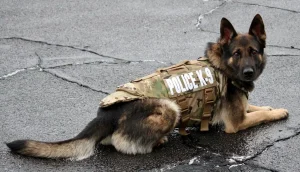
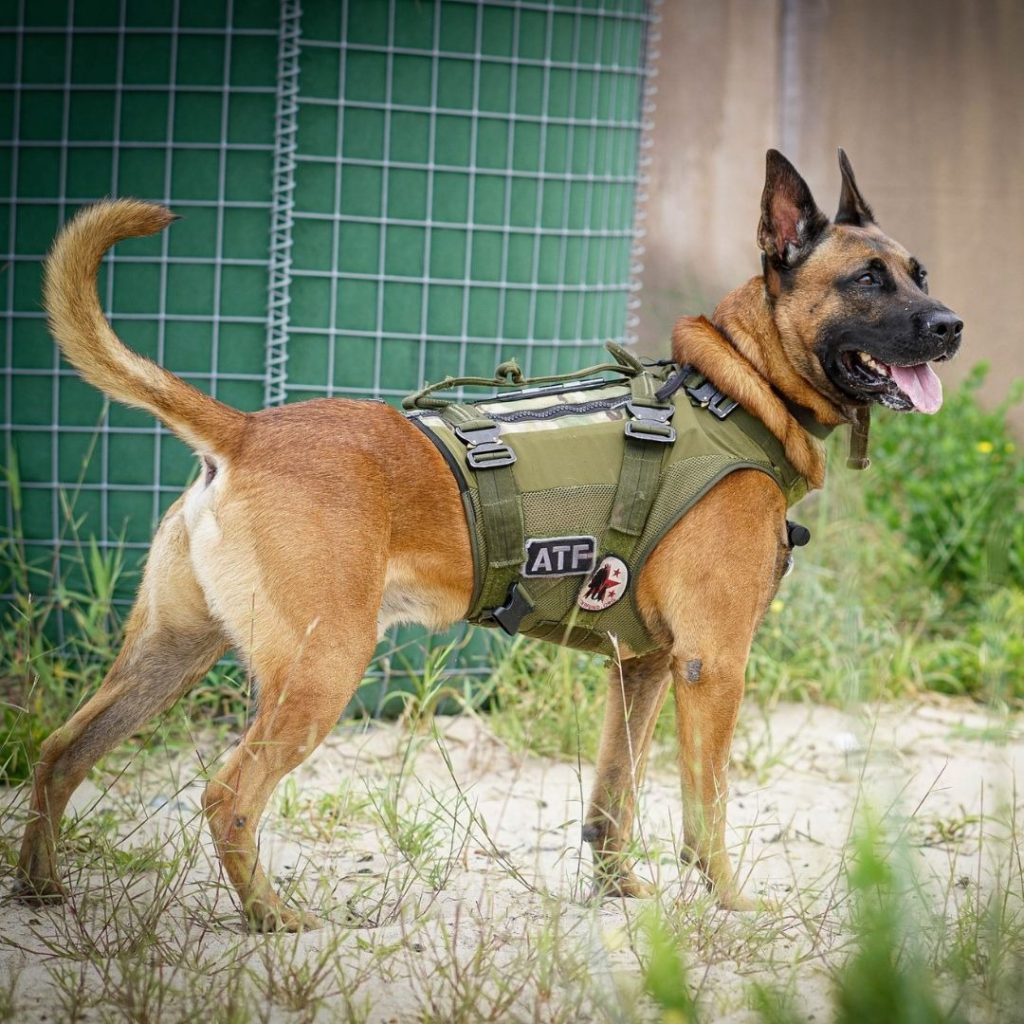
Marketing fills that gap. Emotional language is common. So are dramatic photos. Dogs in tactical vests. Handlers in staged pursuit scenes. These visuals are powerful. They trigger confidence. But they tell you almost nothing about daily reliability, false alert rates, or long-term performance.
There is also a technical knowledge gap. Most procurement teams are not canine behaviour experts. That makes it easier for vague language to pass as expertise. Phrases like “advanced scent theory” or “battle-tested methods” sound impressive. They rarely come with measurable standards.
When those gaps exist, the risk quietly shifts to the buyer. If performance later fails, the burden of proof rests on the organisation that signed the contract. Not the marketing department that built the pitch.
Common Marketing Tactics That Distort Real K9 Capabilities
Certain tactics show up again and again across the industry. None is illegal. All can be misleading if taken at face value.
“Elite-trained” is one of the most common labels. It sounds definitive. It is not. Without clearly defined training benchmarks, the term is essentially decorative.
Another red flag is inflated performance claims with no statistical context. Detection rates near 100 per cent may look reassuring. In practice, no real-world operational system performs at that level without trade-offs elsewhere, such as increased false alerts.
Staged demonstrations are also common. These are tightly controlled environments where success is highly likely. They rarely reflect real deployment conditions: background odours, weather shifts, handler fatigue, or public interference.
Some providers emphasise the dog’s appearance, breed, size, and demeanour over functional indicators like response latency, recovery time, and alert consistency. Others lean hard on equipment and aesthetics as a proxy for capability.
None of these tactics is proof of fraud. But none of them is proof of performance either.
What Buyers Should Demand as Verifiable Proof
Marketing claims should trigger questions. Documentation should settle them.
At a minimum, procurement teams should request evidence from independent, recognised accreditation bodies. Not all certifications carry the same weight. What matters is whether testing is standardised, repeatable, and externally audited.
Testing protocols should be available for review. Buyers should be able to see how scenarios are built, what pass/fail thresholds look like, and how often re-testing occurs. One-time certification tells you very little about ongoing readiness.
Handler records matter just as much as canine records. Background screening, experience history, and documented training hours should be available. A well-trained dog paired with an inexperienced handler is a weak system.
Proof of continuing evaluation is also critical. Re-certification cycles, refresher training schedules, and performance audits offer insight into long-term reliability, not just onboarding quality.
Finally, basic compliance documentation should never be treated as a formality. Insurance coverage, licensing, and regulatory adherence are part of operational risk control, not bureaucratic overhead.
Training Quality vs. Marketing Language
Training is where real capability is built. It is also where marketing language often drifts furthest from reality.
Routine obedience training is not the same as scenario-based operational training. A dog that responds perfectly in a quiet yard may struggle in a crowded, noisy terminal. Buyers should ask what environments are used during training and how distraction is simulated.
Scent discrimination is another technical area that is often oversimplified. Reliable detection depends not just on whether a dog can find a target odour, but also on how consistently it ignores non-targets. False alerts erode trust quickly and can disrupt operations.
Consistency between the handler and the dog is also critical. Teams that train together perform differently from mixed or frequently reassigned pairs. High turnover among handlers is a hidden performance risk that rarely appears in marketing.
Ongoing maintenance training is equally important. Skills degrade. Environments change. Without regular recalibration, performance slowly drifts. When that happens, operational surprises follow.
The cost of weak training rarely appears in the first year. It appears later, in missed detections, unnecessary disruptions, and re-training cycles that were never priced into the original contract.
Procurement Risk Management When You Choose a K9 Provider
Every K9 deployment carries layered risk. Some of it is obvious. Much of it is not.
Legal exposure is one dimension. Performance failures that lead to safety incidents can trigger investigations, claims, and regulatory scrutiny. In many cases, contractual language determines where that liability lands.
Reputational risk is another. Public trust is fragile. A single visible incident involving a working dog can draw attention far beyond the original event.
There is also operational risk. Unreliable detection disrupts workflows. False alerts delay shipments. Missed detections introduce downstream security threats that may not surface for months.
Vendor continuity risk is often overlooked. K9 services depend heavily on people, not just processes. If a provider experiences high handler turnover or internal instability, service quality can change rapidly even if the contract remains unchanged.
All of these risks intersect at one point: the decision to choose K9 provider services without a structured verification framework.
Cost vs. Capability — Avoiding the “Low-Bid Trap”
Cost pressure is real. Public and private procurement alike face tight budgets. But in K9 services, the lowest bid often conceals the highest long-term cost.
Training replacement is expensive. So is downtime during retraining. So are the cascading costs of operational failure: delays, secondary inspections, reputational damage, and legal review.
This is where Total Cost of Ownership (TCO) becomes a practical tool rather than a theoretical one. TCO should include acquisition, training, re-training, handler replacement, downtime, audit costs, and contract exit exposure.
Smart procurement teams weigh financial evaluation against operational and legal risk. A marginally higher upfront cost can be rational if it stabilises performance and reduces long-tail exposure.
The goal is not to overpay. It is to avoid under-buying a service whose failure costs far exceed its invoice value.
Practical Due-Diligence Checklist Before Final Approval
Before finalising any K9 contract, a structured due diligence process should be non-negotiable. Live demonstrations should reflect real deployment environments, not controlled showcases.
Request scenarios that mirror your operating conditions as closely as possible. Review actual deployment records, not just curated success stories. Incident logs, audit summaries, and performance reviews tell a more honest story than testimonials.
Speak with long-term clients, not just recent ones. Stability over time is a stronger signal than early-stage satisfaction. Audit handler continuity. Ask how often teams change. Ask why. The answers usually reveal more than marketing material ever will.
Finally, examine contractual exit terms and performance guarantees closely. They are often the only leverage point if service quality declines after signing.
Key Performance Metrics Procurement Teams Should Track
Operational performance cannot be managed without measurement. Yet many K9 contracts rely on vague service descriptors rather than defined metrics. That creates blind spots.
Detection accuracy trends over time are a foundational indicator. A single test result is less informative than performance across repeated evaluations under varying conditions.
False alert frequency is equally important. High false positives disrupt operations and undermine confidence in the system. Tracking trends, not just averages, helps identify training drift early.
Deployment readiness time matters in time-sensitive environments. How long does it take for a team to become operational at the point of need? Delays, even small ones, compound at scale.
Handler response coordination affects outcomes more than many buyers expect. Communication, positioning, and decision timing influence both safety and detection reliability.
Incident documentation quality is a final, often overlooked metric. Clear, consistent reporting supports audits, insurance review, and regulatory inquiry. Weak documentation creates risk long after the dog has left the site.
Metrics do not replace professional judgment. But they anchor decision-making in observable reality.
Contract Structuring to Protect Buyers from Underperformance
Contracts are where procurement intent becomes an enforceable reality. In K9 services, vague contracts protect vendors. Precise contracts protect buyers. Service Level Agreements (SLAs) should be tied to measurable outcomes, not generic availability.
If performance cannot be measured, it cannot be enforced. Performance review intervals should be defined at contract signing. Waiting for annual reviews in a high-risk service environment is often too slow.
Penalties and corrective actions must be proportional and practical. They should remedy failure without immediately destabilising operations.
Termination thresholds deserve special care. Buyers need clear exit rights if performance falls below acceptable levels for sustained periods. Ambiguity here creates legal friction later.
Data reporting responsibilities should also be explicit. Who collects what data? How often? In what format? Without clear answers, performance discussions quickly become disputes of opinion rather than fact.
Strong contracts do not guarantee strong performance. But weak contracts almost always guarantee weak leverage.
Conclusion
K9 procurement sits at the intersection of security, liability, and public trust. It demands more than surface-level evaluation. Marketing material will always look polished. Claims will always sound confident. What protects buyers is not presentation, but proof.
Evidence-based evaluation shifts decision-making from impression to verification. It forces clarity around training quality, handler competence, performance stability, and contractual protection. It also limits the quiet transfer of operational risk from vendor to client.
This guide is not a vendor endorsement framework. It is a safeguard: a way to impose discipline on a market where emotion and imagery often dominate.
When organisations choose K9 provider services through structured verification rather than assumption, they protect more than budgets. They protect operations, people, and institutional credibility.
FAQs
How can procurement teams independently verify a K9 provider’s performance claims?
Ask for third-party test results, recent audits, and speak directly with long-term clients. Never rely on demos alone.
Is certification enough to evaluate a K9 provider?
No. Certification is only a starting point. Ongoing testing and real-world results matter more.
What documentation should buyers legally require from a K9 provider?
Insurance, licenses, handler credentials, and proof of compliance should all be verified before signing.
How often should K9 teams be retested after deployment?
Most working teams are reviewed at least once a year, with more checks after high-risk deployments.
What is the highest hidden cost in K9 procurement contracts?
Retraining and downtime. Poor early training often leads to long-term cost overruns.