Choosing a security dog for a business is not a branding choice. It is a safe choice. Yet many teams still place all security dogs into one group and decide based only on price. This is where costly mistakes begin.
The difference between a guard dog vs protection dog is not minor. These dogs are trained for very different jobs. They also fall under different legal rules and insurance limits. When a business treats them as the same, it can face higher risk, legal trouble, and higher long-term costs.
This guide clears up that confusion in a practical way. It is written for facility managers, risk teams, and procurement leads. It focuses on real business impact, not training theory.
Table of Contents
Why Businesses Confuse Guard Dogs and Protection Dogs
The confusion begins at the vendor level. Many suppliers market both under broad labels like “security dogs” or “professional protection animals.” For a non-specialist buyer, the distinction feels semantic. To insurers and regulators, it is not.
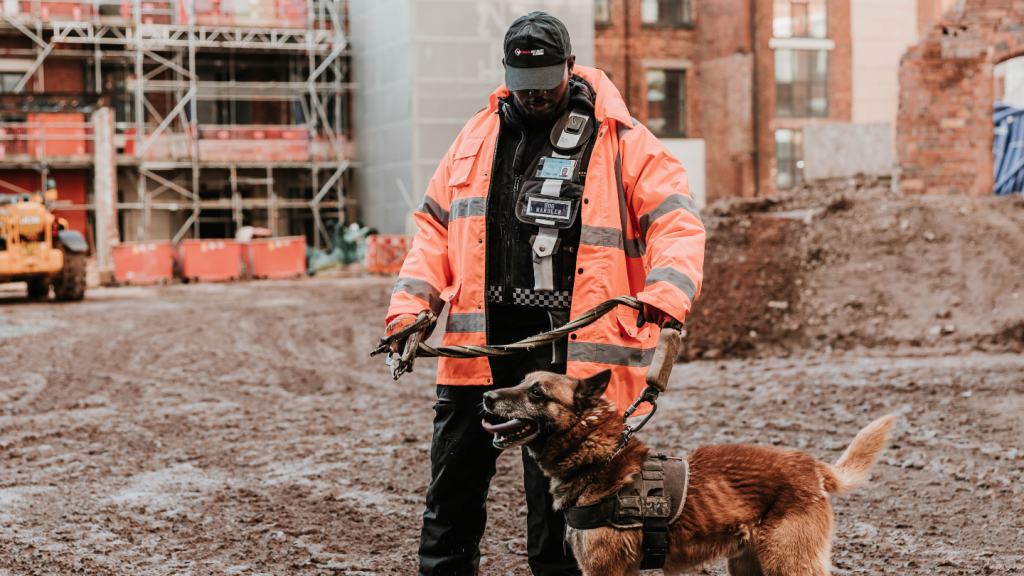
This is why many firms choose to outsource to specialist dog security services. Skilled teams pair each dog to the task, rather than assuming every dog can do every job.
Most Misconceptions Stem From Three Core Issues
First, both dogs are deployed for deterrence. On the surface, that makes them seem functionally equal. A visible dog on-site discourages trespassing. But deterrence is only half the operational story.
Second, procurement teams often receive advice from general security contractors, not canine specialists. That advice tends to simplify the role for speed of sale, not for regulatory clarity.
Third, there is also a gap between how protection dogs are sold and how the law and insurance companies see them. This gap creates hidden risk. A dog may be approved for use at the site but later rejected by the insurer. In some cases, this happens only after an incident.
This wrong classification often leads to three problems:
- Higher insurance costs
- Delays in license approval
- Disputes after a bite or security event
In a business setting, these delays cause real damage. Work may stop. Legal costs rise. Contracts may have to change. What starts as a small buying mistake often grows into a major budget and compliance issue.
Guard Dog Vs Protection Dog: Core Functional Differences
Primary Purpose in a Commercial Security Environment
Guard dogs and protection dogs exist for different security philosophies. A guard dog is a perimeter asset. Its core function is area control. It denies access through presence and alert behaviour. The dog’s role ends when it detects, signals, and intimidates. Engagement is not its primary job. Its strength lies in visibility and unpredictability.
A protection dog, by contrast, is a controlled response unit. It is trained to engage on command. Its purpose is not just to warn but to intervene when directed by a handler. This makes it suitable for scenarios where a direct threat response is required rather than simple deterrence.
From a procurement perspective, this difference shapes everything: staffing models, insurance classifications, and use-of-force documentation. One discourages crime through presence. The other participates in escalation management. That distinction matters most when incidents move beyond trespass into physical confrontation.
Level of Training and Handler Dependency
Guard dogs operate on conditioned territorial instincts reinforced by alert training. They patrol defined zones, react to intrusion, and display threat behaviour through barking, posture, and movement. Their handler involvement is minimal during active guarding cycles.
Protection dogs sit at the opposite end of the control spectrum. Their training includes:
- Advanced obedience
- Controlled bite work
- Threat recognition
- Immediate disengagement on command
They are not autonomous assets. They are extensions of a trained human handler. Without that handler present, a protection dog becomes an unmanaged liability rather than a security tool.
From a business standpoint, this creates a critical dependency. A guard dog can function as part of static site security. A protection dog requires a full-time, certified operator. Remove the handler, and your asset becomes unusable, or worse, non-compliant.
Procurement teams often underestimate this staffing obligation. They budget for the animal but not the professional control framework that must accompany it.
Risk Management and Liability Exposure
Liability does not attach equally to all security dogs. With guard dogs, risk centres on accidental contact: employees, delivery drivers, or unauthorised intruders entering a controlled zone. Most claims arise from unintentional bite incidents during perimeter breaches.
With protection dogs, liability is tied to intentional deployment. When a dog is commanded to engage, the business assumes a higher burden of justification. Use-of-force standards apply. The dog’s actions become part of the company’s defensive response record.
This distinction affects how insurers view claims. Guard dogs are typically classified as deterrent assets with moderate injury exposure. Protection dogs are classified as intervention tools with elevated bodily harm risk. The premium difference can be significant.
Public interaction compounds this exposure. Guard dogs are usually placed in restricted back-of-house zones. Protection dogs often operate near people, executives, security teams, or controlled public-facing spaces. The closer the animal is to civilians, the tighter the compliance expectations become.
Suitability by Business Type
Different facilities require different levels of canine involvement. Warehouses and logistics centres benefit most from guard dogs. Wide perimeters, controlled access points, and low public interaction make deterrence the priority.
Industrial plants follow a similar model, especially where equipment yards and storage zones require after-hours intrusion control more than personnel defence.
Retail and mixed-use commercial spaces face higher public interaction. Guard dogs are usually unsuitable during business hours. Protection dogs may be used only in high-threat scenarios with strict control protocols.
Farms and remote compounds rely almost entirely on perimeter defence. Guard dogs thrive here. Protection dogs add little extra value unless personnel face repeat, targeted threats.
Executive protection flips the logic. Here, asset defence is secondary to personal safety. Protection dogs justify their cost only when a documented threat profile exists.
Procurement value emerges not from the dog itself but from how accurately the role matches the exposure model of the facility.
Crime Deterrence vs Criminal Engagement
Guard dogs influence behaviour before a crime happens. Criminals assess visibility, noise risk, and unpredictability. A patrolling dog introduces all three. Most intrusion attempts stop before entry.
Protection dogs influence what happens after a threat is confirmed. Their deterrence comes from reputation and known capability. But their real value lies in controlled engagement when avoidance fails.
This difference defines escalation pathways. With guard dogs, escalation transitions from detection to human response. With protection dogs, escalation may involve direct physical intervention by the animal itself.
Legally, this affects reporting thresholds. Engagement triggers use-of-force reviews. Deterrence usually does not. For businesses, this difference determines not only legal exposure but also post-incident documentation, internal investigations, and regulatory notifications.
Cost of Ownership and Long-Term ROI
Upfront purchase cost tells only part of the financial story.
Guard dogs involve:
- Lower acquisition costs
- Basic refresher training
- Standard veterinary care
- Limited handler payroll
Protection dogs involve:
- Higher acquisition costs
- Continuous tactical training
- Specialised veterinary oversight
- Dedicated handler salaries
- Ongoing certification and recertification expenses
The ROI calculation shifts with risk level. In low-risk locations, the extra cost of a protection dog rarely leads to real savings from loss prevention. In high-risk locations, stopping even one serious incident can justify the higher cost for many years.
Buyers should compare costs against real past threats. They should not base decisions on worst-case fears that may never happen.
Regulatory & Compliance Considerations for Businesses
Guard dogs typically fall under general animal control and site security ordinances. Protection dogs may fall under:
- Regulated use-of-force categories
- Worker safety compliance audits
- Specialised licensing frameworks
- Mandatory handler certifications
Local laws often impose additional restrictions on attack-trained animals. Some jurisdictions require disclosure to labour authorities. Others impose operational limits during public access hours.
Audits become stricter when a dog’s training includes controlled aggression. Businesses that fail to document these elements properly risk fines, license delays, or forced removal of the animal after deployment.
From a compliance lens, the guard dog vs protection dog distinction directly alters your legal obligations.
Which One Is the Smarter Procurement Choice for Your Business?
There is no single “best” choice for every business. The right choice depends on risk, not personal opinion.
Low-risk areas like storage yards, warehouses, and closed industrial sites usually do better with guard dogs. These dogs stop entry, warn staff, and help avoid direct contact.
High-risk sites, such as executive offices or data centres, may need protection dogs. These locations need a fast and controlled physical response.
Fixed sites work best with guard dogs. Moving security teams need protection dogs. Buyers must also look at staffing. Protection dogs need skilled handlers. If trained handlers are hard to find or keep, the dog becomes a weak part of the security plan.
Many businesses later realise they planned for physical conflict but failed to plan for steady, daily deterrence.
Common Buying Mistakes Businesses Make When Choosing Security Dogs
The most frequent mistake is buying on price. A low upfront cost hides operational and insurance consequences later. Another repeat error is ignoring handler availability. Protection dogs without reliable handlers do not function as protection dogs at all.
Some businesses assume their existing security staff can “learn on the job.” That assumption collapses quickly under audit. Compliance and insurance are also underestimated. Policies may approve guard dogs automatically, but delay or deny coverage for protection dogs without additional documentation.
Finally, there is a persistent mismatch problem: deploying protection dogs where deterrence is sufficient, or using guard dogs in environments that demand controlled engagement. Both choices increase exposure rather than reduce it.
Procurement Checklist Before Investing in a Security Dog
Before issuing any purchase order, procurement should confirm:
- A documented site risk assessment
- Vendor credentials tied to the specific dog type
- Written insurance pre-approval
- Verified skill testing of the individual animal
- A post-deployment operating plan, including staffing and reporting
Skipping any of these steps turns a security asset into a compliance vulnerability.
Conclusion
Security dogs are not symbolic assets. They are operational instruments that carry legal, financial, and reputational consequences. The difference between deterrence and engagement defines everything that follows: training, staffing, insurance, and liability.
Understanding the functional divide between a guard dog vs protection dog before procurement prevents expensive corrections after deployment. The smart decision is not the most aggressive option. It is the one that mirrors your actual threat profile with the least regulatory friction. In commercial security, precision beats display every time.
FAQs
Is a guard dog or a protection dog better for warehouse security?
For most warehouse environments, guard dogs deliver stronger ROI due to their deterrence value and lower liability exposure.
Do protection dogs increase business liability compared to guard dogs?
Yes. Protection dogs carry higher use-of-force and bodily injury exposure. This directly affects insurance and legal review thresholds.
Can a guard dog legally be trained into a protection dog later?
In some jurisdictions, yes. But doing so often triggers new licensing, insurance reclassification, and handler certification requirements.
What certifications should a business demand when procuring protection dogs?
Handler licensing, bite control certification, behavioural assessment records, and ongoing compliance training documentation.
Do insurance companies treat guard dogs and protection dogs differently?
Yes. They are typically classified under different risk tiers with separate premium structures.