
Asset protection has always felt like a moving target. Some days, a site sits in total silence; nothing shifts, no alarms chirp, not a soul walks near the perimeter. Then out of nowhere, an incident appears, and that quiet stretch suddenly feels misleading. That unpredictability pushes businesses to look at how they secure their spaces.
Two approaches regularly end up on the table: trained K9 response teams and alarm-only systems. Their surface differences seem obvious, almost too obvious, but the deeper you go, the more they reveal about what each can realistically handle.
And when comparing K9 vs alarm only setups, procurement teams often discover that the “better” solution depends less on the tech or the animal and more on how each method interacts with the site’s daily life.
This article walks through both solutions, just the kind of practical detail that helps decision-makers think through real operational needs.
Table of Contents
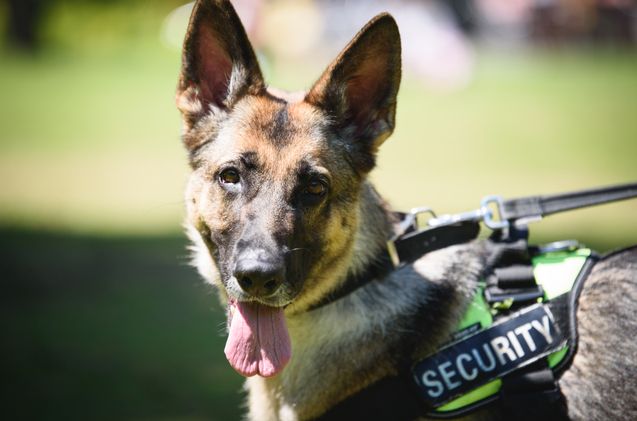
How Trained K9 Teams Strengthen On-Site Security Coverage
How K9 Security Teams Operate
K9 response teams pair trained dogs with professional handlers. They can work onsite, patrol in set intervals, or arrive on call as part of a rapid response model. Dogs sense things humans miss.
They detect shifts in scent, subtle vibrations in the environment, and movements outside the normal pattern. The handler adds judgment, context, and control. Together, they form a moving, adaptive line of defence.
Strengths of K9 Security Units
The first strength is intuition, or something close to it. Call it sensory advantage. A dog’s perception fills the gaps left by cameras and sensors. The second strength is simple visibility. A single patrol dog can discourage attempts before they start.
Their presence suggests unpredictability, and intruders rarely gamble with that. Finally, mobility matters. Open yards, uneven ground, and poorly lit corners become manageable when a K9 unit moves through them with purpose.
Limitations of K9 Security
There are boundaries. K9 units cost more to operate. The dogs need training, rest, and environmental conditions that won’t compromise their safety. Handlers must maintain strict control and follow legal guidelines. And like any living team, they have fatigue and weather limits. None of this disqualifies the method; it just adds layers to consider.
How Alarm-Only Systems Operate in Typical Environments
How Alarm-Only Systems Work
Alarm-only setups rely on sensors and triggers: movement, vibration, entry points, shock, and glass-break detection. When something activates the system, an alert goes out. Some alerts go to monitoring centres, while others go straight to the owner or designated contacts. There’s no onsite intervention built into the system; it simply reports what it sees.
Strengths of Alarm-Only Security
The appeal is clear. Alarm-only options are cost-efficient, predictable, and easy to deploy. Smaller facilities lean on them because they fit into existing layouts with minimal changes. Their integration with cameras and logs allows for tidy digital tracking. For many teams, they become the baseline layer: familiar, straightforward, and scalable.
Limitations of Alarm-Only Systems
Their limitation is structural. They cannot intervene. They only announce an issue. False alarms can happen from weather, debris movement, or wildlife. Response delays occur if the person receiving the alert isn’t close by. And deterrence value often depends on whether an intruder believes anyone will actually show up in time.
Limitations of Alarm-Only Systems
Their limitation is structural. They cannot intervene. They only announce an issue. False alarms can happen from weather, debris movement, or wildlife. Response delays occur if the person receiving the alert isn’t close by. And deterrence value often depends on whether an intruder believes anyone will actually show up in time.
K9 Response vs Alarm-Only Security — Which Protects Assets More Effectively?
Comparing these two approaches reveals more nuance than many teams expect. It helps to break the comparison into practical, procurement-friendly categories: deterrence, response time, incident handling, suitability for asset types, and adaptability. Each category exposes differences that matter in real incidents, not just on paper.
Direct Comparison Across Key Criteria
Deterrence:
K9 units bring something primal to a site. A barking dog, the sound of fast movement, or even a silhouette in low light can disrupt an intruder’s plan. People hesitate. They retreat. That physical, unpredictable element feels alive, and that alone is sometimes enough.
By contrast, alarm-only systems rely on the idea of consequences. An intruder hears the siren, and they run, or they don’t. Some call the bluff because nothing stops them immediately. Deterrence becomes psychological rather than physical.
Response Time:
K9 teams respond in the moment. If they’re onsite, the reaction is immediate. If they’re part of a mobilised response, they still move fast, with handlers trained to interpret the environment while closing distance.
Alarm-only systems depend on someone else responding, and that response varies. It might be five minutes, fifteen, or longer. Even a good response time introduces a gap where assets sit exposed, waiting.
Real-World Threat Handling:
A K9 unit can intercept. It can adjust movement patterns, confront intruders, or corner them until further help arrives. It doesn’t wait for confirmation. The dog senses, the handler decides, and action follows.
An alarm-only system doesn’t intervene at all. It records, notifies, and logs the event. If the intruder moves quickly, the alarm becomes a timestamp rather than a shield.
Suitability for Asset Types:
K9 units thrive in large, open areas. Think distribution yards, warehouses, transport hubs; any space where visibility drops and mobility matters. Dogs navigate the awkward spots: loading bays, blind corners, uneven outdoor surfaces.
Alarm-only setups work best in contained, predictable layouts. Offices. Small shops. Indoor environments where movement patterns stay controlled, and sensors can predict likely paths.
Adaptability:
K9 teams adapt on instinct. They react to micro-changes: a scent shift, a distant sound, a flicker in the environment. Their patrol patterns adjust by the second.
Alarm-only systems adapt through configuration: sensor placement, system updates, and monitoring integration. They don’t adjust themselves. They behave as programmed until someone reprograms them.
Effectiveness for Real Incidents
Incident logs often tell a familiar story: K9 units detect intruders before alarms trip. A dog picks up something such as scent, sound, or movement, before a sensor registers the event. That leads to shifts in the outcome.
Alarms, meanwhile, act as historians. They report what happened, sometimes as it happens, sometimes moments after. The delay isn’t a failure; it’s the nature of passive detection. But when intruders act fast, even a minute becomes a long stretch.
Risk Exposure & Liability Considerations
K9 teams carry unique risks. Handlers must make judgment calls, and incidents can escalate in unpredictable ways. The dog itself becomes part of the equation: a sentient, reactive presence.
Alarm-only systems avoid physical liability, but they expose the site to time risk. The longer it takes for help to arrive, the more an intruder can do.
Which Option Fits Which Use Case?
Patterns emerge across industries, even if they’re not strict rules:
- K9 units appear in open yards, large indoor-outdoor hybrid sites, places where assets sit in plain sight, and operations with extended off-hours.
- Alarm-only systems appear in small interiors, low-risk sites, and budget-tight environments.
These patterns help procurement teams see where each method naturally excels. Deciding between the two isn’t about which one “wins.” It’s about what the site needs to stay functional and safe. Both have strengths. Both have gaps.
And both behave differently under stress. In evaluating K9 vs alarm only, what matters most is how each method aligns with the site’s layout, its level of activity, and how much vulnerability the organisation can tolerate during an incident.
Cost Considerations for Procurement Teams
Upfront vs Ongoing Cost Breakdown
K9 setups involve handler training, dog care, operational routines, and compliance. Alarm-only systems come with hardware, installation, monitoring fees, and upkeep. One leans toward operational labour cost. The other blends equipment cost with recurring service fees. The difference becomes clearer when mapped over a multi-year contract.
Long-Term Value & ROI
ROI often appears in avoided losses. A K9 unit may prevent more incidents by interrupting them earlier. Alarm-only systems, while more affordable, may offer consistent protection at a lower intensity. Procurement teams weigh these outcomes against downtime risk, replacement costs, and the operational ripple effect of a breach.
Conclusion
Security decisions rarely feel tidy. They come with trade-offs, half-answers, and those uneasy “what if” moments that sit at the edge of every risk discussion. K9 and alarm-only systems both try to make that uncertainty a little smaller, just in different ways.
One relies on instinct, presence, and fast physical reactions. The other leans on structure, alerts, and technology that never gets tired or distracted. Some sites thrive with a dog roaming the perimeter at night, reading the air in a way no device can.
Others run smoothly with sensors humming in silence, waiting to announce the moment something breaks the pattern. Neither approach exists in a vacuum. They grow out of the environment they serve.
In many procurement conversations, decisions turn less on theory and more on the character of the site itself; how assets sit, how people move, how often nights feel uncertain. That’s where the nuance of these two methods shows itself.
It isn’t about declaring a winner. It’s about seeing the texture of the place, its rhythms, its weak corners, and choosing the approach that fits those realities without forcing them. A good security system doesn’t just sit there. It blends into the life of the site, responding in a way that feels natural when things go right and decisive when they don’t.
Whether that comes from a trained dog pausing at a sound or from a sensor ringing out an alert depends on what the site expects the world to throw at it. And sometimes, that’s the hardest part to predict.
FAQs
Is K9 security more effective than alarm-only systems?
It depends on the site. Physical presence and quick reaction give K9 teams an edge in active scenarios, while alarm systems deliver consistent detection.
What types of businesses benefit most from K9 response?
Large, open, or high-value environments often use them because mobility and early detection matter.
Are alarm-only systems enough for protecting outdoor assets?
They can be, but real effectiveness depends on response times and how exposed the assets are.
What factors should I consider when comparing K9 vs alarm only solutions?
Layout, asset sensitivity, hours of operation, and acceptable exposure time during incidents.
Does combining both methods offer better coverage?
Many organisations use layered approaches for broader protection, but the best fit depends on operational demands.