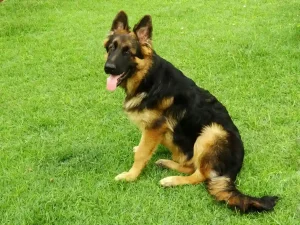
Working dogs occupy an unusual space in modern security work, part trusted partner, part high-value asset, and entirely shaped by the jobs we ask them to perform. Procurement teams sometimes reduce them to “capability units,” yet anyone who has watched a dog work knows the truth is messier and far more interesting.
Patrol dogs and detection dogs may wear similar vests, but their roles are split in ways that change everything from deployment strategy to risk calculus.
Patrol dogs lean into presence and readiness. They project deterrence before they ever make a sound. Detection dogs take the opposite route. They follow scent trails most people never notice, piecing together clues with quiet focus.
So, when organisations weigh mission needs, the question isn’t “patrol dog vs detection dog, which is better?” but “which fits the job in front of us?” This article unpacks that distinction, without the assumptions.
Table of Contents
What Are Patrol Dogs?
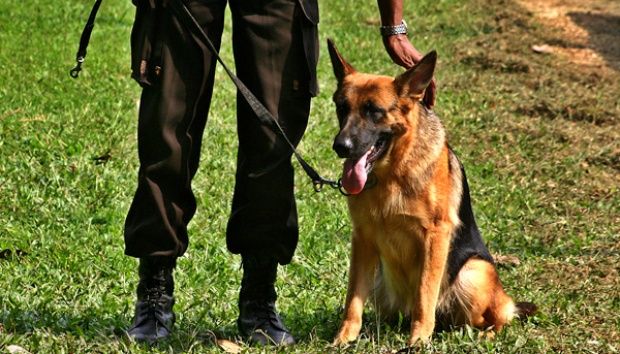
Patrol dogs occupy a demanding slice of the working-dog world, closer to the frontline than most people realise. Their tasks aren’t tidy checklists. They’re shifting combinations of area defence, crowd disruption, suspect pursuit, and sudden intervention when a handler needs protection.
One moment they’re pacing a quiet perimeter, the next they’re navigating a press of bodies or a dark alley where lighting, noise, and human behaviour all tilt unpredictably. It’s controlled chaos, and they’re expected to read it faster than we do.
Although people often talk about them as “deterrents,” that word undersells them. Yes, their presence can stop a situation from spiralling, but they’re also trained to move from stillness to decisive action with almost no delay, if the handler gives the green light. Impulse isn’t welcome here. Deliberate action is.
Key Skills and Training Focus
Training for patrol dogs ends up looking like an odd mix of sport conditioning, discipline work, and rapid-decision problem solving. Obedience is the baseline, yes, but the real shaping happens in the messy drills.
The mock urban chases, the doorway squeezes, the loud, echoing spaces where a lesser dog would hesitate. A capable patrol dog can feel the pressure rise and still stay anchored.
Aggression control is its own specialised lane. Everything hinges on accuracy: bite only on command, let go the instant the handler calls it, switch from tracking to holding without hesitation, and, occasionally, the hardest part, stay put when restraint is the smarter tactic.
Agility ties the rest together. These dogs climb, launch, weave, crawl, and adjust mid-stride with the poise of trained athletes, not pets.
Typical Working Breeds
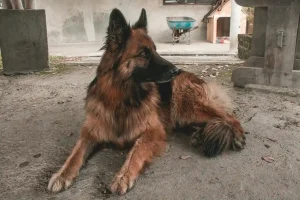
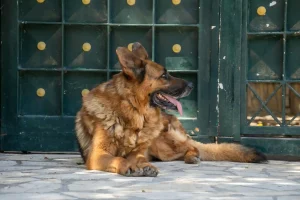
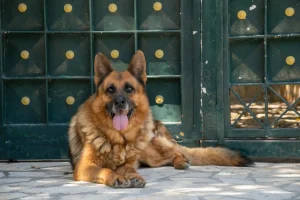
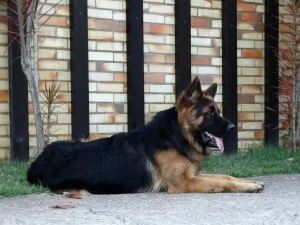
A few breeds consistently meet the bar: German Shepherds, Belgian Malinois, and Dutch Shepherds, high-drive, sharp-minded dogs that can follow complex directions without losing pace or focus.
What Are Detection Dogs?
Detection dogs work in a very different rhythm from patrol units, quieter, more deliberate, almost analytical in how they scan a room or open space. Their world revolves around scent, but not in the casual “good noses” way people like to mention.
These dogs can sift microscopic odour threads out of a haze of fuel vapour, foot traffic, dust, food smells, the whole sensory clutter. A single trained dog can pluck a target scent from what feels, to us, like pure atmospheric chaos. It’s remarkable, and honestly, a bit disarming when you see it up close.
Their range is broad: narcotics, explosives, contraband, biological traces, human remains, disaster victims. If it leaves a scent footprint, there’s probably a dog that can learn to track it.
Specialised Training Approaches
Their training bears almost no resemblance to the high-adrenaline patrol style. Everything here pivots on calm precision. Scent imprinting comes first, teaching the dog which odour matters and what the “I found it” signal looks like, whether that’s a stillness, a sit, or a quiet stare.
Trainers then toss them into busy, unpredictable settings: humming airports, freight bays, open ground, cramped corners. Focus is praised; overexcitement is filtered out. They run on stamina and curiosity, not confrontation.
Common Breeds Used
Labrador Retrievers, Springer Spaniels, and Beagles dominate detection roles. They combine a strong nose with steady temperaments and the stamina to repeat searches day after day.
Patrol Dog vs Detection Dog — A Detailed Comparison
Differences in Purpose and Operational Environments
Patrol dogs and detection dogs may share training fields early on, but the paths split quickly once their roles take shape. Patrol dogs are thrown into the protective spectrum, jobs where deterrence, presence, and fast reactions matter more than subtlety.
One day it’s a crowded street, the next a perimeter breach at dusk, or a volatile entry where the air feels thick before anything even happens. Their world is restless by design.
Detection dogs work a different beat entirely. They lean into investigation and prevention, not confrontation. Most of their deployments unfold in structured spaces, airports, customs lanes, freight corridors, and secure checkpoints.
Some end up in disaster zones, picking through rubble for survivors or remains, but even there their job is to find, not to challenge. In short, patrol dogs shape the immediate physical landscape. Detection dogs illuminate what’s hidden within it.
Training Requirements and Skill Development
Patrol dog training feels almost paramilitary: agility drills, controlled engagement scenarios, bite work, tracking, and handler-guarding sequences. Noise, movement, unpredictable behaviour: they’re taught to stay centred when everything else tilts off-balance.
Detection dog training pivots toward cognition. These dogs build vast scent libraries, mapping odours the way analysts map data. They practise structured search patterns, long-duration focus, and consistent indication signals. Motivation is reward-driven, with accuracy above all.
Both rely on strong obedience and tight handler rapport, but the emphasis diverges. Patrol dogs refine physical command, while detection dogs sharpen sensory and analytical skills.
Behaviour and Temperament Variations
Temperament determines suitability more than breed alone. Patrol dogs must be confident, assertive, and responsive under pressure. They cannot be easily startled or overly submissive. Their intensity must be high yet controlled.
Detection dogs are almost the inverse in temperament. They benefit from patience, curiosity, and lower reactivity. Calm persistence is far more valuable than physical bravado. A dog that becomes overstimulated is less effective when passing through crowds or tight inspection zones.
Selection teams often evaluate prey drive, hunt drive, environmental comfort, and behavioural maturity before assigning a dog to one path or the other.
Advantages and Limitations of Each Type
Patrol Dog Advantages:
- Strong visual deterrence
- Ability to apprehend suspects
- High tactical utility
- Effective in dynamic, high-risk environments
Patrol Dog Limitations:
- Not suited for subtle investigative tasks
- Higher physical strain and shorter service life
- Requires intensive ongoing conditioning
Detection Dog Advantages:
- Extremely precise in identifying target scents
- Safe for public-facing environments
- Valuable for investigative and preventative operations
- Longer potential working lifespan
Detection Dog Limitations:
- Cannot engage suspects
- Limited use in immediate threat response
- Performance is highly dependent on environmental conditions
For procurement teams, these distinctions shape deployment strategy and capability planning.
Ideal Use Cases Across Law Enforcement, Military, and Security Fields
Patrol dogs perform well in riot control, base security, night patrols, border incident response, and tactical entry operations. Their value emerges where physical deterrence or confrontation may occur.
Detection dogs excel in narcotics units, bomb squads, customs agencies, and search-and-rescue teams. They provide clarity, sometimes the kind that influences critical decisions.
Many agencies deploy both together. A patrol dog may secure an area while a detection dog searches it. The layered approach often produces the strongest operational outcome.
Choosing the Right Dog Type for Your Operational Needs
Assessment of Mission Requirements
A procurement process should begin with a candid review of mission demands. Are teams managing high-threat zones? Is the primary challenge contraband, explosive risk, or missing persons? Do operations require active deterrence or precise detection?
Understanding environment, threat level, and operational patterns prevents misalignment between capability and need.
Handler Expertise and Training Resources
Even the best dog cannot compensate for insufficient handler training. Patrol dog teams require structured, ongoing tactical conditioning. Detection dog teams need regular scent catalogue refreshers, environmental drills, and performance validation.
Organisations must match their internal training infrastructure with the capability they expect the dog to deliver.
Long-Term Deployment Considerations
Working dogs represent long-term commitments. Costs extend beyond acquisition: equipment, veterinary care, nutrition, re-certification, and eventual retirement planning all matter. Patrol dogs may retire earlier due to physical wear, while detection dogs often serve for longer periods, although still requiring consistent care and operational checks.
Environmental adaptability is another factor. Hot regions, cold regions, and high-altitude bases; each influences breed performance and welfare.
Conclusion
Patrol dogs and detection dogs are separate tools in the same kit. One protects the frame; the other scans the contents. Both save time, money, and lives when matched to mission needs and supported by trained handlers and ongoing investment.
Procurement should be deliberate: map requirements, verify handler capability, and plan for sustainment. When you build teams thoughtfully, mixing patrol presence with detection precision, you reduce blind spots and increase operational flexibility.
That is practical procurement with measurable impact. And yes: dogs still outperform many machines in messy, human environments. They bring intuition, speed, and trust to complex problems.
FAQs
Can the same dog be trained for both patrol and detection work?
Rarely at scale. Dual-role dogs need exceptional genetics and elite training; maintenance is demanding.
Which dog type is better for high-risk law enforcement tasks?
Patrol dogs. They’re built for deterrence and rapid engagement, the kind of moments where hesitation can cost time or safety.
Are detection dogs trained to attack?
No. Their training rewards locating and signalling, not confrontation.
What determines whether a dog becomes patrol or detection?
Temperament tests, prey/drive assessment, scent inclination, and handler evaluation.
Do patrol dogs retire earlier than detection dogs?
Often yes; physical strain shortens patrol careers, while detection roles can extend with good care.