When companies think about security spend, most people picture hardware: cameras, gates, lights, alarms. The usual suspects. But a surprising number of organisations, distribution hubs, retail chains, and manufacturing plants still rely on something far more instinctive and, in many cases, more efficient: trained security dogs.
K9 teams have been around for decades, yet only in the past few years have finance teams started asking tougher questions about them. Not “Are they effective?” but “Show me the numbers.”
And that’s the shift worth paying attention to. Security is no longer viewed as an unavoidable cost. It’s treated like any other investment. If something can protect assets, reduce losses, or shave off operational waste, procurement wants measurable proof.
In this guide, we’ll break down, step by step, how businesses evaluate the financial value of using security dogs. Not vague claims. Not anecdotal stories. Actual cost factors, ROI models, and decision-making frameworks. If you’re weighing K9 security for your site or preparing a business case for leadership, these are the numbers that matter.
Table of Contents
Why Businesses Use Security Dogs as a Cost-Effective Protection Method
Strengths of K9 Security Compared to Other Security Measures
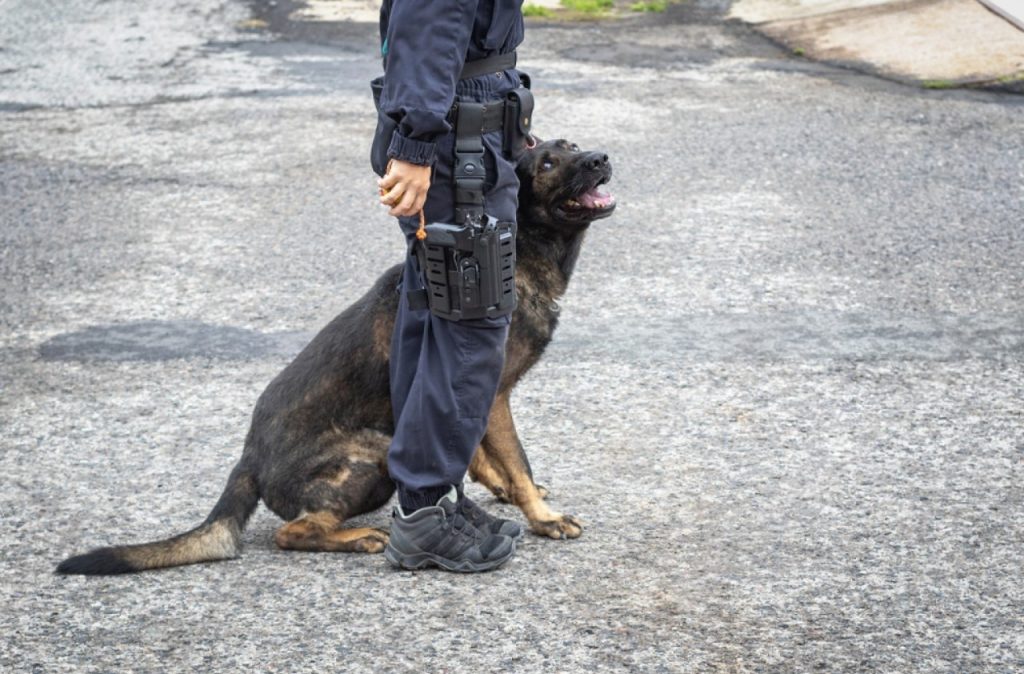
A well-trained security dog does something no camera or sensor can do: it changes behaviour the moment a threat spots it. There’s an instinctive deterrent effect that’s hard to quantify but impossible to ignore.
One K9 pair can sweep broad areas faster than static guards and respond to movement long before technology would trigger an alert. Throw in mobility, patrolling yards, warehouses, or large outdoor zones, and the comparison becomes clearer.
Many companies realise they’d need several guards or clusters of CCTV just to replicate what a single K9 team can cover.
Direct and Indirect Benefits Driving Financial Decisions
Beyond deterrence, K9 units influence the numbers in quieter ways. They prevent theft that otherwise chips away at margins. They trigger faster responses, which means fewer disruptions and shorter downtime.
Insurance providers take note of this, often reducing premiums when K9 teams are on site. And in industries where safety standards matter, like logistics, fuel depots, or food manufacturing, using trained dogs can help strengthen compliance audits and rating scores. These aren’t “soft perks.” They shape budgets, risks, and operating costs.
Key Cost Factors Companies Consider Before Investing in K9 Teams
Upfront Procurement Costs
Before a business signs any contract, procurement teams map out every upfront cost: contracting specialised K9 providers, handler certification, deployment setup, site risk assessments, and onboarding.
Some models use long-term contracts; others use flexible deployments. The cost depends on the type of dog, the number of handlers needed, and the operational hours required.
Operational & Maintenance Costs
Once operational, firms account for recurring expenses: handler wages, dog welfare and veterinary care, transport, specialist equipment, and ongoing training. Certification isn’t one-and-done; dogs and handlers must stay current. These aren’t hidden costs. Just essential to keeping the unit compliant and effective.
Risk Profile & Environmental Considerations
A company’s risk environment heavily influences the final cost. Sites storing high-value goods, operating large outdoor perimeters, or dealing with regular trespassing incidents often need more frequent patrols. Factors like site layout, past incidents, and industry regulations all push the calculation in different directions.
How to Calculate Value K9 Security
Understanding ROI Models Used by Businesses
Most organisations apply a standard ROI model to security decisions, even if the variables feel a bit different. They look at the cost of deploying a K9 unit versus the measurable financial gains: fewer losses, fewer incidents, smoother operations.
Some use payback periods to determine how long it takes for savings to outweigh spending. Larger companies may apply a risk-adjusted model, where expected savings are weighted based on the probability of incidents.
Calculating Savings From Reduced Losses, Damages & Incidents
Theft reduction is the clearest starting point. If a warehouse once lost £10,000 a month in shrinkage but now loses £3,000 with K9 patrols, the savings speak for themselves. Add in vandalism prevention, repairs avoided, downtime avoided, and the numbers build quickly.
Some businesses run before-and-after comparisons using incident logs. The pattern is usually obvious: fewer break-ins, shorter response times, and fewer operational delays.
Comparing K9 Security ROI to Alternative Security Options
Most procurement teams compare K9 costs to the price of hiring additional guards or expanding CCTV systems. A K9 pair may cover the same ground as three or four guards. Cameras don’t intervene; they only record. When companies weigh hourly coverage, effectiveness, and response speed, dogs often turn out to be the more economical choice.
Financial Value of Using Security Dogs
Incident Prevention as Measurable Financial Gain
Every incident has a price tag. Firms track damaged stock, stolen goods, delays, and emergency call-outs. When K9 teams arrive on site, these numbers usually drop. Dogs spot movement faster than technology, giving handlers a chance to intercept intruders before damage is done.
Businesses assign financial value by looking at previous incidents, what they cost then, and comparing them with current numbers. A reduction of even a few incidents per quarter can add up to tens of thousands saved.
Operational Efficiency & Reduced Staffing Needs
Many managers don’t realise this until the numbers sit side by side: one K9 team can replace multiple static guards. Not because dogs “work harder,” but because they cover ground differently. They move with speed and awareness. This means fewer guard posts, fewer overtime hours, and fewer duplication costs.
When procurement teams model hourly costs, the ratio shifts. Instead of paying several staff members to patrol, a company pays for one skilled team that performs the work more effectively. It’s leaner and often safer.
Insurance Premium Reductions & Compliance Benefits
Insurance firms like predictable risk. When businesses add K9 units to their security strategy, insurers see a lower likelihood of claims related to break-ins, vandalism, or inventory damage. That often translates to cheaper premiums.
In sectors with compliance audits, food, medical, and critical infrastructure, K9 teams also strengthen overall safety scores. When auditors see enhanced security controls, it supports certification requirements. Fewer claims and stronger compliance equal direct financial value.
Value of Faster Incident Response & Liability Reduction
A fast response makes the difference between a minor disruption and a major financial hit. Dogs detect threats by scent and sound long before alarms would trigger. That early warning gives handlers time to intervene.
Businesses measure this in avoided downtime, fewer injury claims, and lower legal costs. Consider a simple example: a trespasser enters a yard. Without K9 teams, response might take 10 minutes. With dogs on site, it takes 30 seconds. That difference can prevent a full shutdown or major asset loss.
Reputation Protection & Client Trust
A security incident doesn’t just hurt the balance sheet. It dents credibility. Clients worry. Staff morale drops. In competitive sectors, one bad incident can cost future contracts. Companies estimate this “reputation cost” by looking at client retention rates, contract values, or the time required to rebuild trust.
Keeping incidents low through K9 patrols helps protect the brand. It’s a financial benefit, even if the number sits outside a traditional spreadsheet.
How Procurement Teams Justify and Approve K9 Security Investments
Creating a Financial Proposal or Internal Business Case
Procurement teams build business cases using past incident logs, the value of assets on-site, the expected reduction in losses, and projected ROI. They include comparisons with alternative security options and outline what happens financially if no action is taken.
Vendor Selection: Evaluating K9 Providers
When selecting providers, buyers check licensing, training standards, handler experience, insurance coverage, and past deployment success. A reliable provider offers transparent metrics before deployment begins.
KPIs to Track After Implementation
Businesses monitor: incident reduction, cost-per-coverage-hour, and response time improvements. These KPIs help refine deployment and optimise ongoing value.
Conclusion
K9 security is sometimes seen as an old method, but the numbers show it still works. When businesses look closely at their data, lower losses, fewer staff hours, and smoother insurance talks, they often realise security dogs bring steady, measurable value.
These are real savings that appear in each financial quarter. Their mix of mobility, strong deterrence, and fast response gives K9 teams an advantage that many modern tools cannot match.
For procurement teams, the best approach is simple: treat K9 security like any other investment. Review the results each year, check the ROI, and adjust the plan based on incident trends. Monitoring the data helps the value grow over time.
FAQs
How do companies calculate ROI for security dog services?
They compare deployment costs with measurable savings, lower theft, fewer incidents, reduced downtime, and insurance changes. Most use incident logs and before-and-after comparisons to quantify the financial impact.
Are security dogs more cost-effective than CCTV or guards?
Often, yes. One K9 team can cover the work of several guards, while CCTV systems usually need human monitoring. When companies compare total coverage costs, dogs frequently offer stronger value.
How quickly can businesses see financial benefits from K9 security?
Some see improvements within weeks, especially in high-risk sites. Shrinkage drops, incident reports fall, and patrol efficiency improves. Larger financial gains become clearer after several months of data.
Do insurance companies really lower premiums for using K9 units?
Many do. Insurers value stronger security controls and may reduce premiums when risk exposure decreases. Savings vary by provider, industry, and incident history.
What industries get the highest financial value from security dog deployment?
Warehousing, logistics, retail distribution, construction, and manufacturing often see the best returns. High-value assets, large sites, and frequent trespassing make K9 units especially effective.