Rising security costs have turned procurement into a pressure chamber. Every line on a budget now gets questioned. Every hour billed needs a reason to exist. And yet, the old habit remains: many teams still default to static guards because that’s how it’s always been done. But when security teams face tighter margins and bigger risks, habit becomes expensive.
Across many sectors, one thing has become clearer: hourly rates alone tell only half the story. Buyers are now expected to justify spend through impact, not just presence. This is where K9 patrols start to look very different.
While their headline cost may seem higher at first glance, the financial picture changes once ROI becomes the metric, not the clock. This article explores why K9 patrol ROI, when analysed through procurement standards, often deliver significantly more value than traditional static guarding.
Table of Contents

Understanding ROI Within Security Procurement
ROI in security is a strange creature. It isn’t about how much you spend, but what that spend prevents, improves, and stabilises. The usual pillars still matter, reduced losses, fewer disruptions, and less downtime, but in a security setting, ROI stretches further.
It includes incident avoidance, rapid response, coverage efficiency, and the long-term effect of fewer claims or site issues.
Buyers often fall into the trap of comparing hourly rates rather than operational outputs. A guard on a fixed post looks cost-effective on paper, yet that picture blurs once you factor in blind spots, delayed detection, fatigue, and coverage gaps.
On the other hand, K9 teams bring a different type of capability, one that shifts incident probability itself.
Many procurement teams also assume K9 patrols are “specialist add-ons,” rather than frontline assets. That misconception skews cost comparisons before they even start. A more accurate framework assesses how many risks are avoided, how much ground is covered, and how predictable the long-term cost structure is. When judged with those procurement-ready metrics, K9 patrol ROI tends to tilt upward.
Why K9 Patrols Offer a Higher ROI Than Traditional Static Guarding
Superior Deterrence Reduces Incident Costs
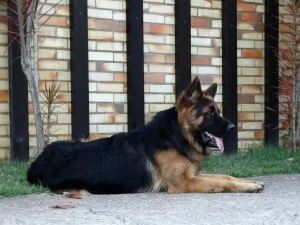
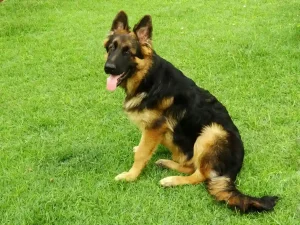
A K9 unit changes the atmosphere of a site the moment it walks in. It’s not subtle, either. People instinctively react to dogs in a way they don’t to uniformed guards. This behavioural deterrence plays a huge role in ROI. When the likelihood of misconduct drops, your cost of managing misconduct drops with it.
Vandalism, nighttime trespassing, and opportunistic theft are often crimes of convenience. A highly visible dog, alert and responsive, strips that convenience away. That alone can reduce the cascade of costs linked to damages: emergency call-outs, insurance conversations (never fun), and the inevitable downtime while things get fixed.
Static guards rely almost entirely on visibility and authority. A K9 team adds instinct, speed, and a very real physical deterrent. It’s this layered deterrence, part psychological, part practical, that makes such a measurable difference in incident-related spending.
Expanded Coverage Lowers Required Headcount
One thing that surprises many buyers: a single K9 team can manage the same footprint that would take several static guards to cover. The difference is mobility. K9 teams move with intent, sweeping large spaces without the slow drift that often comes with manual patrols.
This shift in coverage dynamics changes staffing needs. Fewer overlapping posts. Fewer duplicated hours. Less need to insert additional guards simply because certain areas “feel exposed.” Over time, that reduction in headcount translates into leaner, more predictable budgets.
In procurement terms, this is classic consolidation, achieving the same operational outcome with fewer resource allocations. And unlike cutting personnel in other settings, this isn’t a compromise. It’s an upgrade in capability.
Faster Threat Detection Minimises Operational Disruptions
Dogs detect what humans miss. It’s as simple as that. Their senses pick up movement, scent, and unusual patterns long before a human guard can process them. That matters when you’re trying to keep operations running smoothly, especially in environments where a small disruption can snowball into expensive stoppages.
Fast detection means breaches get contained early. It means equipment doesn’t go missing without a trace. It means unauthorised access gets flagged before it turns into a full-blown incident. The financial difference between a handled alert and an unchecked breach can be significant, sometimes shockingly so.
Static guards, no matter how skilled, have limits. Fatigue, weather conditions, and visibility all play roles. K9 teams offset those limitations, strengthening the probability that threats get identified at the earliest possible stage.
Increased Patrol Efficiency Improves Resource Allocation
Efficiency in security isn’t glamorous, but it’s important. K9 patrols move with purpose. Their routes stretch wider. Their pace remains consistent. They rarely leave the kind of “dead zones” that form when a lone guard tries to manage an oversized perimeter.
This efficiency has ripple effects on resource allocation. Sites often lean on additional measures such as CCTV monitoring hours, rapid response contracts, and temporary guard boosts because their primary guarding model leaves gaps. K9 patrols tighten those gaps. And when the primary layer becomes more reliable, secondary layers don’t need to overcompensate.
From a procurement standpoint, this is a simple equation: better output per hour purchased. It’s not about working harder; it’s about working in a way that reduces the need for add-ons that inflate budgets.
Long-Term Cost Predictability for Buyers
One of the quieter advantages of K9 patrols is cost stability. Many K9 service models offer predictable long-term planning structures, allowing procurement teams to forecast with fewer surprises. Static guarding, by contrast, faces frequent turbulence, turnover, training gaps, sick cover, and variable performance.
These fluctuations create inconsistent cost patterns. K9 units often operate within more structured service frameworks, which means fewer unexpected spends and less time shuffling schedules to make up for shortages.
Cost Comparison Framework for Procurement Teams
Comparing K9 patrols and static guarding isn’t as simple as lining up hourly rates. A fair comparison needs a structured framework, one that weighs performance, prevention, and operational impact.
Start with coverage value. How much ground can one resource realistically cover, and how confidently? A K9 unit often removes the need for multiple guards, which changes the staffing equation entirely.
Next, consider incident reduction. Buyers should look at the patterns: how often issues occur, what they cost to fix, and how those patterns shift when deterrence and detection improve.
Another key factor is the multi-guard replacement ratio. If you need three static guards to achieve what one K9 team handles, the hourly comparison flips on its head.
Then assess equipment vs. integration. Static guarding models often require extra support through surveillance or reaction teams. K9 patrols integrate some of that capability into a single unit.
Finally, examine the total cost of ownership (TCO), the full financial picture across a year or contract cycle. This includes turnover, training, emergency call-outs, and the cost of incidents themselves. A model with fewer unknowns often produces a stronger ROI.
Use Cases Where K9 Patrols Consistently Deliver Higher ROI
Some environments naturally favour K9 patrols due to size, layout, or risk profile. Logistics yards, for example, can be vast and cluttered, making full visibility tough for static guards. A dog’s mobility and sensory range change the game there.
Distribution centres benefit from rapid detection and deterrence, especially around loading areas where expensive stock moves in and out. Construction sites face a different challenge, open boundaries, tools, and materials that attract opportunistic crime. K9 patrols reduce that risk window.
Large outdoor facilities, from energy plants to agricultural sites, need broad, dynamic coverage. Static posts struggle. Event perimeters also see strong ROI because crowd behaviour shifts dramatically when a dog team is present. In each case, the environment amplifies the strengths of K9 patrols, producing consistent cost advantages.
Conclusion
When procurement teams compare security models with ROI as their compass, the advantages of K9 patrols become clearer. They deter more, cover more, detect more, and create operational stability that static guarding often can’t match.
Cost-per-hour may start the conversation, but real value lies in prevention, capability, and resource efficiency. Viewed through that lens, K9 patrol ROI delivers a stronger, more reliable return on the investment made, one that aligns with both operational needs and long-term financial planning.
FAQs
Do K9 patrols actually cost more than static guards?
Not necessarily. The hourly line item might seem steeper at first glance, but that figure doesn’t tell the whole story. Once you account for how much ground a K9 team covers and how many issues they prevent, the numbers start to shift. In lots of cases, one dog-and-handler team replaces several static guards. Fewer people on rota, fewer overlapping posts, the budget starts breathing again.
How do K9 teams improve ROI in practical terms?
They shut down problems early, sometimes before anyone even realises something was about to happen. That cuts back on the usual headache list: insurance wrangling, emergency call-outs, operational slowdowns. Add in broader coverage and quicker responses, and you often need fewer “booster” measures to plug gaps. That’s where the return quietly stacks up.
Are K9 patrols suitable for all types of sites?
Not every location needs a working dog, no. Some sites are compact or low-risk enough that static guarding is fine. But places with long boundaries, open access points, or costly assets tend to get more value. Logistics yards, building sites, and wide outdoor estates, these environments play to a K9’s strengths.
Why are K9 units more effective at deterrence than static guards?
It’s a human thing, really. People react to dogs in a way they don’t to a uniform alone. A trained K9 brings a type of presence that feels instinctive, subtle, but unmistakable. That extra psychological pressure stops a lot of opportunistic behaviour before it even starts, long before a guard has to step in.