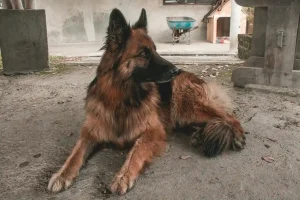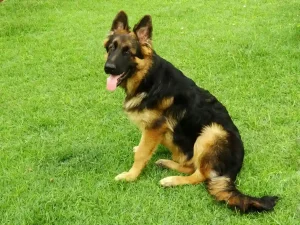
On some nights, a site feels too still to be dangerous. Forklifts sit silent. Yard gates tap against the wind. Sodium lights hum over stacked pallets. Then the patrol dog beside you freezes mid-step. His ribs lift, nostrils fluttering, as if tugged by something invisible. You scan the fence line, no footprints, no broken locks, nothing worth noting. Yet he leans forward, tail rigid, already sure.
That quiet shift is often the first sign that dog micro scent tracking has picked up an intruder’s fading trail. It reminds handlers that even the smallest airborne human scent particles can rewrite the night.
Table of Contents

Understanding the Science Behind Micro-Scents
What Micro-Scents Actually Consist Of
Micro-scents are not floating smell clouds drifting across a site. They are microscopic human fragments, shed skin cells, sweat vapours, fibres from clothing, traces of detergents, cosmetics, or even a person’s microbial signature. Humans release tens of thousands of skin particles every minute, yet they scatter invisibly. Carried by air currents, they collide with dust, settle on steel racks, cling to concrete, or collect in sheltered pockets between buildings.
These fragments form the raw material behind dog micro scent tracking, even when no physical evidence remains.
How Micro-Scents Become Trackable Clues
Dogs interpret these trace scent signatures with remarkable accuracy. Their olfactory system sorts airborne molecules long before a handler senses any change. In real security environments, these tiny scent particulates behave like hidden breadcrumbs pooling near machinery heat, drifting through low-pressure zones, or hanging above gravel yards where airflow slows.
Even more striking, some patrol dogs recognise odour concentrations measured in parts per trillion. So a single human fragment across an airfield still has meaning, enabling ecological scent navigation where cameras and lighting can’t.
Why Large Sites Challenge Micro-Scent Tracking
If microscents were stable, following them would be simple. But vast sites complicate scent behaviour. Ports, distribution hubs, airfields, and retail parks act like miniature weather systems. Air moves differently between stacked cargo, open parking bays, and corrugated steel warehouses. Diesel exhaust, chemical residues, standing water, or food waste all produce competing scent structures. Dogs must filter those ambient odours without losing the intruder’s trace-odour pursuit.
Wind changes everything. A light crosswind can drag scent forty metres off the original path. Thermal lift near loading docks pushes molecules upwards at midday and drops them again after sunset. Metals reflect heat, changing how particles move over time. Sand and asphalt absorb scent differently, releasing it back into the air at unpredictable intervals.
This is why experienced handlers remind new teams: dogs are not following footprints. They are mapping scent movement where it drifted, settled, swirled, separated, or stalled. Large sites turn microscents into puzzles, but well-trained patrol dogs recognise scent plume behaviour and respond accordingly.
How Patrol Dogs Read Micro-Scent Plumes
The Shift Into Detection Mode
Dogs don’t march in straight lines like search grid diagrams suggest. Their bodies switch into detection mode long before handlers consciously notice. The sniffing cadence changes to shorter bursts and faster inhalations because the dog needs continuous sampling. A dog might sweep a Z-pattern across a yard, gathering data about whether airborne human scent particles thicken or fade.
Why Dogs Follow Plume Edges, Not Centres
Micro-scent plumes behave like rivers. The centre often contains older or more dispersed particles, but edges reveal motion. So dogs drift toward those edges, tracking not where scent is strongest, but where it leads. The most skilled patrol dogs prefer movement over intensity.
Stereo Olfaction and Olfactory Mapping
Each nostril takes in slightly different information, a feature called stereo olfaction. It lets dogs measure directional shifts in scent concentration within milliseconds. Their brain performs olfactory mapping, layering environmental scent dynamics with air pressure, temperature, and the tiny turbulence caused by passing vehicles. Handlers have described it as watching the dog draw a moving blueprint nobody else can see.
Recognising “Fresh” Odour Molecules
Some encounters highlight how advanced this sensing is. One late-winter shift, a patrol dog and handler were checking a logistics yard backed by woodland. The dog paused at a forklift bay, clearly detecting human odour. The scent pool was strong, almost too obvious. Instead of committing, the dog peeled left and moved toward an open storage lane. The handler followed, confused at first until the dog located a fresh supply of particles pushed under a gate by shifting wind. The intruder never stepped near that bay. The stronger scent was older, trapped in still air, while the fainter stream was new.
This ability to weigh scent age gives security teams a moving timestamp. Dogs don’t just detect someone; they sense when.
Working With Scent Cones and Turbulence
Some dogs also respond to scent cones, triangular zones of dispersal where odour molecules spread outward from the origin. When scent collapses at crossroads or near alley-like passageways, dogs circle, reset, inhale deeper, and re-establish direction based on plume edge tracking. Watching them work reminds you that intrusion-based scent detection is both a science and a craft.
The Handler’s Role Without Interfering
The handler’s job is not to lead. It is to observe without bias. Experienced handlers stay behind the dog’s decision line and avoid pulling or nudging, because human assumptions often ruin ecological scent navigation. Many intruders take unpredictable paths through drainage gullies, around offices, or between stacked timber, and the dog knows this long before the flashlight catches up.
A tiny head tilt, a tail flick, or a slight shift in breathing may indicate a scent plume splitting into multiple currents. The handler must be patient enough to let the dog solve the interference. Silence helps. Vocal encouragement can distract, making the dog prioritise handler expectations instead of field-validated scent tracking.
Good handlers also maintain awareness of environmental scent dynamics, wind direction, machinery heat, and building layouts. They position themselves so they do not contaminate the area with their own scent, especially in tight corners.
A Real-World Example of Micro-Scent Intelligence
At a warehouse perimeter in the Midlands, security footage picked up nothing. No alarms triggered. Yet one roll door had been tampered with. Responding officers assumed the intruder escaped through the vehicle gate. The patrol dog disagreed. He ignored the gate completely and walked past stacked timber, nose low, following particles drifting in a lazy arc.
Wind had bounced the human scent plume off a metal container and pushed it behind the building. The intruder had actually climbed the fence, then paused long enough to leave a denser cluster of airborne human scent particles before cutting across a scrub patch. The dog found the exact entry point, even though tyre tracks and torch beams revealed nothing.
The takeaway wasn’t dramatic arrests or cinematic tension. It was simple: micro-scents travel according to physics, not intuition. Dogs track where the scent went, not where humans think intruders should have walked.
Why Technology Can’t Replace Micro-Scent Tracking
Most modern sites rely on CCTV, drones, perimeter sensors, motion detectors, and thermal imaging. These tools are useful, but they observe moments. They capture presence, movement, or anomalies, not intention, path history, or exit strategy.
Patrol dogs excel because they interpret time. They analyse scent age, direction, dispersal pattern, and human behaviour embedded in odour molecules. No camera can identify whether an intruder paused, turned back, panicked, or ran. Dogs can. Micro-scent intelligence narrows search zones faster than wide-area surveillance sweeps. It adds context, not just detection.
Technology and dogs aren’t competitors. They form complementary layers of security, each addressing limitations the other cannot. And until machines can decode dispersed scent plume behaviour, dogs remain irreplaceable.
Closing Knowledge Takeaway
When working across large industrial environments, skilled patrol dogs are more than guardians. They are environmental analysts, turning fragmented odour molecules into actionable movement patterns. Dog micro scent tracking proves that even the smallest airborne traces can protect vast spaces when interpreted correctly.
As this knowledge hub grows, we’ll explore how scent ages, how night-time cooling reshapes odour currents, and why overlapping human scents don’t confuse well-trained patrol dogs. For now, it’s worth remembering one simple truth: the dog already knows someone was there long before the rest of us catch up.
Frequently Asked Questions
1. What are microscents in security environments?
They’re tiny human scent fragments—skin cells, sweat vapours, clothing fibres—that linger across large sites and become trackable clues.
2. How far can patrol dogs follow microscents?
Distance varies with wind, terrain, and temperature, but some dogs follow dispersed scent trails across airfields, ports, or logistics yards.
3. Why is dog micro scent tracking effective at night?
Cooler, calmer air often slows scent dispersal, allowing dogs to read direction and age more clearly.
4. Can technology replace scent-tracking dogs?
Not yet. Cameras show where someone is or was, and dogs interpret movement, intention, and exit routes through odour.
5. Do handlers guide the dog during tracking?
Only when necessary. Skilled handlers observe, avoid influencing decisions, and let the scent lead the search.