A quiet site can shift in seconds. One moment, heavy equipment rests under the night sky, still and silent. The next, a fence rattles, a latch clicks, or a shadow slips between machines. For people responsible for high-value assets, this switch is never theoretical. Machinery can vanish fast, and thieves know how to move with speed and confidence.
We look at the real-time chain of actions that unfold the instant a K9 security for machinery. In 2024, theft of agricultural machinery, equipment, and vehicles in the UK cost an estimated £44.1 million, according to NFU Mutual. This blog tells what happens when a trained patrol dog is on the ground instead of a passive sensor.
Table of Contents
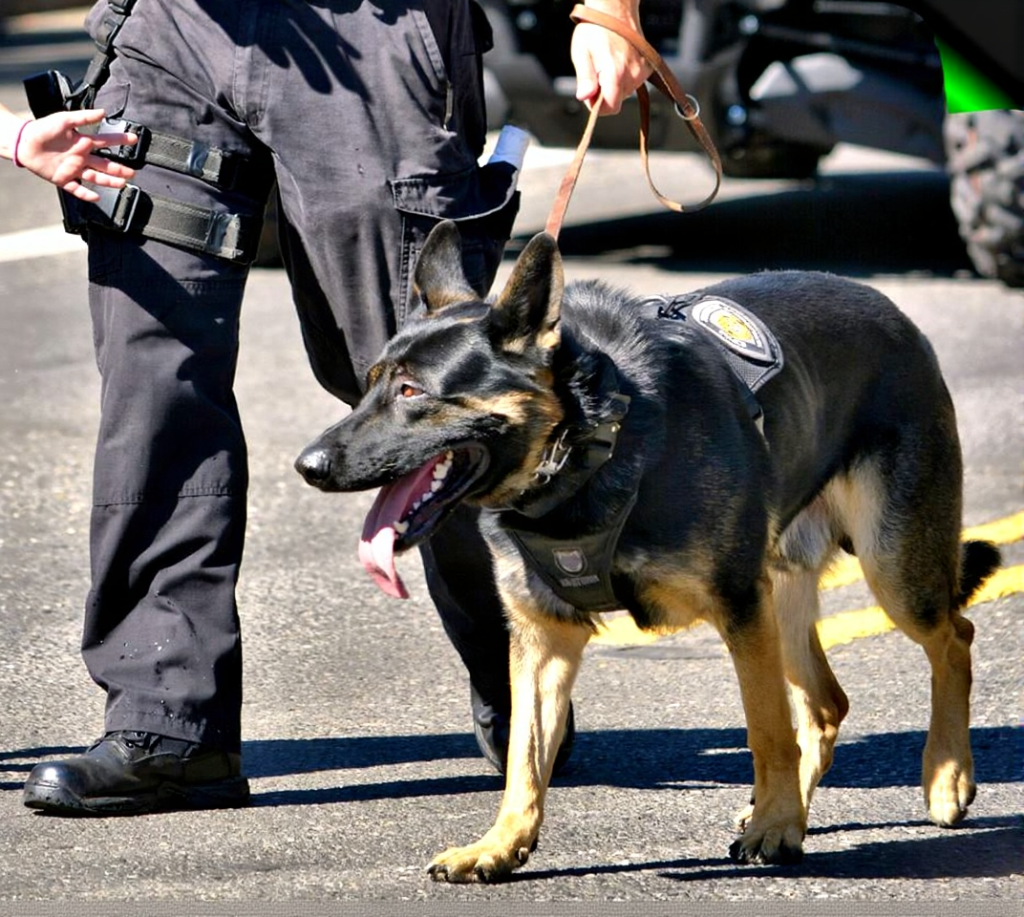
The Initial Engagement: The K9 Security for Machinery
Before a crowbar touches a panel or a thief even reaches the cab, the dog is already working. While sensors focus on triggers, a K9 reads the entire environment at once. This early warning stage is where patrol dogs outperform mechanical systems.
The Acoustic Filter: Distinguishing Threat from Noise
Industrial sites hum with background noise. Wind knocks loose sheet metal. A truck downshifts on a nearby road. A strap clinks against a scaffold frame. To people, these sounds blur together. To a trained patrol dog, they sort like files. The dog filters each one, dropping the useless tones and isolating a new pattern.
A creak from a locked excavator door. A foot grinding into loose gravel where no one should be standing. A low scrape of a tool against a fuel cap. Dogs trained for industrial site surveillance recognise minor anomalies before any alarm trips. This acoustic focus is deliberate, sharpened through drills. It teaches the dog to move only when the sound suggests a true intrusion. This means no false charges and no wasted energy.
Olfactory Lock: Detecting Adrenaline and Fuel Vapours
Then comes the second sense: smell. Adrenaline has a scent. Stress leaves a chemical trace. Fuel spills, tool lubricant, and the human odour in clothes carries through the air. While a thief creeps toward a machine, the dog already knows an unfamiliar person is present. Even from across a yard, the K9 can angle its body toward the source and begin subtle, silent movement.
This olfactory lock gives the dog an advantage that mechanical systems can’t mimic. The K9 isn’t waiting for contact. It’s tracking intent. Once that scent hits, interception becomes a matter of timing.
The Tactical Intercept and Immediate Deterrence
When a thief approaches a heavy machine, they assume they have a few seconds to work. A dog removes that window. The moment detection turns into certainty, the K9 shifts from observation to action. Thereby, the intruder’s plan breaks apart.
Vectoring and Closing the Gap to the Asset
The K9 does not race. It calculates. Training teaches the dog to determine the path the intruder must follow to reach the machine. Instead of running straight at the person, the dog moves in a line that blocks access to the asset. This is vectoring, choosing the route that protects the equipment first.
If the intruder tries to circle the machine or truck, the dog forces them away from the ignition area. This is where construction site theft prevention becomes real, hands-on action. The dog’s goal is simple: keep the thief off the machine, no matter which direction they try to approach. This fast, precise intercept turns “seconds to steal” into “nowhere to go.”
The Psychological Decibel: The Impact of the Alert Bark
Once the dog has visual confirmation, you hear something no thief wants. The thief will be aimed exactly. It is not a simple bark. It is a deep, controlled, cracking warning designed to hit with force. The sound stops intruders cold because it sends a message: “You are identified. You are not reaching that machine.”
This alert bark is not random noise. It’s trained. It’s timed. It’s loud enough to rattle the intruder’s confidence and fast enough to freeze them. This happens before they make a move on the controls. Most thieves fold at this moment. They back away or run because the animal has broken their plan before they even knew the dog was present.
Containment and Handler Communication
Not every intruder flees. Some hesitate, unsure whether to surrender or attempt a new approach. This is where the K9’s discipline becomes crucial. The dog does not bite on impulse, nor does it abandon position. It shifts into containment mode, steady, unwavering, and ready.
Establishing the Proximity Line: K9 security for machinery
The K9 now forms a physical boundary. It keeps itself between the intruder and the machine. This lets the pacing in small arcs that force the person backwards. But do not escalate unless necessary. The dog’s training tells it exactly how close the intruder is allowed to come. This proximity line is strict. If the person moves inward, the dog pushes forward. If they retreat, the dog maintains the gap. At no point does the intruder get near the controls. In 2024, theft of agricultural machinery, equipment, and vehicles in the UK cost an estimated £44.1 million, according to NFU Mutual.
This defensive stance is one of the most valuable parts of guard dog training. The dog becomes the shield, holding the intruder at a safe distance. This also helps to prevent any tampering. No buttons pressed, no hoses cut, no ignition wires touched.
The Handler’s Role: Confirm, Communicate, and Control
Meanwhile, the handler is moving. They receive the dog’s alert, confirm the presence of the intruder, and maintain distance. The K9 security for machinery keeps the threat limited. This lets the handler call for backup. They also secure the site entry points and communicate with law enforcement. This prevents rushing into the danger zone.
This teamwork is deliberate. The handler doesn’t need to stand over the equipment or argue with the intruder. Instead, the dog holds the line, and the handler builds the perimeter. This division of roles is what makes containment effective. The dog offers control without exposure. The handler provides a strategy without risk.
Strategic Justification: Preventing Loss vs. Insuring Loss
Theft isn’t about the machine itself. It’s about the ripple effect. Especially when it comes to risk management teams, rental companies, and equipment owners. A stolen excavator means crews standing idle and the deadlines pushed back.
Zero Downtime: The True ROI of Real-Time Prevention
When a K9 stops a theft, it also stops deductible payments and equipment replacements. It also avoids rental delays and long repair queues. You keep the project moving, the budget intact, and the timeline stable. This is the true value of high-value asset protection. It helps in replacing machines after they disappear. But keeps them exactly where they belong so operations never stop.
Conclusion and Next Steps
From the faint sound to the containment stance, a patrol dog delivers a layered defence. Such a defence cannot match mechanical systems. Detection begins before alarms activate. Intercept happens before the thief reaches the controls. Containment holds the intruder at bay until people arrive to finish the job.
Detection, Intercept, and Containment are the phases that define K9 units. It remains one of the strongest protective measures for machinery on active sites.
To understand the training and deployment strategies, get in touch. Visit our comprehensive guide to K9 Security for Machinery.