Perimeters are not what they used to be. Threats come fast in the form of teams, inside helpers, and tech-savvy thieves. Alarms shout, cameras watch, and static guards sit. Yet holes remain. Cameras can lose night detail. Alarms trigger from wind or wildlife. A lone guard can only be in one place at a time.
K9 security for perimeter control brings motion and sense. A dog smells what a camera cannot see. A dog hears what an alarm cannot explain. Handlers read behaviour. Together, they act fast. They move where trouble is likely. They check an alarm before people spend hours and money chasing a false lead.
Table of Contents
The Modern Perimeter Challenge: Why Static Defence Fails
Static defence is a layer. It works for simple risks. But modern attacks are layered. Teams probe weak spots and spoof sensors. They use diversion and timing. A camera may miss a masked figure in the shrub line. A motion sensor may flag a stray animal at night. A lone guard may be distracted or outside the line of sight.
That gap is where losses happen. Loss is not only goods stolen. It is the time wasted, the alarms called in, and the shaken trust. Static guards and basic sensors give you coverage. They rarely give rapid verification and active pursuit at the same time.
K9 security for perimeter control: A Hybrid Force Multiplier
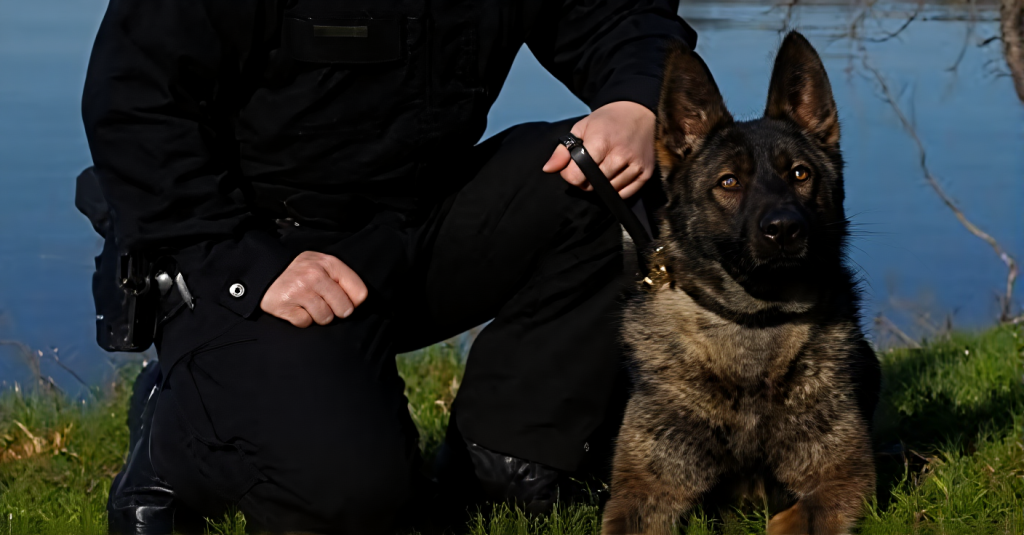
K9 teams do two jobs at once. They are a live sensor and a first responder. They move fast. They sense odours, hear small sounds, and read human intent. That combination makes them ideal to pair with tech. Send a dog team to check a camera alert. Let the handler work with the control room. Use the K9 unit to verify an alarm before dispatching a full team.
This hybrid approach multiplies force. It does not mean replacing tech. It means letting dogs and systems work in step. The K9 team gives you quick, local answers. That saves time and money. It also lowers the risk to staff and assets.
K9s as the “Smart Sensor” and Response Layer
Dogs are not toys, but tuned tools. Their noses and ears are organic sensors. They pick up tiny traces of scent and small noises that machines often miss. This makes them ideal for bridging the gap between detection and action.
Bridging the Gap Between AI Detection and Human Response
AI video and radar find patterns. They flag motion and shapes. But they produce noise. A camera sees heat. A radar sees movement. Dogs smell what lies beneath that noise. Studies show that trained dogs can detect volatile compounds at very low concentrations. It occurs at parts-per-trillion levels for some odour types. This is far beyond human ability and often beyond simple electronic sniffers. This gives handlers a fast cue that an alert is real or false.
Data-Driven Deployment: K9 Integration with Digital Systems
K9 teams do not wander. Patrols can be routed with data. Feed AI alerts, radar sweeps, and thermal blips into a command layer. The system marks hotspots. Handlers get a push. The team moves to the right gate, fence line, or yard section.
GPS vests show the dog’s path. Body cameras record the check. The handler notes time, findings, and any scent trails. This data loops back. Patrol maps get smarter. Routes change with risk. The result is fewer blind spots and faster confirmation.
Modern sites already use this. Integrations let an alarm become a guided mission. One K9 team can be re-tasked during a shift to cover the riskiest areas first.
Achieving “Silent Alarm Verification”
False alarms cost money. They cost patrol hours and patrol vehicles. They also reduce trust in systems. K9 security for perimeter control can reach an alarm quickly and check it shortly. If the dog shows no signs, the event is likely an environmental false alarm.
If the dog alerts, the handler can act with confidence. That quick check reduces unnecessary dispatches. It helps security teams keep their focus on real incidents. Field reports show that adding K9s to verification saves operational hours.
Functional Model of a K9 security for perimeter control
Cost is where decisions get made. K9 units ask for investment. They also give returns that are not always obvious at first glance. Think coverage, speed, and loss reduction, not hourly wages.
Justifying K9 Investment: ROI Beyond Labour Substitution
One K9 team covers ground fast. Industry reports often show that a single K9 team can match the patrol value of many static guards. It happens especially at night or across rough terrain. K9 teams move quickly, pursue a suspect, and secure a scene. The numbers often favour canine deployment over extra static posts. Firms find that a single K9 team can replace static guards for perimeter patrol roles.
To build a simple ROI, compare these lines:
- Cost of two static posts per night vs. the price of one handler + dog shift.
- Loss is avoided when an attempt is stopped, rather than the cost of a false alarm call-out.
- Downtime is saved when a quick verification avoids a full site lockdown.
When you run these numbers over a year, the K9 program often shows payback in reduced losses.
Risk Mitigation and Insurance Cost Reduction
A strong K9 program also shifts the risk profile. Insurers view visible, proven deterrents as part of loss control. Some operators report lower premiums after formal K9 deployment and documented protocols. Exact savings depend on policy and region; documented security programs support better terms. And it also brings fewer penalties after an incident. Keep clear logs, evidence from body cams, and routine audits to make that case to your carrier.
Case Study: K9 Effectiveness in High-Value Logistics Sites
At logistics hubs, value is dense and time is critical. One service operator that works with airports and cargo lines tracks losses. It also tracks the delay before and after K9 teams go on patrol. Within months, reports noted marked drops in opportunistic theft and faster recovery. Firms with K9 cover spelt out clear reductions in lost shipments and incident cycles. These gains translate into fewer claims, lower handling costs, and happier clients. This is why facility owners often favour a K9 overlay to electronic fences at cargo yards.
Advanced Deployment Scenarios for Critical Perimeters
K9 teams fit many profiles. The trick is to place them where their skills matter most.
The Three Layers of K9 Defence
Deterrent. Dogs on visible patrol change behaviour. People think twice. A K9 security for perimeter control at the main fence is a real-time warning.
Tracker. If a breach happens, dogs follow scent lines. They work across scrub, uneven ground, and cluttered yards. Tech may lose a trail where a dog keeps going strong.
Search & Clearance. After a confirmed intrusion, K9 teams sweep warehouses and yards. They clear aisles and stacks faster than a slow foot search. That lets staff resume work sooner and limits inventory checks.
These three functions form a single, flexible playbook. You can scale them for big sites or use a small team for night-time coverage.
Ensuring Compliance: The K9 Audit Trail
In data-sensitive areas, trust and proof matter. Modern handlers use GPS vests, body cameras, and integrated logging tools. Every patrol can generate a tamper-proof record. It includes patrol routes, timestamps, video clips, handler notes, and scent confirmations. That audit trail helps in court, in insurance talks, and in internal reviews. It turns a dog team from a tacit defence into a verifiable security asset.
Vetting Your K9 Program Partner
K9 programs are as good as their trainers. Do not buy a dog on price alone.
Beyond Basic Training: Focus on Scenario-Based Certifications
Look for partners who certify dogs in real tasks. It covers urban tracking, yard clearance, and noisy-site searches. The dog must work with a handler who can read behaviour and file clear reports. Scenario-based drills show skill under stress. Insist on documentation and periodic re-testing.
Legal Governance: K9 Use-of-Force Policies
A good program has rules. It should state how and when a dog is required. It should include warnings and de-escalation steps. Handlers must know the law. Your vendor should hand over policies, training logs, and incident reports. That reduces legal risk and keeps your site on the right side of governance.
Conclusion & Next Steps
K9 teams are not an old trick. They are a smart, active layer that fits next to cameras, AI, and fences. They verify, pursue, and deter in ways machines and fixed guards cannot match. For many modern sites, that mix is the difference between a costly incident and a stopped attempt.