People talk about intuition as if it’s a rare gift. Dogs live inside it. Their world is shaped by tiny cues we shrug off, and that difference lets them see trouble before it shows its face.
Dogs sense aggressive intent by sensing the tremors hidden under a calm surface. They catch the shift in tone, the tightened breath and the stance that looks safe until the moment it changes. These clues gather in a flash. Dogs read them faster than we decide what to think. Nothing mystical. Just instinct, sharpened by time, shaped by experience, and alive in every step they take beside us.
Table of Contents
Understanding the Foundations of Canine Instinct
Evolutionary Roots Behind Their Protective Behaviour
Long before fenced homes or polished floors, early dogs watched the shadows around human fires. Survival depended on seeing danger in half-formed movements, in the tension of someone stepping closer with the wrong intent.
Those ancient choices of who to trust and who to challenge still sit deep in modern dogs. Even in quiet rooms or busy pavements, their eyes flick to the slightest shift. They judge posture the way we judge words, and the instinct is older than language.
Sensory Systems Built for Detection
Humans navigate with sight first and everything else later. Dogs don’t work that way. They absorb the world through layers: scent drifting ahead of footsteps, sound settling before movement, a visual flicker confirming what the nose already knew.
Their senses overlap, almost stacking on top of one another. That cross-checking creates a sharp picture of intent long before we notice anything at all. They aren’t guessing. They’re analysing.
The Science Behind How Dogs Sense Aggressive Intent
Reading Micro-Signals in Human Body Language
A person trying not to look threatening often reveals more than someone who isn’t thinking about it at all. Dogs spot that disconnect fast. Tense shoulders, uneven pacing, and a quick inhale before speaking each tell a story.
Even the stillness people slip into when trying to control anger rings strange to a dog. They see the stiffness that doesn’t fit the moment. They hear the footfall that lands just a little too heavy for comfort. Their sense of wrongness isn’t dramatic. It’s precise, and this is one way dogs sense aggressive intent without needing a single spoken word.
Detecting Stress Chemistry and Emotional State
Emotions leak into the air. Adrenaline and cortisol carry a scent that shifts when someone’s fear turns sharp or their anger spikes. Research has shown that dogs can distinguish human stress through changes in breath and body odour, even when no visible behaviour has changed.
Dogs register those changes almost instantly. They build associations: this smell paired with raised voices, that smell paired with tense arguments. Over time, those patterns settle into memory. A dog may not understand the science behind a hormone, but it knows what the body feels like when something isn’t right.
Pattern Recognition Through Experience
Even untrained dogs learn by watching. Repetition writes clues into their minds: the hurried tone someone uses before acting out, the strange pause before a confrontation, a step that breaks rhythm.
Trained dogs refine it further. They catalogue behaviour the way a seasoned guard reads a room. Their response grows sharper, quicker, and surprisingly intuitive, as if they’ve seen the moment unfold long before it arrives.
Intuitive Responses When Dogs Sense Dangerous Energy
The Shift From Observation to Guard Mode
The transition is subtle. A dog that was relaxed suddenly angles its body, lowers its weight, or narrows its focus. The tail may stiffen, the ears sharpen, the breath slow to a steady beat. That shift isn’t random; it’s a calculation. The dog is mapping the threat, tracking its movement, measuring the space between action and reaction.
When Dogs Choose Intervention
A warning often comes first, a low vibration in the throat, a bark used like a line drawn across a floor. Engagement only appears when instinct and training say there’s no room left for hesitation. Well-trained dogs don’t jump toward chaos; they move with purpose. Instinct gives them the signal. Training gives them control.
Factors That Influence Threat Detection Accuracy
Breed Differences and Temperament
Certain breeds carry instincts like a second heartbeat. Working-line dogs, built for decision-making and pressure, handle threat detection with a steadiness that companion breeds rarely display. Temperament matters as much as lineage. A confident dog evaluates. A nervous dog reacts too fast. The right mix of drive and nerve strength makes threat detection reliable.
Training That Sharpens Their Natural Instincts
Training chisels away confusion. Through controlled exposure, obedience practice, and environmental challenges, dogs learn when to hold still and when to act. They stop responding to meaningless noise. They pay attention to patterns that matter. The result is a level of accuracy rooted in clarity, not guesswork.
Handler Influence and Bonding
A dog tuned to its handler works almost like a mirror. Calm handler, calm dog. Tense handler, heightened alertness. Trust strengthens that connection. Over time, the dog reads not only the environment but the emotional pulse of the person beside it. That link sets the tone for every decision it makes.
Misinterpretations: When Dogs React to Non-Threatening Signals
Understanding Over-Arousal or Misread Cues
Not all reactions point toward danger. Sometimes the world throws a lot at once: a hand waving too fast, a loud laugh in a quiet space, a gust catching someone’s coat just wrong. Dogs trace meaning through these moments but may misread them if nerves and instinct fire together. Context becomes the compass, anchoring instinct in reality.
How Training Reduces Incorrect Threat Reads
Well-managed exposure teaches dogs to separate noise from intent. Crowds, machinery, unpredictable movement, these become familiar. They learn that not every quick step signals hostility. Handlers guide them, reinforcing patience, sharpening focus. With repetition, misreads fade, replaced by confident judgment.
Why Security Teams Rely on This Instinct
Early Detection That Technology Cannot Replicate
Cameras see what is there. Dogs sense what’s coming. Before aggression becomes visible, it reshapes posture, breath, and scent. Dogs pick up those shifts with startling accuracy. They warn before escalation. That early insight closes gaps technology can’t reach.
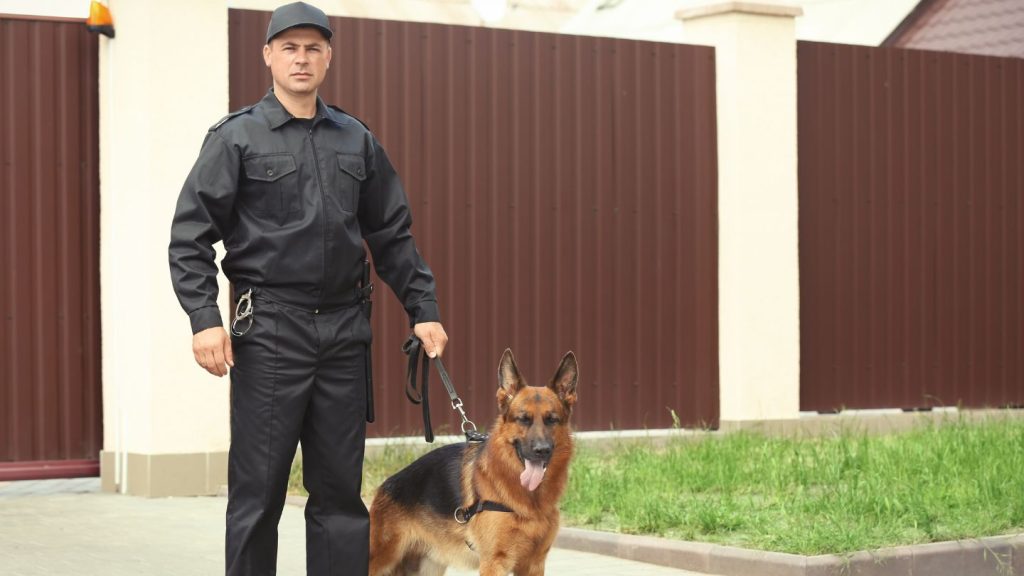
This is why professional dog security services are used in environments where early judgment matters more than reaction time, such as events, transport routes, and sites where escalation carries real consequences.
Proven Real-World Applications
In busy events, dogs weave through movement yet still catch the off-beat energy that signals trouble. On isolated routes, they stand as both sentinel and guide. In tense environments, they notice individuals who try too hard to seem relaxed. Again and again, handlers tell the same story: the dog reacted first and was right.
Conclusion
When dogs sense aggressive intent, they aren’t tapping into superstition. They’re reading the world with precision shaped over centuries. A tightening breath, a chemical shift, a stance that doesn’t match the moment, these details form a code they crack without effort. Dogs act before danger hardens into action, giving people time they often don’t recognise they need. Their instincts remain one of the strongest early-warning systems available, especially when paired with steady training and a handler who understands their signals. That shared awareness creates a shield built not from force, but from insight.
Frequently Asked Questions
1. Can dogs really sense danger before it happens?
Yes. Their senses track micro-signals and emotional cues long before obvious behaviour appears.
2. Do trained dogs detect aggressive intent better than untrained dogs?
Training boosts accuracy by reducing confusion and honing instinct into a reliable assessment.
3. What signals do dogs look for when assessing intent?
Tension in movement, scent changes, tone shifts, stillness, and unusual pacing all play a part.
4. Why do some people trigger defensive behaviour even without harmful intent?
Nervousness, unfamiliar scent, awkward posture, or inconsistent body language can mimic threat patterns.
5. Can dogs misjudge aggression, and how is this corrected?
Yes, but structured training, guided exposure, and handler consistency reduce these errors dramatically.