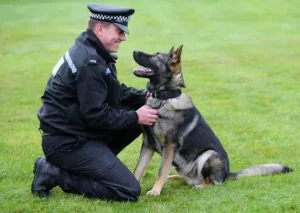
University gates and main entrances are odd places. They are thresholds between public life and campus life. People pass through, wait, and groups gather. In those simple moments, small things can spiral into nuisance behaviour, loud shouting, loitering, intimidation, or minor damage. It is rarely planned and often opportunistic.
That is why the idea that dog deter student behaviour matters. A dog’s presence shifts the scene before anyone needs to speak. It alters choices and pauses momentum. This piece looks at how and why dogs change behaviour at entrances, without turning a campus into a closed place or a guarded fortress.
No heavy policy talk. No policing rhetoric. Just an observation about how presence, posture and instinct change what people decide to do.
Table of Contents
Understanding Anti-Social Behaviour Around University Entrances
Why Campus Entrances Attract Low-Level Disorder
Entrance areas draw people in for reasons that have nothing to do with access. Waiting, drop-offs, and late-night movement all collect in one place. When tiredness and alcohol mix, minor issues are more likely to be tested.
Testing is the keyword. People probe boundaries to see what sticks. They test whether anyone cares or if they can get away with it.
Behavioural Testing, Not Criminal Intent
Many incidents begin as experiments rather than intent. A rude gesture or careless action checks the response. When the cues change, the behaviour usually fades.
This aligns with how anti-social behaviour is described in UK guidance, where disruption and nuisance are often situational rather than planned offences.
How Physical Presence Influences Human Behaviour
Visibility Changes Choices Before Action
When someone feels observed, they tend to adjust. It happens fast. It is not dramatic. Uniformed presence changes behaviour without a word spoken. Small pauses like these often stop situations from escalating further.
Presence is prevention. It nudges decisions away from harm.
Why Predictable Security Loses Impact
Predictability weakens deterrence. If a post is always in the same place, people learn the pattern. If a patrol moves on a clock, it becomes a mark to avoid, not a deterrent. On the other hand, dynamic presence keeps behaviour uncertain. However, uncertainty reduces testing.
How Dogs Deter Student Behaviour at University Entrances
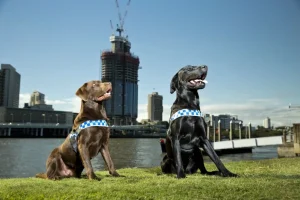
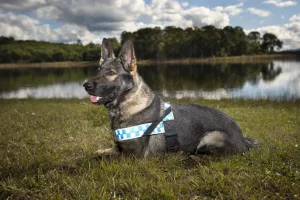
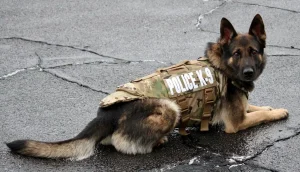
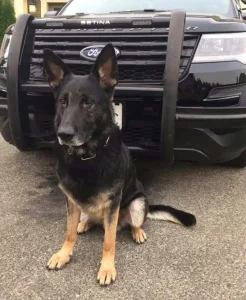
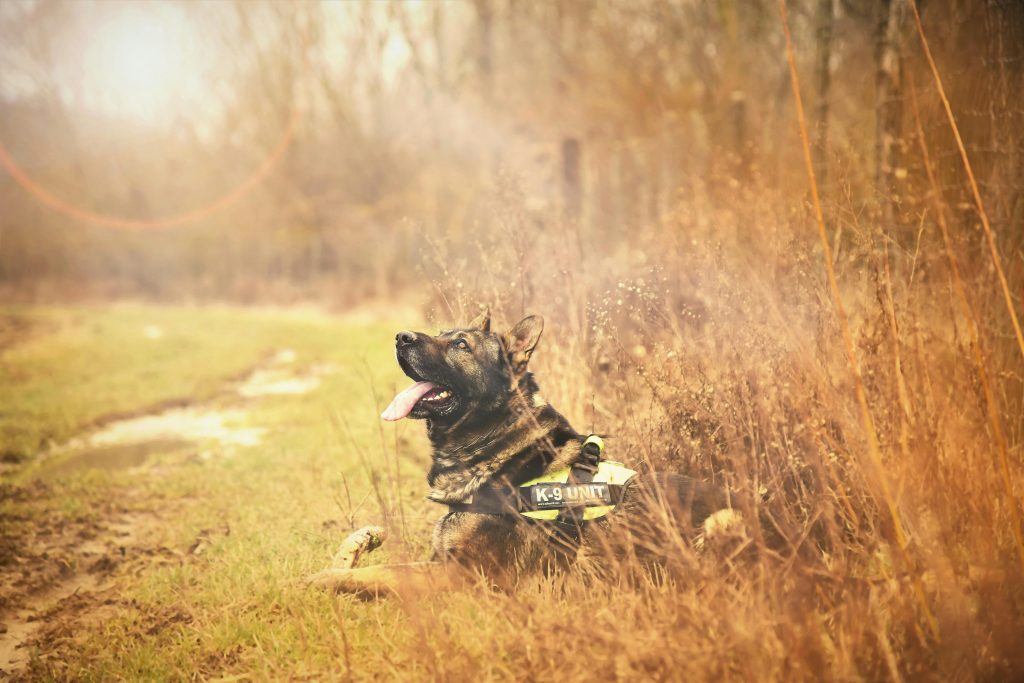
Dogs influence behaviour without issuing commands. They do not enforce rules or correct actions. Instead, they change how a space feels the moment they arrive. At university entrances, where behaviour forms quickly and informally, that shift matters.
Anti-social behaviour near campuses is rarely planned. It grows from noise, numbers, and anonymity. Dogs interrupt that process early. Their presence slows movement, conversations drop, and groups loosen. What looked like the start of a problem often dissolves before it settles.
This is the practical reality behind how dog deter student behaviour works in open academic environments. The effect happens before any engagement, instruction, or intervention.
Dogs as Behavioural Interruptions, Not Enforcement Tools
A dog creates a pause. That pause is the intervention.
Dogs trigger instinctive reactions. Their calm stance and attention show that awareness is present in the moment.
This awareness breaks behavioural momentum. Small acts that rely on blending in lose their cover. Lingering feels less comfortable. Raised voices feel unnecessary. The behaviour that depends on anonymity fades once that anonymity disappears.
Unlike enforcement, this interruption carries no accusation. There is nothing to argue with. No rule has been cited. The moment simply shifts.
Why Dogs Deter Without Direct Engagement
Dogs shape space without controlling it. Groups naturally give them room. Individuals adjust their path without being asked. This quiet reorganisation reduces congestion at entrances, which is often where behaviour tips from harmless to disruptive.
Because dogs communicate without words, they avoid escalation. There is no challenge. No confrontation and authority being tested. The response happens internally, as people reassess their choices rather than react to instruction.
This is especially important in student environments, where group dynamics can amplify resistance to direct control. Dogs remove the trigger for that resistance.
Non-Verbal Authority and The Power of Presence
A dog’s authority is not symbolic. It is physical, immediate, and understood without explanation.
Students do not see a dog as a rulebook or a warning sign. They see a living presence that notices movement and reacts to change. That difference matters because cameras watch quietly, signs fade into the background, and dogs are noticed.
This acknowledgement alters behaviour before it needs managing. People adjust their behaviour on their own. Groups thin out, entry points clear, and the space settles without instruction.
Breaking Group Momentum at Entry Points
Anti-social behaviour often depends on group energy. Dogs interrupt the cycle that turns small actions into noise.
Groups are approaching the entrance slowly. Some peel away, while others move through instead of stopping. The moment loses its impact, and what might have escalated fades away.
Over time, these small shifts add up. People remember where behaviour felt noticed. They avoid lingering and move differently. The entrance stabilises without constant oversight.
Dogs do not dominate campus spaces. They anchor them. By changing how decisions are made in the moment, they reduce the need for intervention later. And in environments built on openness, that quiet control is what keeps balance intact.
The Unique Effect of Dogs in University Environments
Students Read Dogs Differently Than Guards
A uniformed figure can feel confrontational. A dog beside a handler reads as social. Students are more likely to step back politely than to argue. The dog softens the scene while maintaining control.
This is not about fear. It is about social coding. Dogs signal boundaries in ways people accept.
Dogs Reduce Group Momentum
Groups create momentum. One person raises their voice, while others follow.
- A dog disrupts that rhythm.
- Groups split.
- Movement resumes.
- Less crowding.
- Fewer confrontations.
That difference matters near narrow entrances and busy walkways.
Timing Matters: When Dogs Have the Strongest Impact
Evenings and Late-Night Entry Points
Late hours bring different risks. People return from nightlife. They are tired and are less rational in their choices. A dog’s presence at entry points late at night turns a moment of potential mischief into a controlled pause. That small change prevents a lot of minor harm.
Event Nights and High Footfall Periods
Freshers’ week, graduations, and open days, these nights are noisy and full. People feel anonymous in crowds. A dog moving calmly through a crowd anchors behaviour and helps maintain a quieter flow.
Why Dogs Work Best at Boundaries, Not Deep Inside Campuses
Threshold Control Vs Area Domination
Dogs work best at the edges of a site. Entrances act as filters, where early control stops problems from moving inward. The goal is not full coverage, but making thresholds feel watched without becoming routine.
Reducing The Need For Intervention Inside
When boundaries hold, staff spend less time responding to minor disruptions. Prevention cuts the need for escalation. That saves time and preserves the campus atmosphere.
Long-Term Behaviour Change, Not One-Off Deterrence
Pattern Memory and Avoidance
People remember where they felt watched. Over time, the pattern of avoidance grows. That is how quiet deterrence becomes durable. It does not erase behaviour entirely, but it pushes it away from key points.
Quiet Deterrence Vs Visible Enforcement
The aim is to reduce complaints, not to create spectacle. Quiet, consistent presence changes choices without drama.
Limitations and Responsible Use of Dogs on Campuses
Where Dogs Are Not Appropriate
Dogs are not right for every setting. Exam halls, sensitive research spaces, and some indoor academic areas need different measures. Accessibility issues and allergies must be considered.
Dogs As Part Of A Wider Security Ecology
Dogs are a tool, not a solution on their own. When used well, dog security services sit alongside lighting, site design, staff presence, and clear lines of sight. Each element supports the others. The dog adds awareness and movement.
The environment removes hiding places. People notice both. Together, these factors shape behaviour without force, creating spaces where calm choices feel natural and disruption feels out of place.
Conclusion
The question of how dog deter student behaviour is less about force and more about influence. Dogs change the scene. They interrupt momentum and nudge decisions away from nuisance without shouting or escalation.
At campus gates and entrances, subtle control often wins. A presence that feels human and restrained shifts decisions before small problems form. Campuses stay open, while behaviour becomes easier to manage.
Frequently Asked Questions
1. Why do dogs deter anti-social behaviour more effectively than signs or cameras?
Signs and cameras speak to the rules of recording. Dogs change social dynamics. They create a live moment of attention. That live moment alters choices.
2. Do dogs escalate behaviour in student environments?
When managed well, no. Dogs tend to reduce escalation. Handlers trained in calm responses are key.
3. Is deterrence psychological or physical when dogs are present?
Mostly psychological. The presence primes people to act differently. The physical fact of an animal simply supports that mental shift.
4. Why are campus entrances more affected than internal areas?
Entrances concentrate transitions. They are moments of waiting and choice. Change behaviour there, and you change what happens inside.
5. Does repeated exposure reduce the deterrent effect of dogs?
Patterns can blunt impact, which is why varied presence and integration into wider measures work best. Rotate times and places. Keep the effect unpredictable.