From the outside, elite security dogs can look effortless. They sit and watch without urgency, moving only when needed, guided by a quiet, instinctive confidence. But nothing about their behaviour is accidental. Long before deployment, long before a site or handler is assigned, these dogs are shaped through layered systems that reward judgment over impulse.
That is where elite k9 training methods separate themselves from basic guarding routines. The goal is not intimidation. It is control, not aggression, but reliable decision-making under pressure. “Elite” is not about performance on a single day. It is about a process that holds up, night after night, when conditions stop being predictable.
Table of Contents
What Separates Security K9 Training From Standard Working Dog Programs
Security-focused K9 training sits in a narrow space. It borrows elements from working dog disciplines, yet avoids many of their extremes. The dog is neither a pet nor a weapon. It is an operational partner.
Training for Decision-Making, Not Just Commands
Standard working dogs often excel at speed. Fast responses and sharp reactions. In elite security contexts, speed alone can be a liability. Dogs are trained to pause, assess, and choose. A moving figure is not automatically a threat, and a raised voice is not always a danger.
Training environments introduce conflicting signals on purpose. Movement paired with neutrality. Noise without consequence. The dog learns that correct restraint is just as valuable as engagement. Rewards come later, sometimes much later, reinforcing judgment rather than urgency. Over time, this builds a dog that thinks before it acts, even when adrenaline is present.
Conditioning for Unpredictable Human Behaviour
Humans are messy variables, such as panic, intoxication, aggression, and confusion. None of it follows scripts. Elite training exposes dogs to these behaviours in controlled settings. Shouting without threat. Erratic movement without intent, and emotional spikes that do not require a response.
The aim is not desensitisation alone. It is discrimination. Dogs are conditioned to remain neutral until clear markers appear. When a recall is issued under pressure, it must work every time. This restraint-first approach is one of the quiet pillars behind elite k9 training methods, and one that casual observers rarely notice.
The Progressive Training Phases Behind Elite K9 Performance
Elite performance does not appear overnight. It emerges through progression, not milestones.
Environmental Stress Conditioning
Training happens where sound distorts, and movement never settles, from echoing halls to unpredictable crowds. Dogs are conditioned to work through the confusion, not chase it.
Training moves from dim light to unstable ground and into narrow corridors with no escape routes. Open yards follow, teaching dogs to remain neutral whether boxed in or fully exposed. The dog learns that the environment alone does not dictate response. This steadiness becomes critical later, when real sites introduce all these factors at once.
Scent Discipline Without Over-Stimulation
Scent work carries intensity, which is why elite training tightens the loop around it. Recognition is built slowly, reinforcement comes late, and precision replaces excitement.
Disengagement is built deliberately, not assumed. When a trial ends, the dog is expected to reset fully, without hesitation or fixation. Patience shapes this response, teaching that outcomes follow accuracy, not intensity.
Elite K9 Training Methods that Prioritise Control Over Drive
Pressure is not added all at once. It is stacked.
Pressure-Stacking Exercises
Isolated triggers rarely cause problems. It’s the combination of noise, movement, and environmental change, sometimes without a handler, that tests control. Cues are delayed or withheld to see what holds.
Handler silence drills are common. The dog learns to regulate itself without constant direction. This builds internal control. When guidance returns, it reinforces trust rather than dependency. These elite k9 training methods create dogs that remain functional even when communication breaks down.
Scenario Loop Training
Real-world incidents repeat, but never perfectly. Training reflects this. Each scenario repeats with subtle changes in entry points, timing, and expected outcome.
The dog cannot memorise; it must adapt. This prevents pattern dependency, a weakness that shows quickly in operational environments. Adaptability becomes a habit, not an exception.
Handler–Dog Synchronisation as a Core Training Outcome
No elite dog operates alone. The relationship matters, but not in sentimental ways.
Non-Verbal Communication Conditioning
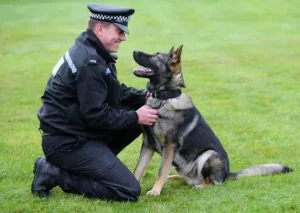
K9 security handlers are trained as much as the dogs.
- Posture
- Breathing
- Weight shifts
- Small signals carry meaning
- Dogs learn to read them, often faster than words
Silent direction becomes vital in high-risk moments like a pause, a turn, and a slight lean. These cues reduce noise and maintain control without escalation. Trust builds through consistency, not dominance.
Emotional Neutrality Transfer
A dog reads the handler before it reads the environment. Anxiety creates tension, calm steadies the response, and training is built around controlling that exchange.
Handlers learn to control presence before controlling dogs. Neutral tone, steady movement, and no sharp corrections. Over time, the dog associates calm behaviour with clarity. This is why the most reliable teams often look unremarkable. Nothing dramatic is happening, and that is the point.
Why Elite Training Prioritises De-Escalation Over Aggression
Aggression is easy to teach, while control is not. Elite K9 training systems are built around the idea that restraint prevents more incidents than force ever could. Dogs are conditioned to hold position, manage distance, and disengage the moment risk drops. This mirrors the broader approach taken across professional canine use in the UK, where control and public safety sit above raw physical response, including within government-supported operational frameworks for working dogs overseen by the UK Home Office.
Controlled Engagement Protocols
Elite training defines thresholds clearly. Engagement has conditions; however, disengagement is harder to train. The moment a threat marker drops, the dog releases.
Positioning and distance matter. Many incidents are resolved simply by presence and movement. Escalation is avoided not by avoidance, but by confidence in restraint. This approach protects everyone involved, including the dog.
Public-Space Readiness
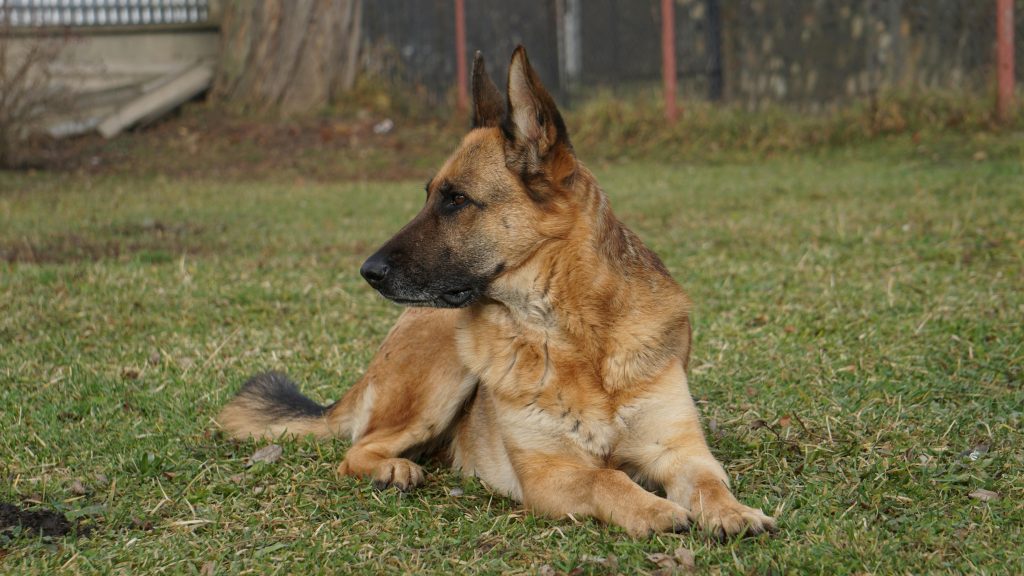
Elite security dogs are trained for environments where civilians are nearby. They learn to ignore passing vehicles, running children, and ambient noise while staying task-focused.
The dog remains aware without locking on. Perception is trained alongside protection. This balance allows elite teams to operate in shared spaces without becoming liabilities.
The Long-Term Reinforcement That Keeps Elite K9s Operational
Training does not end at deployment. It shifts.
Skill Refresh Without Regression
Rotational drills keep responses sharp without dulling them. Over-drilling is avoided, but a repetition without purpose erodes judgment.
Sessions stay short, focused, and varied. Motivation remains high because pressure stays meaningful. The dog does not train out of habit, but out of engagement.
Mental Load Management
The workload is intense, which makes mental fatigue unavoidable. Training programs account for this with planned recovery, not afterthought breaks.
This balance is one reason elite dogs retire later. Their workload is managed, not exploited. Longevity becomes a by-product of good systems, not luck.
Conclusion
Elite security dogs are not defined by size, breed, or aggression. They are shaped by systems that prioritise judgment, restraint, and reliability. What looks instinctive on site is the result of layered conditioning, handler alignment, and long-term reinforcement. Elite k9 training methods turn potential into precision, not through force, but through structure. These dogs are not reactive tools. They are managed assets, built to operate calmly where uncertainty is the norm.
Frequently Asked Questions
1. What makes elite K9 training different from standard guard dog training?
Elite training focuses on judgment, restraint, and adaptability rather than routine patrol behaviour or visible aggression.
2. Are elite security dogs trained to bite on command?
No. Engagement is conditional and tightly controlled, with strong emphasis on disengagement.
3. How long does elite K9 training usually take?
Training is continuous. Dogs progress through structured phases rather than reaching a fixed endpoint.
4. Can elite K9s operate safely in public environments?
Yes. Public neutrality and distraction control are core priorities throughout training.
5. Do elite K9s require ongoing training after deployment?
Absolutely. Regular reinforcement prevents skill decay and maintains operational reliability.