Most security incidents do not begin with violence. They begin with uncertainty. A raised voice and a refusal to move signal a boundary being tested to see if it will hold. Escalation is rarely sudden. It builds through misread intent, delayed response, or a challenge to authority that goes unanswered for too long.
This is why timing matters more than force. The moment when behaviour pauses or accelerates often decides the outcome. In those moments, perception shapes action. People react not only to what is said, but to what they believe might happen next.
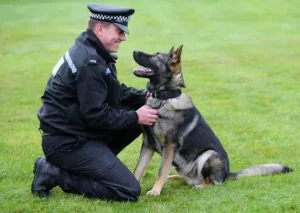
Understanding why reduce violence dogs work requires seeing escalation as a process, not an event. Violence is often the by-product of hesitation or confrontation, not criminal planning. K9 units alter that process early. They shift behaviour before positions harden. And in doing so, they change how incidents end.
Table of Contents
How Violent Escalations Actually Develop During Security Incidents
Escalation follows patterns. They repeat across locations, sectors, and time of day. The early stages are easy to miss because they do not yet look dangerous.
Early-Stage Triggers That Shift Behaviour
Most incidents start with small shifts; voices rise slightly. Someone steps closer than they should, and instructions are ignored, then questioned. Boundaries are tested because the cost of crossing them feels low.
Group dynamics accelerate this. A single person draws attention, and others gather to watch. The situation becomes less about the original issue and more about control or status.
These moments are fragile. They can still turn back.
Why Human-Only Presence Sometimes Accelerates Conflict
Human authority often invites challenge. Under stress, calm can be misread as weakness, while firmness can sound personal.
Under alcohol and adrenaline, attention narrows. Misheard intent creates verbal loops where each response escalates tension. This is where escalation often locks in. Once that happens, options narrow fast.
Why K9 Units Change the Escalation Curve
Dogs do not argue. They do not negotiate, and their presence alters behaviour without words.
The Psychological Interruption Effect
A K9 unit introduces hesitation. As movement slows, attention shifts and people pause to reassess their next move.
That pause matters. It closes escalation windows before decisions harden. The incident does not need to be resolved yet. It only needs to stop accelerating.
This is one reason reduce violence dogs function differently from verbal control. They interrupt the process rather than confronting it.
Authority Without Verbal Confrontation
Dogs communicate consequences without explanation. There is no dominance contest. No raised voice. No back-and-forth.
The message is simple and widely understood. Behaviour changes because the risk calculation changes. Not because someone was convinced.
The Science of Perception and Threat Assessment
This effect is not mystical. It is practical.
Why Dogs Trigger Instinctive Recalibration
Humans evolved to read animals as signals. A dog signals unpredictability and consequence at the same time. The brain responds before reasoning catches up.
When bravado drops, risk comes back into focus, and people step away instinctively.
How Offenders Reinterpret Risk When Dogs Are Present
Testing behaviour declines, lingering stops, and attention shifts from confrontation to exit.
The focus moves away from the target and toward avoidance. Compliance increases because the situation feels less negotiable.
Reduce Violence Dogs: A Non-Verbal Control Layer in Incident Response
This is not about intimidation. It is about clarity.
Non-Verbal Dominance Versus Verbal Escalation
Verbal authority invites debate. Dogs remove that phase entirely.
There is no argument to win. No instruction to resist. The boundary exists and is visible. That alone prevents many incidents from progressing. This is how reduce violence dogs stabilise situations without force.
Why Dogs Reduce Miscalculation Under Stress
People misjudge tone when stressed. Dogs do not.
Handlers read environments through the dog’s posture, focus, and movement. The animal becomes an early indicator. That information guides decisions before mistakes are made. Used correctly, this is prevention, not enforcement.
Comparative Outcomes: With and Without K9 Presence
Outcomes differ even when the starting conditions look similar.
Incident Trajectories Without K9 Support
Incidents last longer when nothing interrupts the cycle. Verbal exchanges repeat and draw attention. As bystanders become involved, physical intervention becomes more likely. Resolution often comes late, after options narrow.
UK workplace safety frameworks treat violence as a foreseeable risk that should be managed through early intervention and environmental control, not only after incidents escalate, as outlined in HSE guidance.
Incident Trajectories With K9 Deployment
Compliance happens earlier, conversations shorten, and physical contact is avoided more often.
The real impact of reduce violence dogs is seen in what no longer needs to happen once they are present.
Where K9 Units Are Most Effective at Preventing Escalation
Dogs are not needed everywhere. They matter most where behaviour is fluid.
Transitional Spaces
People make their choices at entrances, perimeters, and the edges of crowds, deciding whether to comply or push on. These are decision points. K9 presence shifts decisions early.
Night-Time And Low-Visibility Environments
Darkness heightens emotion, blurs interpretation, and shifts behaviour toward instinct rather than logic. In these conditions, visible non-verbal control reduces confusion and risk.
Limits, Ethics, and Responsible Deployment
K9 units are not a universal answer. Their value depends on how selectively they are used and how clearly their role is understood during an incident.
Why K9 Units Are Not A Solution For Every Incident
Medical emergencies require care, not control. Domestic disputes involve complexity that dogs do not resolve. Tight public interiors can limit safe use.
Knowing when not to deploy matters as much as knowing when to deploy.
Handler’s Judgment As The Controlling Factor
A dog’s presence does not mandate action. The handler decides. De-escalation remains the objective. Dog security services that understand this reduce harm rather than create it.
Conclusion
Violent escalation is not inevitable. It is shaped by timing, perception, and how authority is expressed in the moment. Most incidents still have an exit ramp early on. They only become violent when that ramp is missed or blocked.
Used correctly, reduce violence dogs operate as a preventive layer. They interrupt escalation before confrontation hardens. They replace argument with clarity. They allow incidents to end quietly rather than dramatically.
This is why dog security services remain relevant in modern incident response. Not because they add force, but because they remove the need for it. When behaviour changes early, outcomes change with it. That is the difference between managing incidents and inheriting consequences.
Frequently Asked Questions
1. Do K9 units actually prevent violence or just respond to it?
They prevent escalation by interrupting behaviour early, before force is required.
2. Why do dogs de-escalate situations faster than verbal commands?
They change risk perception without argument, reducing the chance of confrontation.
3. Are K9 units appropriate in public-facing security incidents?
Yes, when used selectively and with clear handler control.
4. Can K9 presence reduce the need for physical restraint?
Often, yes. Earlier compliance reduces the need for contact.
5. What role does the handler play in preventing escalation?
The handler decides when presence alone is enough and when to disengage.