Large hotels rarely stop moving. Even when guest areas feel quiet, work continues behind the scenes. Kitchens stay active. Linen moves floor to floor. Deliveries arrive early and leave late. These internal zones function like a small city, but without the visibility of public spaces.
Back-of-house areas carry heavy traffic but little attention. Service corridors, staff lifts, and storage rooms are used constantly, yet often overlooked. Traditional security tools often struggle here, as cameras miss corners and access systems rely on trust.
This is where hotel backhouse dog patrol becomes practical. Not visible to guests. Not disruptive. Just controlled, alert protection focused on how hotels really operate.
Table of Contents
Back-of-House Security Risks in Large Hotel Complexes
Back-of-house areas differ from guest spaces in one key way. They are built for speed, not supervision. That design choice creates risk.
Staff Corridors, Service Lifts, and Restricted Zones
Hotel operations depend on movement. Staff, contractors, cleaners, and suppliers share the same routes. These paths cross departments and floors throughout the day.
Service corridors often connect kitchens to lifts, lifts to storage, and storage to loading bays. Access points multiply. Monitoring them all is difficult, even with strong policies in place.
Because routes are shared, it becomes harder to notice who belongs and who does not. Familiar faces blend into busy surroundings.
Official guidance from the National Counter Terrorism Security Office highlights the risks of complex internal layouts. These environments require proactive security measures and constant vigilance.
Asset Density Outside Guest View
Many of a hotel’s most valuable items sit far from public view.
- Linen rooms store bulk stock.
- Kitchens hold equipment and consumables.
- Storage areas protect alcohol, electronics, and supplies.
These spaces are functional, not monitored. Theft, interference, or misuse can continue unnoticed for long periods. Loss is often discovered late, once patterns are already set.
Limited Oversight During Off-Peak Hours
Night shifts and early mornings change the risk profile. With fewer managers on site, rotating teams and temporary staff often work alone.
Static security measures lose impact during these hours. A quiet corridor at 3 am does not behave like one at midday. Gaps appear, even in well-run hotels.
Why Security Dogs Are Effective in Non-Public Hotel Areas
Security dogs perform well in places where the structure is complex and the activity is constant. Back-of-house hotel areas match that environment.
Natural Detection in Complex Indoor Layouts
Dogs do not rely on sightlines or lighting. They follow scent through corridors, stairwells, and service routes that cameras struggle to cover. Multi-floor layouts don’t limit dogs, and connected spaces don’t confuse them. They follow movement naturally.
Deterrence Without Guest Disruption
Security dogs operate where guests rarely go. Their presence is felt by staff and contractors, not visitors. That separation matters. It allows strong deterrence without altering the guest experience. There is no tension in public spaces, no visible enforcement on the hotel floor.
Adaptability to Hotel Movement Patterns
Late deliveries, extended events, and shifting staffing mean hotels rarely run to fixed schedules.
Dog patrols adapt easily as routes and timings change. Unpredictable patterns reduce the risk of repeat offenders exploiting routines.
How Hotel Backhouse Dog Patrol Works in Practice
The strength of hotel backhouse dog patrol lies in how naturally it fits into hotel operations. It does not replace staff or systems. It reinforces them.
Patrol Routes Through Operational Zones
Dog patrols focus on service corridors, basements, kitchens, loading docks, and storage areas. These zones connect the hotel’s core functions.
Handlers move vertically as well as horizontally. Service lifts and stairwells are part of the route, not obstacles. Coverage extends across floors without relying on fixed points.
This continuous movement reduces blind spots. It also disrupts routine patterns that offenders often rely on.
Handler-Led Control and Decision Making
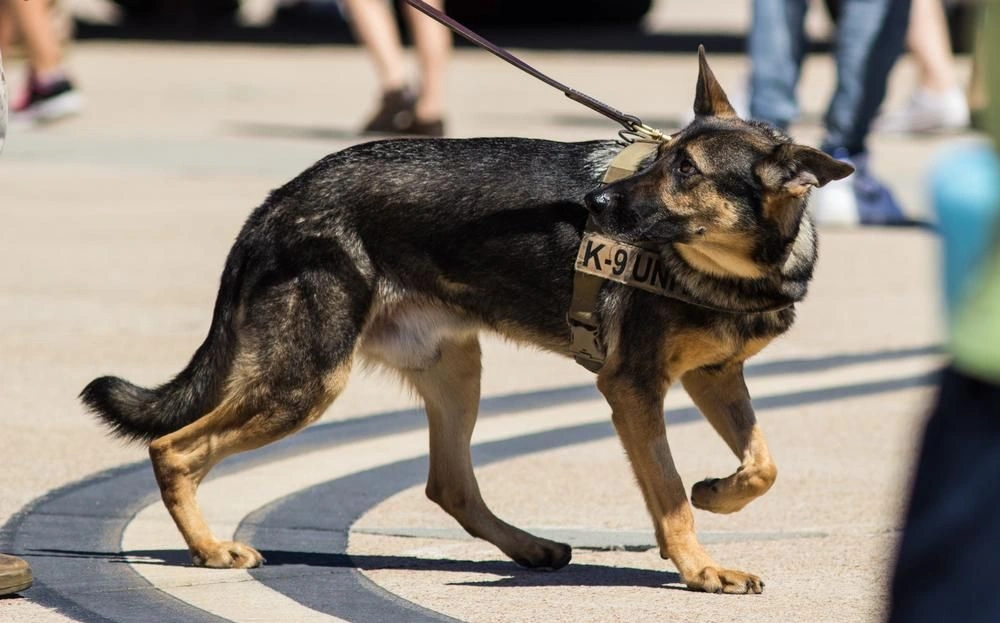
Dogs are never deployed alone. Each patrol is led by a trained handler who understands hotel environments.
- The dog detects change.
- The handler interprets it.
- Human judgement guides the response.
This balance prevents overreaction and keeps authority clear. Situations are assessed before they escalate.
Managing Internal and External Threats
Not all risks come from outside. Unauthorised staff movement, tailgating, and access misuse are common issues in large hotels.
Dog patrols identify unusual behaviour quickly. They also deter intrusion through service entrances, which are often targeted during quiet hours.
The response stays controlled. The aim is correction, not confrontation.
Security Dogs vs Traditional Back-of-House Controls
Most hotels already use cameras and access cards. These tools have value, but limits remain.
Limitations of Cameras and Access Cards
Cameras depend on coverage and review. Blind spots exist. Issues are often discovered after the event. Access cards can be shared or misused. Once inside, movement is rarely questioned. Both systems are passive. They record, and they do not respond.
Advantages of Live Canine Patrols
Dogs detect issues as they happen. Their presence is immediate, responses are real-time, and their behaviour is hard to predict and harder to avoid. This makes planning theft or intrusion far more difficult.
Operational Benefits for Large Hotel Management
Beyond security, dog patrols support smoother operations.
Reduced Internal Theft and Loss
Consistent patrols protect stock, equipment, and supplies while reducing repeat losses and breaking patterns early.
Improved Staff Accountability
A visible patrol reinforces boundaries without constant supervision. Expectations stay clear, even during shift changes.
Support for Wider Security Strategy
Dog patrols work alongside guards and monitoring systems. They strengthen layered protection without overlap. Within broader K9 dog security services, this approach adds depth rather than noise.
When Hotels Should Consider Dog Patrols
Not every site needs the same solution. Some conditions increase the value of dog patrols.
Large Complexes With Multiple Back-of-House Zones
Resorts, conference hotels, and multi-wing properties carry higher internal risk due to size and layout.
High Staff Turnover or Contractor Access
Temporary workers and third-party suppliers increase movement and reduce familiarity.
History of Unexplained Loss or Breaches
Repeated issues suggest gaps that passive systems have not closed.
Conclusion
Back-of-house areas carry some of the highest risk in large hotels. They are busy, hidden, and difficult to control with static tools alone. This is where hotel backhouse dog patrol offers real value.
By working quietly behind the scenes, security dogs strengthen prevention, improve control, and support safer operations. They are not a reaction to failure. They are a strategic layer, designed for how hotels truly function.
Frequently Asked Questions
1. Are security dogs used only at night in hotels?
No. Patrols can run during quiet daytime periods, early mornings, or overnight, depending on risk.
2. Do dog patrols interfere with hotel operations?
No. They remain within operational areas and avoid guest-facing spaces.
3. Can dogs work inside active hotel buildings?
Yes. Handlers guide movement carefully through service routes and controlled zones.
4. Are dog patrols suitable for luxury hotels?
Yes. Deployment is discreet and focused away from public areas.
5. How are incidents handled when a dog detects a threat?
Handlers assess the situation and follow clear procedures without disrupting hotel operations.