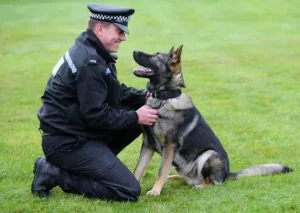

Many sites rely on cameras to keep people and property safe. It gives a modern feel and also lets you stay secure. A lens that never sleeps impresses everyone to get it. Yet when trouble appears in real life, a camera can only watch. It cannot react to the situation or cannot block a gate. This is why CCTV alone vs K9 has become such a loud debate in the security world.
When a trained dog team stands beside CCTV systems, the whole setup changes. There is weight in the air. A dog notices small moves, faint sounds, steps in the dark, and things a camera might miss. Together, both tools create a stronger shield. On their own, cameras do a helpful job, but they cannot carry the whole burden of protection.
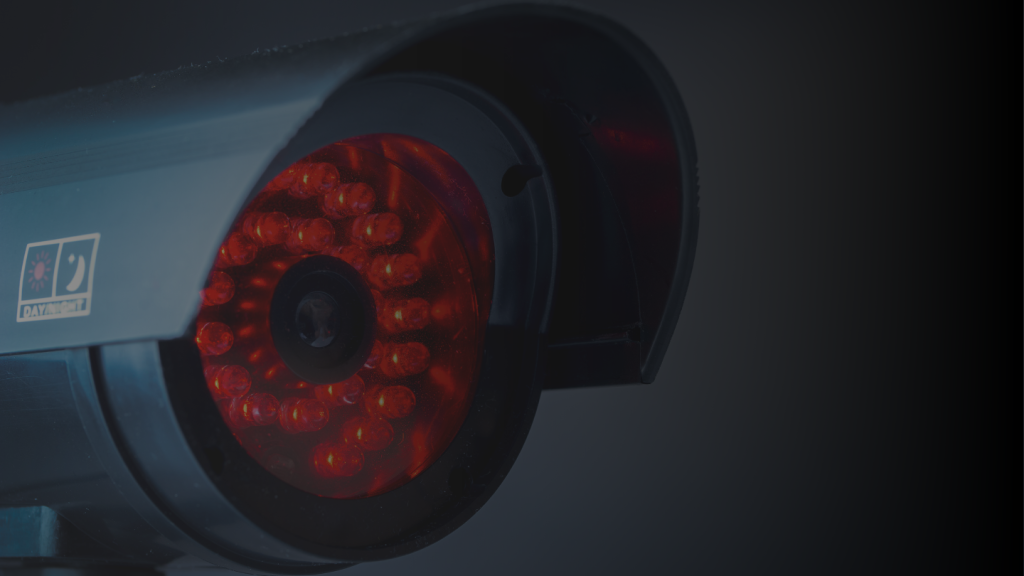
CCTV Helps, but It Cannot Act on Its Own
A screen can show what is happening. And it can record a face, a hand, a shadow, or a break-in attempt. But it cannot step into the scene and prevent any kind of threats. Even the smartest system still depends on a human. They can watch the situation from the control room and analyse how to resolve the situation.
The Limits of Tech When Confronting a Live Threat
If someone climbs a fence or tries to force a door, the camera captures it and records the feed. But that is all they can do. Suppose your site has no presence on the ground. And there is no human presence to guard the site’s surroundings. It can create a path for intruders to enter the house. Tech can only see the situation; it can’t prevent or resolve the threat. This gap brings both CCTV and K9 guarding apart and shows the importance.
Slow Response Time When Human Teams Are Far Away
A remote operator may notice something and call for help. Yet help can be delayed as they must travel to reach. This delay can create space for the offender to run, hide, or cause more harm. Offenders can be caught on CCTV, but the damage can’t be prevented.
Blind Spots and System Failures That Criminals Understand Well
Every camera has limits. They do have some disadvantages like corners, low light patches, glare from lights and sudden fog. These can affect the camera’s vision and make guarding tough. Even a small outage can leave a whole area unchecked. People with intent know how to move through these spaces. They walk with care, testing each spot until they find a path.
What Trained K9 Teams Bring That CCTV Cannot
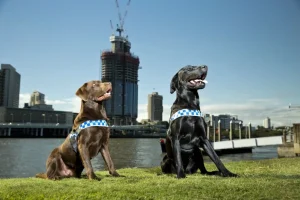
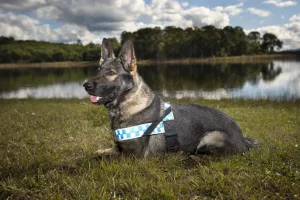
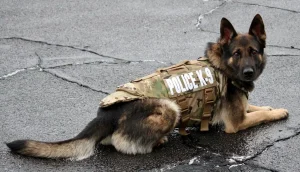
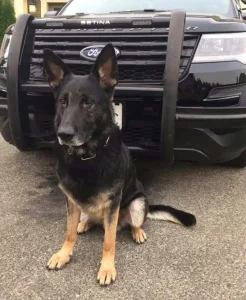
When a dog team steps into a site, the atmosphere shifts. A dog does not rely on light or electricity. It can sense movement through smell and sound. And it follows trails that a person cannot see. This is where physical deterrence, real-time response, proactive protection, and threat detection come alive.
Guidance set out in the BSI Security Dogs Code of Practice explains that trained security dogs are deployed to provide active deterrence, controlled response, and reliable detection in live environments. The code recognises that dogs are used to support security operations where technology can observe but cannot intervene, particularly across large or open sites.
The Strong Physical Deterrence That Changes Offender Behaviour
Most offenders back away when they notice a trained dog. It is not because the dog is loud or feels threatening. It is because it is present and it can alert its handlers. A dog’s stance, alert ears, and focused eyes send a signal that cannot be ignored. If they identify you, then they can alert the guards and find you more easily. Most intruders fear entering houses with dog security because the risk is high.
Trained dog security services are built around this visible presence. The handler and dog patrol together, moving through key access points, open ground, and boundary lines where cameras often struggle. This movement reinforces the warning intruders already sense. It shows the site is actively watched, not passively monitored, and that any breach will be detected early and dealt with on the ground.
Real-Time Response That Fills the Gap Left by Cameras
When something happens, the handler and dog move at once to identify the issue. There is no waiting for a car, and there is no delay. With a handler and a dog, you can cover a large site. They stay on the ground towards risk and are ready to act. That quick response cuts down the time an intruder has to cause harm.
Proactive Protection That Stops Crime Before It Starts
A dog’s patrol is not passive. They often move around the site and check around to verify nothing is unusual. Also, trained dogs do listen to their handlers and detect any danger through smell. It covers areas that cameras might not reach. Many intruders turn away before they even try because the presence alone makes the site feel too risky.
CCTV Alone vs K9: Why a Joint Setup Works Best
When cameras and K9 units work together, the site gains both eyes and action. The combination builds a barrier that feels alive, not static. This makes the CCTV alone vs K9 debate fade away, as using them both can enhance your site security.
How Tech and K9 Units Boost Each Other
CCTV spots early signs of any intruders into your site. And a dog can also respond to the smell of any intruders. A dog notices shifts. The guards can confirm the threats by understanding that both the camera and the dog detect an unusual presence inside the site. Each one fills the other’s weak points. This makes the whole setup more stable and flexible.
Faster Threat Detection With Eyes, Ears, and Trained Instinct
A dog’s instinct catches things long before a camera picks them up. It hears faint metal sounds and also picks up fast movements. A dog can sense unease and alert its handler. This makes managing the site easier. The handler can identify the threat by noticing how the dog reacts. This two-way link creates fast threat detection that a single tool cannot match.
The Balance: Machines Record, K9 Units Intervene
Cameras store the recorded videos as proof. While the Dogs can only act in the moment, cameras can track movements. These roles work well together because they do not overlap, and by supporting each other, they can ensure site protection.
How to Choose the Right Mix for Your Site
Not every site needs the same setup. Some need constant patrols. Others only need a short window of cover. Look at your space, the number of entry points, the hours of activity, and the type of work that happens there.
Look at Risk Level, Size, Layout, and Night Activity
Large sites with open land, blind corners, and long night hours benefit the most from the combined approach. Cameras alone struggle in these spaces because there is too much area and too many paths.
When a K9 Team Becomes Non-Negotiable
If your site holds high-value items, open yards, plant equipment, or wide outdoor zones, a K9 team becomes essential. These spaces need real presence and also constant watch to identify threats early.
Conclusion
It is vital to know that there is no CCTV alone vs K9 for security. CCTV systems have a strong role in modern security. They watch, record, and provide a clear view of what has happened. But they are not enough when the threat is active and close. A trained K9 team steps in where tech stops. It adds movement, presence, and instinct. Together, both create a shield that feels solid, fast, and alive.
Frequently Asked Questions
1. Can CCTV stop a crime without help from people or dogs?
No, it cannot. It can show what is happening, but it cannot move or act. That is why we never rely on cameras alone and add K9 security to the site.
2. Why add trained K9 units when cameras are already installed?
We add K9 units because they bring the real deterrence that cameras lack. Their presence changes how intruders behave.
3. Do K9 teams work well with high-tech CCTV systems?
Yes, they do. We find that both tools lift each other. Cameras guide the handler, and the dog reacts fast on the ground.
4. Is a joint setup worth the cost for a medium site?
In our experience, yes. A mix of cameras and K9 security cuts risk fast and avoids bigger losses later.
5. How do I know if my site needs a K9 team as well as cameras?
We look at the size, layout, and risk level. If there are open zones or weak points, we bring in a dog team.