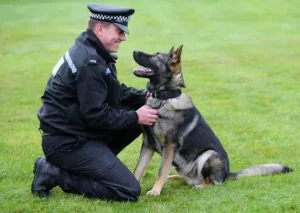
A door bangs in an empty hallway, and a K9 raises its head quickly. The handler notices the difference and moves immediately. No words, no signals, just a spark that propels them both towards the hidden threat.
Moments like this demonstrate how strong handler-dog connections boost security outcomes in real life. The dog understands minor cues. The handler believes those cues.
This bond is neither warm nor cute. Long days, rigorous drills, and consistent effort have all contributed to its development.
In security, such a relationship unites two individuals into one sharp team. This blog highlights why that bond matters and how it changes real results.
Table of Contents
The Foundation of Excellence: Relationship-Based Training
Moving Beyond Command and Control
Older training methods emphasised strong control. Dogs obeyed out of fear of being wrong. It worked for quick results, but it left the dog tense and unsure.
Modern relationship-based training for working security dogs changes that idea. It builds calm habits, clear steps, and steady rewards. The dog learns to work because it feels safe and wants to take part.
This creates a dog that thinks on its own, not one that freezes under stress. In loud or wild scenes, a dog trained through trust stays sharp and ready. It faces new sights and sounds with confidence instead of doubt.
Building Unbreakable Trust and Communication
Real strength in a team comes from handler–dog trust and communication in security work. This trust grows slowly, through daily work and small wins.
The dog depends on the handler to choose safe paths and read danger. The handler depends on the dog’s sharp senses to find what the eye can’t.
They talk without words. A light pull on the leash. A shift of the hand. A change in the dog’s stance. These tiny cues guide them through tight spaces where silence matters.
Over time, this quiet language becomes second nature. When the bond runs deep, they move like one body and are ready for whatever waits ahead.
The National Association of Security Dog Users (NASDU) promotes stable handler–dog pairings as a key factor in maintaining dependable performance and calm control during real-world security work.
How Strong Handler Dog Bonds Improve Security Outcomes
Increased Vigilance
A strong bond keeps the dog alert without pushing it into panic. It monitors the handler’s steps, checks small sounds, and scans the space with steady focus.
The dog is not guessing what the handler wants. It already knows the flow of the team. This comfort sharpens its senses. It picks up soft shifts, light taps, broken scent trails, or a faint change in breathing from someone hiding.
The handler reads the dog’s change in posture and reacts, giving them a jump on threats before they grow.
High-Stress Compliance
Real security work can turn rough in seconds. A threat appears with no warning. A dog with a strong bond anchors itself to the handler. Even when fear hits, it listens fast.
It follows tough commands because it trusts the handler’s choices. This keeps the dog from acting on raw instinct and lets the handler move with purpose during hard moments.
This level of control is built through consistent pairing, real-world exposure, and structured deployment, which is why K9 dog security services place strong emphasis on long-term handler–dog teams rather than rotating pairings.
Adaptability
Plans bend and break in the field. A bonded pair adjusts without long signals. The dog senses a small change in the handler’s pace. The handler spots a quick tilt of the dog’s ears.
These tiny cues help them change speed, angle, or focus without losing control. It feels smooth and natural, even under pressure.
Enhanced Area Control
A close team moves like a steady wave. The dog explores widely, but never drifts out of reach. The handler uses small steps or light hand shifts to guide the sweep.
This helps them clear halls, fields, or tight rooms with fewer missed corners. The movement stays calm, which also helps keep bystanders settled.
Clearer Team Judgment
Pressure can cover choices. A bonded team stays grounded. The handler’s calm settles the dog. The dog’s alerts stay honest and sharp. The handler trusts those alerts, leading to cleaner decisions to hold, shift, or press forward.
This calm, shared judgment often decides how fast a threat gets stopped and how safely the scene stays under control.
Data-Backed Performance: The Role of Bonding in K9 Operations
Higher Success Rates
In the UK, long-term K9 teams often score far better than new pairs. Many reports indicate a 20–30% increase in search-and-catch success when the dog and handler have worked together for a long time.
Reduced Incidents
When the same handler stays with the same dog, mistakes drop fast. The impact of handler consistency on dog reliability shows up in day-to-day work.
Dogs react with more care. They give fewer false alerts. They stay calmer in tight spaces. UK units often record fewer slip-ups when the pair has time to build a steady rhythm.
Mission Time Reduction
Bonded teams move with quick, sure steps. They spend less time fixing errors or re-checking the ground. In scent tasks, they often finish faster because the dog reads tiny cues from the handler without stopping to guess.
This tight flow cuts minutes off jobs where speed can decide whether a threat is found in time.
The Strategic Advantage: Enhanced Threat Detection and Teamwork
Sharper Combined Senses
- Enhanced threat detection through handler–dog teamwork comes from using two kinds of awareness at once.
- The dog reads scent trails, pressure shifts, and tiny sounds.
- The handler studies patterns, risk points, and changes in the dog’s stance.
- When the dog signals a scent, the handler gauges the level of urgency and chooses the next move without delay.
Fast, Clean Assessments
- The dog’s early alerts help the handler narrow down danger zones.
- The handler’s clear decisions keep the dog steady and focused.
- Together, they close gaps that lone officers or tech systems often miss.
Smooth Movement in High-Risk Spaces
- The role of bonding in K9 team performance shows in how they move as one.
- In halls, open yards, or dark corners, the pair shifts speed and direction with tiny cues.
- No loud commands. No wasted steps. Just a quick and shared action.
Stronger Presence on Patrol
- A bonded team creates a calm but firm security image.
- Their tight spacing and aligned reactions discourage threats before they start.
- This unity gives them an edge that cameras, alarms, or rotating staff cannot copy.
Reliable Adjustments Under Pressure
- When plans change, the team reacts without hesitation.
- The dog trusts the handler’s judgment; the handler trusts the dog’s senses.
- This trust keeps the response sharp, even when the situation turns fast and chaotic.
Conclusion
A strong K9 team does not rely on skill alone. The bond between dog and handler forms the core of the unit, turning two separate strengths into one sharp, dependable system.
This is how strong handler dog bonds improve security outcomes in real operations. Security teams that invest in long-term pairing and relationship-focused training build sharper, calmer, and faster units. Prioritising that bond is the most effective path to stronger results in the field.
FAQs
1. How does a strong bond affect a security dog’s performance in chaos?
It keeps the dog calm, focused, and locked on the handler instead of the noise, allowing fast and controlled action.
2. What is the primary method used to establish the deep handler–dog trust and communication in security work?
Steady routines, clear cues, and positive rewards. Daily consistency turns small signals into a shared language.
3. Is longevity linked to how strong handler dog bonds improve security outcomes?
Yes. Long-term teams react faster, make fewer mistakes, and handle real threats with smoother teamwork.
4. How does bonding differ in detection vs. patrol work?
Detection relies on reading subtle alerts. Patrol work needs control and courage in close, tense moments. The bond strengthens in different ways.
5. Can a dog achieve enhanced threat detection through handler–dog teamwork with multiple handlers?
No. One primary handler creates the strongest trust and best performance.