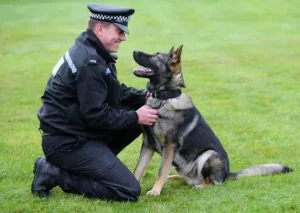
A sudden shout. Fast footsteps. A hostile movement in the corner of a dim yard. Most animals would jolt back or lash out. But a highly trained security dog doesn’t flinch. It remains still, breathing calmly, ears tracking like radar as it watches, measures and waits.
There’s something almost unnerving in that discipline. It remains dog calm under pressure, behaving with a composure that many humans struggle to maintain. And it’s not magic or instinct. It’s a skill. Learned, layered, reinforced skill. Years of conditioning, emotional training, structured routines, and a tight bond with a dependable handler.
Today, we’re stepping inside that world into the behavioural science and the training psychology that teaches a dog to stay collected during high-stress, confrontational incidents.
The Science Behind Why Security Dogs Stay Calm When Tension Spikes
Stress hits every creature. The difference lies in what the mind does with it.
Instinct vs. Conditioning — How Training Replaces Reactive Behaviour
A dog’s natural response to threat is simple: fight, freeze or flee. No animal decides that; instinct takes the wheel. But training challenges are instilled through a quiet kind of repetition.
A dog meets new noises, sudden movements, unpredictable scenarios, yet each time, the trainer stands steady. No shouting, and no panic. Just a sequence of cues and rewards that show the dog a different path:
- Pause
- Look
- Think
The animal learns to override a reflex with a learned response. It becomes present instead of reactive. And that shift is what turns a regular dog into a reliable working partner.
Emotional Regulation Through Progressive Behaviour Training
One myth keeps circulating that certain dogs are “naturally calm.” They’re not. Calmness is nurtured, like a muscle.
With progressive behaviour training, dogs develop a buffer between stimulus and reaction. They read human faces, sense aggression levels, and understand the difference between real threat and noisy bluff. They do this without absorbing panic from the environment.
Trainers create controlled spaces that regulate adrenaline spikes. Over time, you can almost see the mental gears turn: the dog stands tall, but the eyes stay soft. A mind actively choosing control.
How a Dog Stays Calm Under Pressure
The phrase dog calm under pressure isn’t a slogan. It’s the outcome of precise behavioural engineering.
“Calm Zone” Conditioning That Builds Controlled Responses
There’s a small but powerful technique used in many professional K9 units: the calm zone.
It’s a trained state where the dog returns to neutral. Its body remains still, and its breathing stays slow, with no sign of lunging or jaw tension. Trainers reinforce this state constantly, rewarding the dog whenever it slips into controlled observation.
The result is a baseline temperament that feels stable. Even when chaos arrives, that internal “reset” is close enough to reach.
Stress Simulation That Builds Familiarity Before Real Confrontations
Security dogs don’t meet real hostility for the first time on the job. Their training runs on simulations of loud confrontations, raised hands, and sudden objects hitting the ground.
A dog that has already met 100 different forms of aggression doesn’t panic at the 101st. What surprises an untrained animal becomes routine for a working K9. Familiarity softens shock, which, left unmanaged, becomes fear. And fear leads to mistakes.
Decision-Making in High-Stress Environments
Staying calm isn’t enough. The dog must also make sense of what it sees—and quickly.
Split-Second Threat Assessment Skills
People often assume dogs react only to noise or movement. But trained dogs do something deeper: they analyse intent.
A flailing hand may be panic, not aggression. A loud voice may be fear, not a threat. Training helps dogs make these distinctions with astonishing speed.
Avoiding overreaction is not just professional, it’s essential. It protects owners, staff, crowds and even the intruder.
Handler Influence That Stabilises Canine Behaviour
A dog’s emotional compass often sits in the handler’s voice and posture.
If the handler’s pulse jumps, the dog knows. If the handler stays measured, the dog steadies itself. This bond is the backbone of composure. Dogs don’t merely follow commands; they follow energy.
And when both move with a shared calmness under pressure, their presence alone discourages escalation.
Daily Discipline That Strengthens Calm Behaviour
Training doesn’t end when the session closes. Calmness is built in the quiet days, too.
Structured Routines That Lower Stress Baselines
Predictability matters. Regular exercise stabilises hormones. Obedience drills sharpen focus. Bonding time deepens trust. A dog with predictable life experiences fewer spikes in cortisol, which means fewer emotional swings.
Stability breeds clarity. And clarity is what keeps a dog from misreading a tense moment.
Why Trained Dogs Avoid Overreaction Even in Direct Confrontations
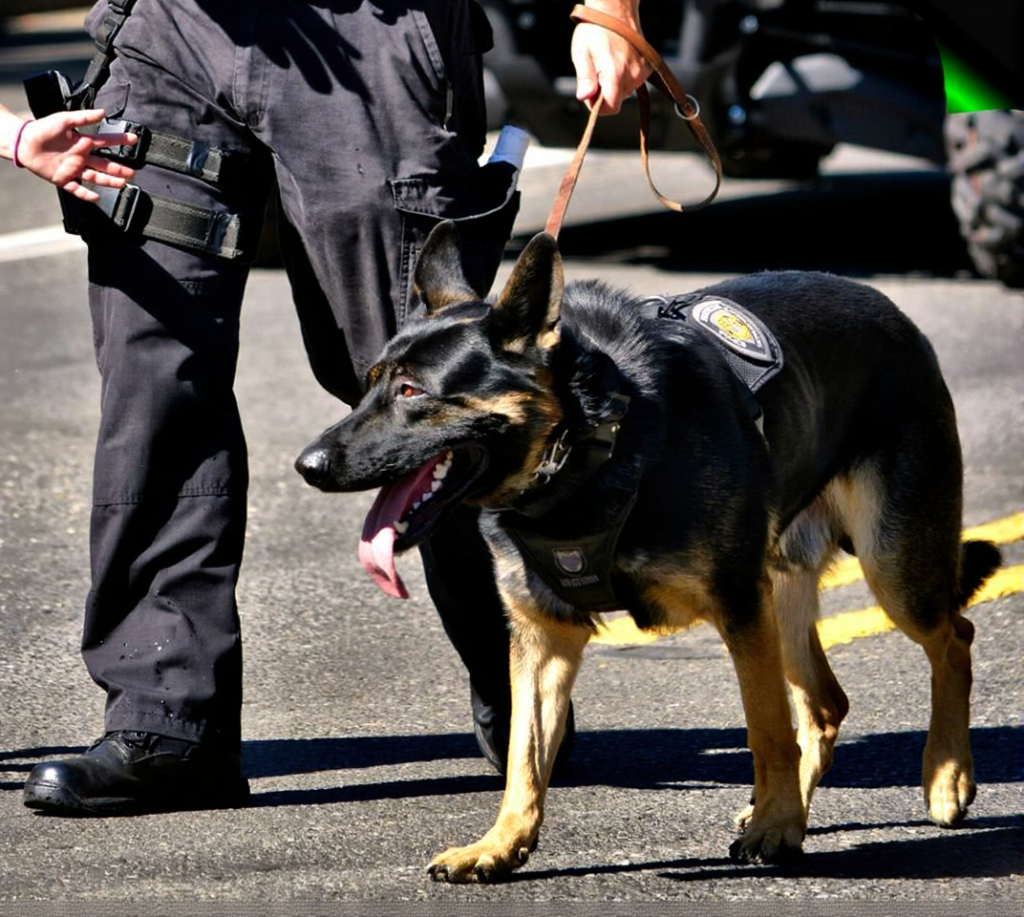
Picture a loud, aggressive intruder rushing toward a handler. A non-trained dog might leap before thinking. A trained dog does something else: it watches. It holds its head forward and its body firm, weight centred while it waits for the handler’s signal.
That moment, microseconds long, is what prevents unnecessary bites or uncontrolled force. It’s also what makes K9 units so valuable. They offer power with restraint, which is rare even in human responders.
Real-World Effects of a Calm Security Dog
The presence of a calm dog often changes the entire mood of a confrontation.
Natural De-Escalation Through Non-Reactive Presence
Dogs broadcast signals with their posture. A tense dog sparks tension. A calm dog deflates it.
Intruders often freeze, not because they’re scared of the bite, but because the dog’s steady gaze removes the “fight” from the equation. People back down when they realise the dog won’t be baited or distracted.
Increased Safety for Handlers, Bystanders and Property
Controlled dogs make fewer mistakes. They don’t lash out at sudden movements or get overwhelmed by shouting crowds.
This predictability reduces risk for everyone on-site. It supports smoother conflict management and fewer incidents. Calmness isn’t just a behavioural trait; it’s a safety tool.
Conclusion
When chaos hits a site fast, loud, and unfiltered, the difference between fear and focus can reshape the outcome. A dog calm under pressure stands firm in that gap. These dogs aren’t fearless. They’re trained, disciplined, emotionally supported and taught to use instinct as a tool rather than a trigger.
Their composure turns tense moments into manageable ones. Their restraint protects handlers, staff and the public. And their controlled presence shows what happens when behavioural science, human trust and canine discipline merge into a single response: quiet, powerful readiness.
Frequently Asked Questions
1. Do trained security dogs still feel stress during aggressive incidents?
Yes. Stress exists, but training helps them control it rather than react impulsively.
2. How long does it take to train a dog to stay calm under pressure?
Many dogs train for months or even years, depending on breed, temperament and the complexity of the security role.
3. What makes trained dogs different from regular dogs in stressful situations?
Trained dogs respond with learned behaviour instead of instinct. They evaluate, then act.
4. Does a handler’s behaviour affect the dog’s calmness?
Very much. Dogs read tone, posture and even micro-expressions. A steady handler reinforces steady behaviour.
5. Are security dogs trained to de-escalate rather than attack?
Yes. Modern K9 units focus on control, restraint and presence. Aggression is the last resort.