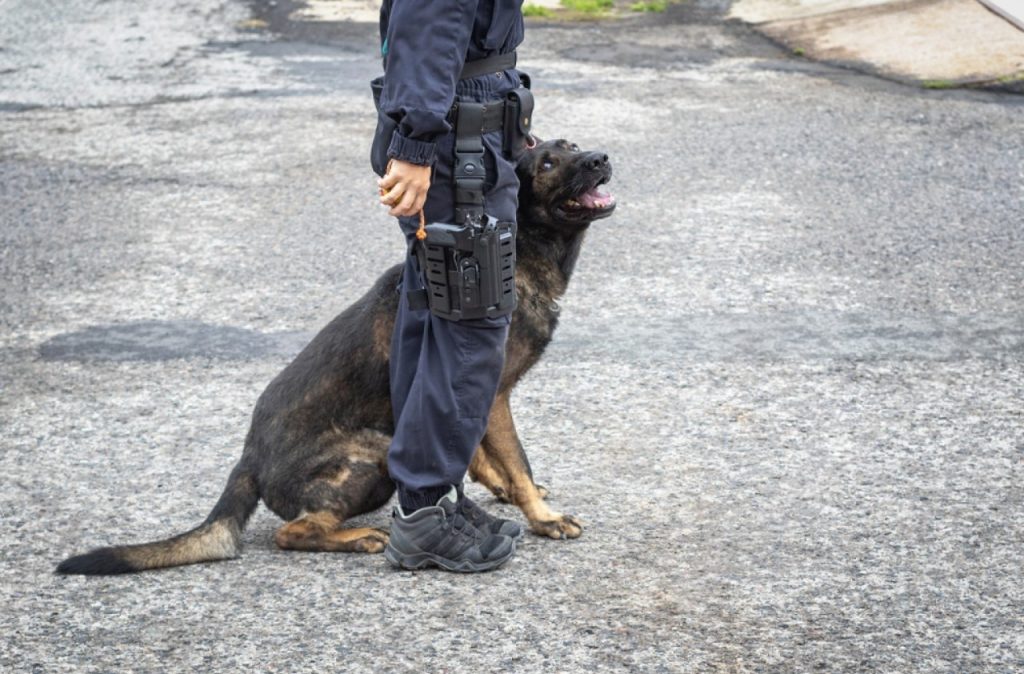
In modern dog emotional intelligence security, a guard dog’s real advantage isn’t strength. It’s the ability to read emotion with the accuracy of someone who has lived around people their entire life. A trained K9 doesn’t wait for chaos; they sense the emotional currents that lead to it. Intent reveals itself long before movement does, and dogs are experts at spotting those early signs. Their decisions come from that insight, not force.
Table of Contents
Understanding Dog Emotional Intelligence Security
Emotional intelligence in dogs is not an abstract theory; it’s a working skill. A guard dog notices the emotional environment the second it steps into a space. You can smell tension before anyone speaks. Fear stiffens posture, anger shifts the breath, and strange indifference reveals more than it hides.
What makes a dog’s emotional intelligence security powerful is the dog’s ability to sort these signals. A busy loading bay might hum with stress, but a dog knows the difference between overworked staff and someone hiding intent. Instinct alone can’t do this. Emotional intelligence fills the gaps and shapes a more accurate threat picture.
In unpredictable environments, crowded events, construction sites, and distribution hubs, dogs use emotional filtering to avoid reacting to harmless behaviour. They save their focus for genuine risk. This ability protects not only property, but also people who simply move through the space.
The Science Behind Canine Emotional Intelligence
Sensory Processing and Cognitive Filters
Dogs absorb more emotional data in two seconds than most people pick up in a minute. A shift in scent, a stiff shoulder, a sideways glance, all small signals stacking into a pattern.
A person trying to blend in may act relaxed, yet their heartbeat, breathing, and micro-movements betray them. Dogs catch those inconsistencies because their senses run in layers: smell, sight, tone, rhythm. Emotional intelligence sits on top of this sensory foundation.
Cognitive filtering helps them avoid false positives. A mechanic with oil-stained clothes isn’t a threat. A visitor pretending to check directions while inching toward restricted zones might be. The dog discards irrelevant signals and leans into the ones that matter.
Interpreting Human Emotions and Intent
Dogs don’t stop at recognising emotion; they understand how emotion links to action. Fear can lead to flight, anger to confrontation and nervousness to concealment. Sometimes, even calmness becomes a warning when it feels too deliberate.
This is where emotional mirroring appears. The dog reflects small pieces of the observed emotion to decode it. It’s subtle, instinctive, and extremely effective. In dog emotional intelligence security, that mirroring functions like a social decoder ring: emotion becomes the clue, but intent becomes the answer.
How Emotional Intelligence Shapes Security Decisions
Distinguishing Neutral Activity From Suspicious Behaviour
Dogs build a mental map of “normal.” Once that baseline forms, everything outside it stands out. A warehouse might have shouting from across the floor, forklifts reversing, and people rushing between aisles; that’s normal chaos. But someone moving quietly in a noisy place, or hesitating in a spot where people usually stride through, feels wrong.
The dog studies energy levels. Balanced, nervous, evasive, and deceptive, each creates a different pattern. Emotional intelligence helps the dog avoid flagging false threats while still catching subtle danger.
Selecting Response Levels Based on Emotional Readings
A guard dog’s response isn’t binary. It escalates in steps: observation, positioning, silent warning, handler alert, intervention. Emotional intelligence determines which step fits the moment.
- A flicker of anger? The dog shadows.
- Sustained tension? The dog blocks the route.
- Is intent sharpening into action? The dog intervenes.
Emotional intelligence gives this sequence precision. Dogs act not because someone moved fast, but because their emotional footprint shifted into danger.
Maintaining Composure During High-Stress Situations
Crowds panic, machinery blasts and people argue while alarms ring in the background. Yet an emotionally intelligent dog stays grounded instead of reacting to every spike of tension. With emotional regulation, they pace their responses rather than erupting at every trigger.
This steadiness builds trust. Handlers rely on a dog that won’t be dragged into the emotional chaos around them but will still respond decisively when the threat becomes real.
Real-World Security Scenarios Where EI Makes the Difference
Access Control and Screening Behaviour
Entry points expose the widest emotional range. Some people rush in because they’re late. Some hesitate because they’re new. Others hide something, fear, guilt, or a plan.
A dog reads the emotional tension behind those behaviours. Nervous but innocent people look different from those who are nervous for the wrong reason. Emotional scanning at checkpoints is one of the strongest pillars of dog emotional intelligence security.
Patrols in Low-Visibility or Night-Time Settings
After dark, sound shifts, spaces thicken, and the whole environment feels transformed. Dogs detect “emotional residue”, which is a faint hormonal trace left behind by people who were recently stressed or frightened.
An emotionally intelligent dog can tell whether someone wandered through absentmindedly or moved with deliberate caution. That distinction helps handlers respond with clarity rather than guesswork.
Emotional Coordination With Handlers
A handler’s emotional state becomes part of the dog’s environment. As tension spreads and calm returns, focus narrows, and dogs adapt instantly. Their emotional alignment deepens as the bond grows.
When the handler stiffens, the dog prepares. When the handler relaxes, the dog eases. This two-way emotional feedback loop leads to precise, synchronised decision-making, one of the most underrated strengths in modern K9 work.
Training Approaches That Build Emotional Intelligence in Guard Dogs
Scenario-Based Emotional Exposure
Dogs aren’t born knowing how to decode complex human behaviour in security settings. Trainers immerse them in controlled emotional scenarios: a frightened actor, an aggressive approach, deceptive calmness, and distracted behaviour.
These drills sharpen recognition. The dog learns to label emotional patterns and decide how to respond based on context.
Reinforcement Strategies for Thoughtful Responses
Good training never rewards impulse. It rewards judgment. Dogs learn that taking a breath, literally and figuratively, before acting results in praise. Exercises like delayed commands, scent discrimination games, and confidence-building activities boost emotional stability.
With each repetition, emotional intelligence grows. Decision-making becomes cleaner.
Handler Communication and Emotional Consistency
Tone, posture, pace, and timing from the handler matter. Dogs thrive under consistency. Mixed signals muddy their emotional clarity.
Joint training helps the handler and dog synchronise emotionally. This connection strengthens the dog’s ability to interpret both the environment and the handler’s expectations, a key element in effective dog emotional intelligence security.
Why Emotional Intelligence Gives Guard Dogs a Security Advantage
Technology can see and hear. It cannot interpret, but a dog can.
Cameras track movement and sensors log heat or motion, but none of them grasp the undercurrent behind behaviour. Dogs detect intent before action, and that makes their presence invaluable.
Emotionally intelligent guard dogs reduce false alarms, guide human responders, protect staff, and de-escalate situations without force. Their judgment is fast but thoughtful. Their accuracy makes them indispensable in environments where human behaviour is unpredictable.
In short, emotional intelligence isn’t a bonus trait. It’s the foundation of dependable K9 security work.
Conclusion
In the world of dog emotional intelligence security, a working dog’s greatest strength is awareness. Emotional intelligence helps dogs read intent, avoid false alarms, and make well-timed decisions. It turns raw instinct into precise judgement and keeps both handlers and sites safer. EI isn’t an optional skill; it’s the core driver of dependable K9 behaviour in modern security work.
Frequently Asked Questions
1. How do guard dogs develop emotional intelligence?
Through exposure, training, and daily interactions with varied human emotions.
2. Do emotionally intelligent dogs show less unnecessary aggression?
Yes. They respond to intent, not impulse.
3. Can dogs detect concealed emotions like fear or deceptive calmness?
They read scent, posture, tension, breathing, and micro-movements.
4. Is emotional intelligence more important than physical skills in security work?
Both matter, but EI drives precision and decision accuracy.
5. Does stronger emotional intelligence reduce false security alarms?Absolutely. Emotionally aware dogs filter threats more effectively.