Security is often seen in videos or images of cameras fixed to a wall. It’s also pictured as a guard standing at a building entrance. But the biggest emotional impact comes from instinct. That instinct can make an intruder stop, think twice, or even walk away long before any advanced technology steps in.
That’s where trained dogs dominate. Their presence taps into deep human psychology, the kind that doesn’t wait for logic. It reacts first, thinks later. And when we look at how these reactions form, we land right in the heart of K9 psychological triggers security, a field shaped by fear, unpredictability, and raw survival responses that intruders can’t shrug off.
Table of Contents
Why Psychology Matters in K9-Based Security
The Hidden Layer Behind Physical Protection
There’s the visible part, the barking, the stance, the low growl that vibrates in the chest. But the real force sits underneath. Humans carry ancient instincts toward dogs, especially large working breeds. Intruders sense the change at once, their muscles tightening and their breathing shifting. Thoughts scatter a little, even if they pretend to stay calm. And when a trained dog steps forward, confidence drains faster than most people admit.
That reaction isn’t an “if.” It’s predictable. A dog doesn’t need to bite or chase. Its presence alone stirs uncertainty. For an intruder who thrives on control, that loss of control is enough to disrupt the entire plan.
How K9 Presence Changes Intruder Behaviour Instantly
The moment a dog appears, a subtle pause happens. It might be half a second or longer for someone who wasn’t expecting resistance. That pause matters. It’s where doubt slips into the mind. Flight becomes a real option. Even seasoned offenders hesitate because a dog doesn’t negotiate. It doesn’t bluff, but it acts.
Guards see this all the time: shoulders tighten, steps slow, eyes dart. Some intruders turn back before the dog even approaches. That’s the power of psychology doing its job long before physical force enters the picture.
Understanding the Core K9 Psychological Triggers Security Forces Depend On
Fear Conditioning Through Scent, Sound, and Stance
Dogs communicate in ways humans can’t ignore. A single bark carries both warning and authority. A focused stare adds another layer. Even their scent cues, subtle as they are, signal presence before the intruder fully sees them.
Humans react biologically as their heart rate jumps and their skin prickles. The amygdala fires warnings faster than conscious reasoning can catch up. The dog simply stands there, and yet the human body behaves like danger has already arrived.
The “No Escape” Perception Created by Guard Dogs
Another psychological trigger comes from how dogs move. They track, follow, and cut angles far better than humans. An intruder knows they can maybe outrun a guard, maybe hide from CCTV, maybe slip through a blind spot. But outrunning a determined dog? That feels impossible.
And when the intruder senses there’s nowhere clean to escape, panic creeps in. Panic leads to mistakes, and mistakes end encounters quickly.
Unpredictability as a Deterrent
Unpredictability sits at the centre of how dogs unsettle intruders. Even trained criminals can read human guards, but dogs? They’re harder to anticipate. Their reactions feel quick, sharp, and sometimes sudden. Not reckless, trained dogs maintain discipline, but fast enough that an offender doesn’t want to test limits.
This is one of the strongest K9 psychological triggers security teams depend on, because uncertainty alone can dismantle an intruder’s confidence before any physical engagement happens.
How K9 Units Use Instinct to Outmatch Human Intruders
Territorial Dominance That Forces Intruders to Retreat
Dogs understand territory better than humans. When they commit to defending a space, every step they take puts pressure on the intruder. It’s almost like an invisible boundary tightening around them. Offenders feel watched, surrounded, and unwelcome.
A well-trained dog doesn’t need to lunge. Its grounded stance and measured posture deliver a message: “You don’t belong here.”
Hyper-Awareness and Sensory Advantage
This part is both impressive and unnerving. Dogs pick up micro-sounds, tiny scrapes, breaths, and clothing shifts that humans miss. They read movement patterns and detect scent trails that reveal intent. An intruder may think they’re quiet. They’re not quiet to a dog.
Once the dog locks onto a direction or movement, the offender knows hiding won’t work. That realisation alone causes many break-ins to stop right there.
Target Locking and Persistent Focus
Dogs don’t get bored or distracted during threat response. They don’t glance at phones or blink at screens. When they fix on an intruder, they stay fixed. That laser focus unnerves even confident offenders.
One handler described it like this: “Humans look at threats. Dogs look through them.” And that sensation being pinned by a stare that doesn’t wander makes intruders lose their nerve quickly.
Intruder Mindset Breakdown: Why K9 Units Create Immediate Compliance
Adrenaline Spike and Loss of Rational Thinking
If you’ve ever been startled by something loud or unexpected, you know how fast reasoning disappears. Multiply that by the size of a trained protection dog. As adrenaline floods the intruder’s system, logic collapses, and their decisions stumble.
This is why many offenders surrender faster to dogs than to human guards. The body’s panic takes over before the mind can argue against it.
Visual Intimidation and Dominant Body Language
A dog doesn’t need words. The squared shoulders, the raised posture, the alert ears, they tell the story. The way dogs “claim” space with their stance intimidates intruders who were confident moments earlier. Body language becomes a weapon. A silent and very effective one.
The Fear of Physical Consequence
Even experienced criminals avoid being bitten. They know how fast a dog can close the distance and how much force that bite can deliver. No intruder wants to test those odds.
This fear isn’t irrational. It’s practical and logical. A dog represents immediate consequences, not delayed legal ones.
The Evolution of K9 Behaviour Conditioning in Security Roles
Training That Strengthens Psychological Impact
Modern K9 training combines obedience, environmental control, threat recognition, and response timing. The goal is not just physical ability, it’s psychological influence. A calm dog with precise reactions scares intruders more than a chaotic one.
Pairing Handler Signals With Canine Instincts
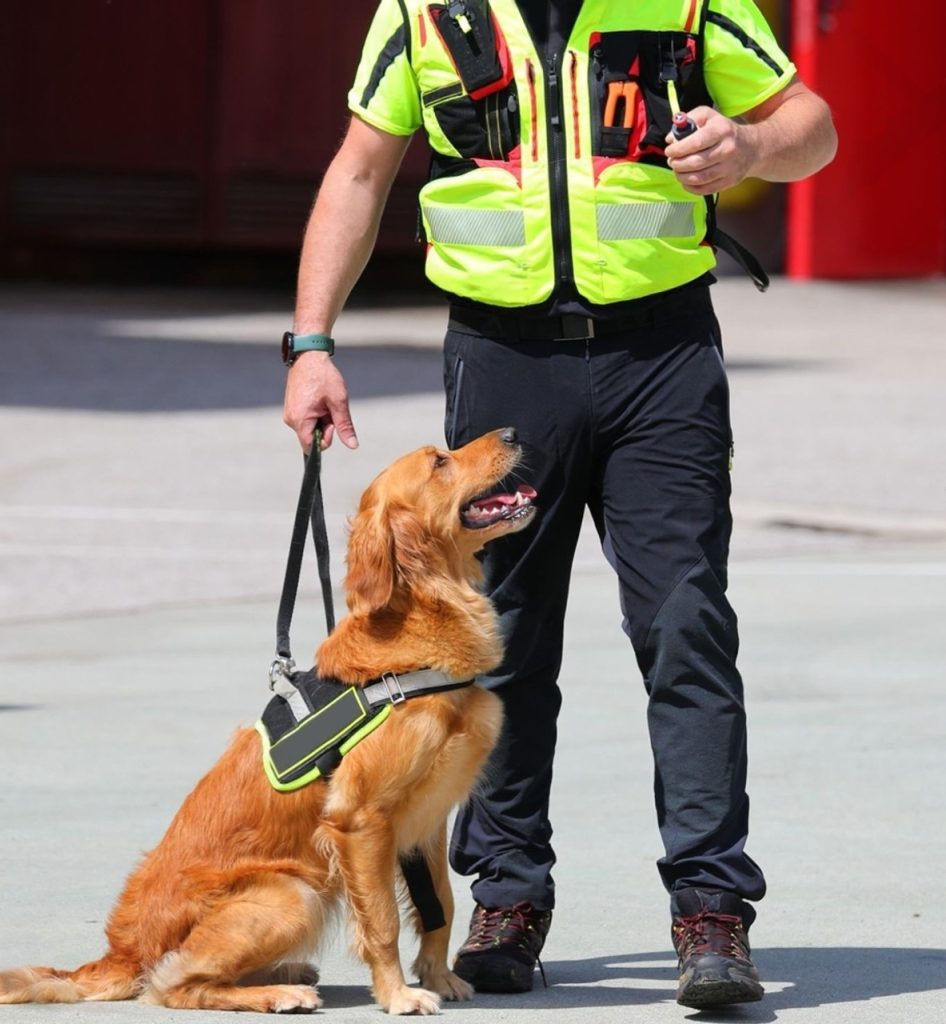
Handlers amplify the dog’s presence. A subtle hand command, while a shift in tone. A movement that cues the dog. To an intruder, this teamwork looks seamless, almost like one unit rather than two beings working together. That cohesion adds another layer of intimidation.
Modern Behaviour Models Shaping Security K9 Performance
Today’s training uses adaptive behaviour models. Dogs learn not only commands but patterns, sound changes, human stress signals, and unusual movement signatures. They respond faster and more accurately than older generations of security dogs. This evolution strengthens every psychological trigger they deploy.
Real-World Scenarios Where K9 Units Outperform Human Security Alone
Perimeter Breach Situations
Many break-ins never progress past the initial breach because the intruder hears or spots a dog. Fences, gates, blind alleyways, and dogs dominate these zones with keen senses and powerful deterrence.
Night Patrol Advantages
Darkness should favour the intruder. It doesn’t. Dogs thrive in low-light conditions. Their sensory advantage spikes. Intruders sense that imbalance and often withdraw before contact.
High-Risk Sites (Warehouses, Compounds, Remote Areas)
In large open spaces or isolated zones, dogs fill gaps that no number of cameras can cover. Their presence alone shifts the psychological atmosphere around the site.
Final Thoughts: Why Psychological Advantage Makes K9 Units Irreplaceable
K9 units aren’t just strong or fast; they manipulate human instincts with remarkable precision. They create doubt, fear, and unpredictability. They dominate territory and disrupt intruder planning. And through it all, they harness the ancient, primal triggers that shape K9 psychological triggers security strategies across the world. Technology may evolve, but no device can replace the psychological effect of a trained security dog standing its ground.
Frequently Asked Questions
1. Why do intruders fear K9 units more than human guards?
Because dogs activate primal fear pathways, humans can’t turn off unpredictability, speed, and perceived danger.
2. Do K9 units prevent crime even before a breach?
Yes. Deterrence psychology plays a huge role. Many offenders avoid sites known to have dogs.
3. What psychological triggers affect trained criminals most?
Sound cues, pursuit pressure, sensory awareness, and the dog’s unbroken focus.
4. How are security dogs trained for maximum psychological impact?
Through body-language conditioning, scenario drills, controlled aggression, and handler synchronisation.
5. Are K9 units effective in low-light or noisy environments?
Absolutely. Dogs rely on scent and sound processing far beyond human ability, giving them the advantage.