Warehouses lose more than merchandise when criminals strike the same place again. A single break-in already hurts, but repeated offences drain money. Inventory disappears. Repairs pile up. Insurance deductibles rise. Productivity slows. One incident turns into a chain of setbacks. It stretches across the entire operation.
The problem is not one weak area in the fence. The real threat is the pattern that criminals use to test the site and grow bolder each time. When this becomes routine, the warehouse ceases to be a storage hub. It turns into an ongoing opportunity for offenders who now understand its vulnerabilities.
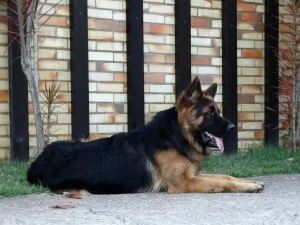
This is where K9 patrol security for warehouses creates a sharp break in the cycle. Trained dogs disrupt the entire equation and deliver warehouse crime prevention.
Table of Contents
The Psychology of Sustained Deterrence vs. Initial Fear
Why K9 Patrol Security for Warehouses Drop Repeat Attempts
26% of all business premises in England and Wales were victims of business crime. It is reported by the Home Office 2023 Commercial Victimisation Survey.
Most criminals do not think about long-term consequences while committing their first offence. They assume they can sneak in and slip out before anyone notices. Cameras might catch them, but the risk seems manageable. Alarms may sound, yet many believe they can outrun the response. The fear is shallow, and for many, it fades fast.
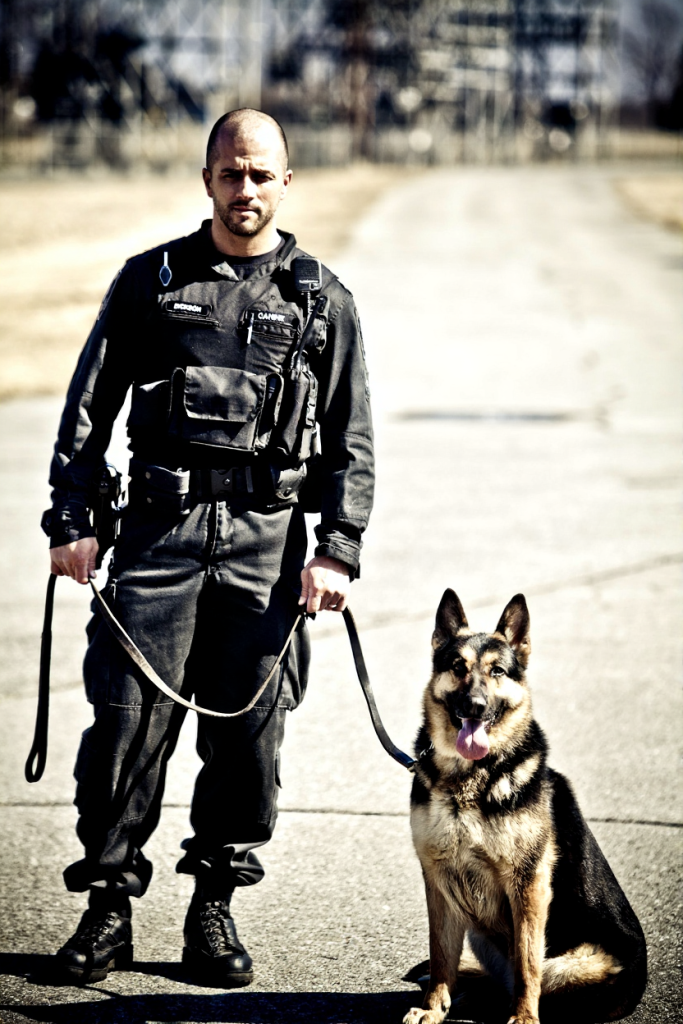
But the fear that matters most is not the initial one. It is the fear that sticks, the kind that prevents a second attempt. This is where K9 patrols change everything. The presence of a trained dog is not a visual warning. It is a living, unpredictable force that criminals cannot calculate or bluff through.
The K9 Unit as a High-Consequence Variable
A dog introduces a threat to the criminal. Guards can be studied. Silent alarms can be timed. But a dog? The dog sees, hears, and smells more than any piece of hardware. Its speed outmatches any human’s. Its reaction is instinctive and immediate.
This creates a “learned risk” for offenders. After one encounter, they understand that returning to the site is dangerous. Most will take the chance with a camera. Few will ever risk a fast, silent, and powerful animal trained to track them in the dark.
Proactive Threat Elimination Through Unpredictable Sweeps
K9 units do not rely on criminals making noise or triggering sensors. They patrol large warehouse yards, narrow hallways, and hidden corners before anything happens. They detect hiding places and scent trails that human guards never notice.
This is why warehouse canine patrol effectiveness is so high. These dogs reduce opportunity itself. When opportunity disappears, repeat offences disappear with it.
Operational Proof – K9 Patrol Effectiveness in High-Risk Zones
Data-Driven Impact – Measuring the Reduction in Recidivism
Warehouses come with natural blind spots. They are large, complex, and full of hiding places. Some criminals return many times because they know these weak points better. A K9 unit flips that advantage.
Beyond the Perimeter – Deep Intrusion Risk Mitigation
Dogs excel in areas where cameras fall short. Think about fence lines with tall grass or loose soil. Offenders often crawl under or jump over these spots during low-traffic hours. A dog’s nose picks up fresh tracks before the intruder reaches the building.
Storage yards with stacked pallets create perfect cover. Criminals often hide between rows waiting for the right moment. A K9 clears those aisles fast by following scent pockets and movement trails.
Roof access points also see attempts. It especially happens to repeat offenders who use ladders, scaffolds, or parked equipment. Dogs notice the human scent left behind even after the person has climbed up.
Remote loading docks are another favourite entry point. They sit far from the main office areas and often remain quiet at night. The K9’s routine sweeps expose anyone lurking around. In each case, the dog secures what technology alone cannot. This is what makes them a proven security deterrent for repeat crimes.
Correlation Between K9 Duration and Crime Suppression
Data across industrial facilities shows a striking pattern. The longer a K9 unit is, the lower the rate of repeat offences. Warehouses that use canine patrols for only six months see improvement. But those with a year or more of constant presence see the best results. Many facilities report a 65% reduction in repeated break-in attempts. It happens once they surpass the 12-month mark.
Why the jump? Because offenders learn which sites are too dangerous. Over time, word spreads, and the warehouse drops off the radar of high-risk offenders.
Case Study Snapshot – Eliminating a Repeat Target
Imagine a warehouse hit three times in eight months. The thieves used the same spot along the fence each time. Guards noticed the pattern but arrived too late to stop the intruders. Cameras recorded them, but the criminals moved with confidence. This happens because no one confronted them on-site.
After the third break-in, the company brought in a full-time K9 patrol. The dog swept the fence area, followed scent trails, and alerted handlers. Within weeks, attempts dropped to zero. No offender returned. The risk profile changed overnight. The site went from “easy target” to “not worth it.” That is the power of ongoing security patrol benefits delivered by K9 units.
The Economic Justification for K9 Patrol Security for Warehouses
ROI – How K9 Patrols Turn Chronic Losses into Sustained Savings
Security budgets often focus on price instead of value. But when you consider the real cost of repeat crimes, the equation changes fast. Theft alone is expensive, but it rarely stops there. Add damaged fences, lost productivity, disruptions in delivery, and delays in order fulfilment. Then consider the long-term hit: rising insurance premiums.
Calculating the ROI of Repeat Crime Prevention
To understand the financial return, multiply the cost of breach by the repetitions. Many warehouses suffer two to five repeat offences in a single year. Often, preventing even one of those events pays for months of K9 service. The value compounds each time a break-in never happens.
Insurance and Liability Benefits
Insurers pay attention to long-term mitigation strategies. A documented K9 program shows the warehouse is taking serious steps to reduce risk. Some insurers respond with better rates or at least avoid raising premiums after a claim. A K9 unit can also support liability protection since it’s an active measure. It strengthens your defence in risk assessments.
K9 vs. Technology – Preventing vs. Recording
Cameras, analytics, alarms, and sensors are essential. They create awareness. But they record events more often than they stop them. A dog changes that. It does not wait for something to happen. It stops the attempt at the source. That difference is where the long-term savings come from.
Conclusion: Sustainable Security and Operational Certainty
Achieve Operational Certainty with a Proven Security Deterrent
Warehouses run on predictability. When crime becomes a recurring problem, everything becomes uncertain. K9 patrol security for warehouses restores that stability. They change how offenders see the property. What once looked like an open door becomes a dead end. Criminals rely on low risk. Dogs remove that advantage.
The difference shows in absolute numbers, behaviour, and peace of mind. This is why proven security deterrents like canine patrols continue to gain traction. It happens across distribution and logistics hubs. They create a level of warehouse crime prevention that static systems cannot match.
K9 deployment is the investment that removes chronic weaknesses and restores operational certainty. It is decision-makers who manage extensive inventories, tight schedules, and vulnerable sites. If the goal is to drop repeat break-ins and protect the supply chain, a K9 presence delivers results.