Remote industrial sites have always lived with a certain level of risk. They sit far from towns, depend on limited staff, and often stretch over wide or uneven grounds. When an alarm goes off, getting someone on scene can take time. Even with the good systems in place, distance and isolation slow things down. Because of that gap, many operators now use trained dogs in teams. Because the K9 alarm response in remote industrial sites stays better. Dogs bring speed, awareness, and instinct that no device can match.
Table of Contents
Why Remote Industrial Sites Face Unique Alarm Response Challenges
Remote sites carry their own security weight. You may have solid alarms, good lighting, and cameras pointing in the right places. But still, the location itself creates barriers and requires reliable planning.
The Gap Between Alarm Activation and Human Arrival in Remote Areas
When a device picks up movement or a break-in, the alert reaches a control room. But the human team responding might be half an hour away, sometimes even more. Roads can be rough, or the weather can slow down the vehicles. At night, visibility drops can affect the support. The alarm knows something has happened, but the people responsible take time to get there. And in that gap, things can escalate.
High Rate of Unverified Alarms and Operational Disruption
Remote alarms trigger for many reasons. Wind rattles loose panels, wildlife brushes past beams, or sensors fail without warning. Each alarm demands attention, and many turn out to be false. When teams must drive long distances only to find nothing wrong, the entire operation suffers, and it costs dearly. Managers may end up losing time, and workers feel stretched. Preventing these issues can resolve the problem and increase security.
Limited Visibility and Difficult Terrain Affecting Security Patrols
Even on a clear day, many remote industrial sites cover large, uneven areas. Human patrols move at a steady pace but cannot cover everything. Machinery and storage zones create blind areas. These sites need more than cameras and physical patrols to stay secure.
How K9 Teams Strengthen Remote Industrial Sites And Alarm Response
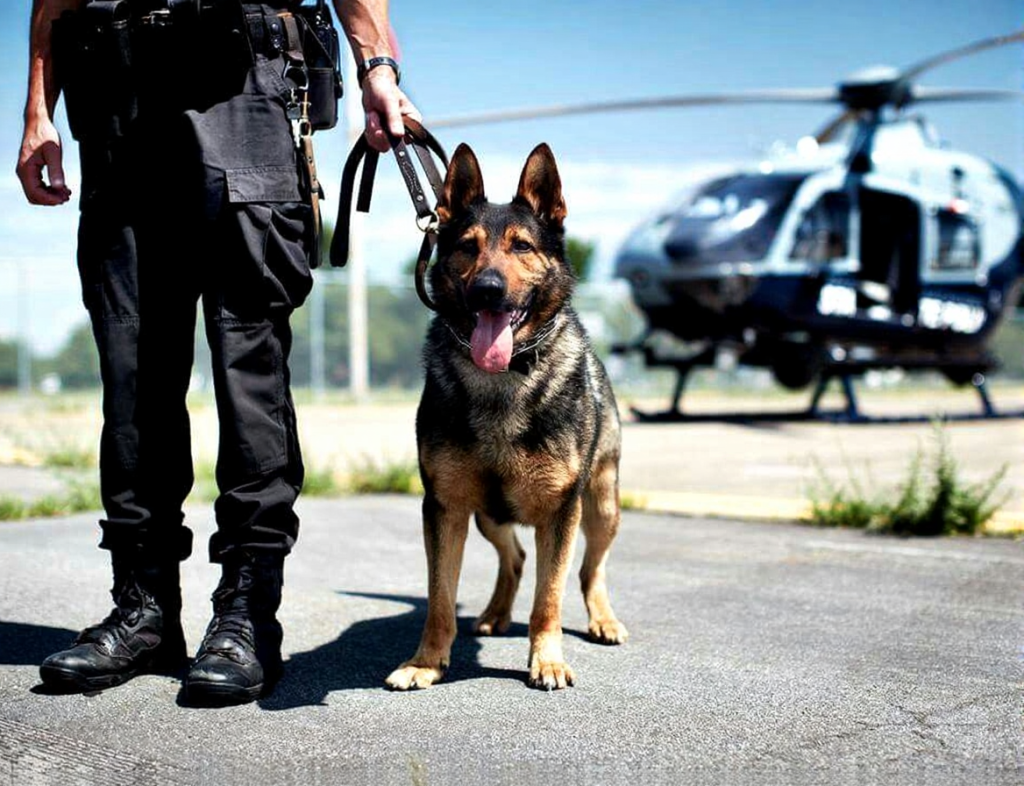
K9 units add a real, physical layer to alarm systems. Where alarms detect and alert, dogs investigate and confirm. They move quickly, sense more, and adapt to the environment without delay. With solid training, K9 alarm response in remote industrial site. And with handlers, they create a fast and reliable alarm response method.
Rapid Deployment and Fast Terrain Navigation by K9 Units
A dog moves over rough ground far quickly than a person. It slips through narrow paths, climbs uneven banks, and runs at speed without tiring easily. When an alarm sounds, the K9 team heads straight to the location. Instead of the long wait for an external response unit to arrive, the dog covers the distance from its on-site base almost at once. It pushes the response time down from long minutes to short moments.
Enhanced Detection and Tracking Capabilities After an Alarm Trigger
Once on site, the dog’s nose takes over. Smell lingers in ways that cameras or beams cannot track. Even if an intruder moves behind a structure or hides in shadows, the dog follows the trail. Wind, rain, or uneven surfaces don’t stop this. A trained K9 can tell the difference between human scent and animal scent. So the response team knows what they are dealing with. This level of detection brings clarity to alarms that would otherwise seem vague or confusing.
Combining Both K9 Security And Alarm Systems In Remote Industrial Sites
Integrating K9 Teams With Alarm Monitoring Technology
K9 alarm response does not work in isolation. Today’s systems link the dog team with the control room. Handlers carry radios. Dogs wear harnesses fitted with GPS trackers. Some harnesses have built-in sensors that show the dog’s movement patterns or body temperature. When an alarm pinpoints a location, the control room follows the dog’s progress on a live map. This keeps everyone aligned and reduces confusion during tense moments.
Deterrence Value of K9 Units at High-Risk, Remote Locations
Most intruders think twice when they know trained dogs are on site. This alone cuts many incidents before they start. K9 alarm response in remote industrial sites supports great with their strong instinct. Cable theft, fuel siphoning, equipment stripping, and break-ins drop when word spreads that dogs patrol the area. A dog’s presence does more than cameras or warning signs. It sends a message that the site is not easy to breach.
What Makes K9 Alarm Response Ideal for Remote Industrial Sectors?
Suitable Site Types
Remote sites are hard to guard with technology alone. Pipelines run for miles, quarries sit in rugged terrain, and renewable farms spread wide across open land. Substations, often isolated, remain vital yet exposed. Following it, even the infrastructure corridors like rail lines or energy routes. In each of these places, K9 alarm response adds mobility and instinct that sensors cannot match. This support makes them ideal for these environments. Dogs can be helpful in security where terrain and isolation challenge traditional systems.
Operational Benefits for Security Managers
Security managers face constant pressure to balance cost and effectiveness. Dogs reduce false alarms by sensing real threats, which saves time and resources. Following it, incident reporting becomes clearer. Because handlers record precise alerts rather than chasing noise. K9 partners share the burden, keeping vigilance high without exhausting staff, and the burden drops. Compared to adding more tech-only solutions, K9 alarm response delivers stronger returns. They blend instinct with existing systems for a higher ROI.
Conclusion
Remote industrial sites need more than alarms. They need a way to respond with speed and certainty. K9 alarm response in remote industrial site stays reliable and better. Their instincts, mobility, and presence turn an alarm into a clear and actionable event. Instead of waiting for distant responders, operators gain immediate awareness and faster control. In these demanding environments, that edge makes all the difference.
Frequently Asked Questions
1. How do K9 teams speed up alarm response at remote industrial sites?
Dogs speed up response by reaching alarm points far quicker than a patrol team. Our dog moves fast across tough ground, so we reach the source before delays build up.
2. Can dogs really detect intruders better than sensors at isolated locations?
Yes, we rely on our dog’s scent tracking, which picks up human presence even when sensors fail or visibility is poor.
3. Do K9 units reduce false alarms in remote areas?
They do. We can confirm whether an alarm came from a person, wildlife, or weather. This cuts wasted callouts.
4. What type of industries benefit the most from K9 alarm response?
We see the strongest results in oil and gas, mining, renewable energy, and large industrial corridors.
5. How do I integrate K9 teams with my current alarm and monitoring tools?
We use GPS, radios, and alarm-linked deployment plans so our dogs’ movements sync with the control room systems.